


Shares of Taiwan Semiconductor Manufacturing Co (TSMC, 台積電), the world’s largest contract chipmaker, yesterday surged to their highest in more than nine months after the company raised its earnings guidance for the current quarter on Wednesday evening.
TSMC shares gained 2.03 percent to close at NT$151 in Taipei trading, the highest since April 28 last year, with 61.71 million shares changing hands.
The Hsinchu-based chipmaker raised its sales guidance for this quarter to a range between NT$201 billion (US$5.99 billion) and NT$203 billion from a previous estimate of between NT$198 billion and NT$201 billion, according to a company filing with the Taiwan Stock Exchange.
The company, which supplies chips for Apple Inc’s iPhones, attributed the more favorable outlook to a weaker New Taiwan dollar against the greenback.
The local currency is trading at an average of NT$33.18 versus the US dollar, down from last month’s forecast of NT$32.5, TSMC said.
Foreign exchange gains are expected to offset the damage of the magnitude 6.4 earthquake that struck southern Taiwan on Feb. 6 and disrupted production capacity, the company said.
However, TSMC trimmed guidance for its gross margin for this quarter to between 44 percent and 46 percent, down from a previous estimate of between 47 percent and 49 percent, because of the earthquake, the filing said.
The operating margin would drop to between 33.5 percent and 35.5 percent from a range of 36.5 percent to 38.5 percent after factoring in insurance payments, the filing said.
TSMC produces 12-inch and 8-inch wafers in its facilities in the Southern Taiwan Science Park that were affected by the quake, the company said, adding that a batch of wafers on the assembly line sustained heavy damage.
Due to the earthquake, wafer shipments from its Tainan-based Gigafab facilities — with capacities ranging between 80,000 wafers and 100,000 wafers per month — that were scheduled to be delivered this quarter are to be delayed until next quarter.
About 100,000 12-inch wafers are to be delayed by between 10 days and 50 days, while shipments of about 20,000 8-inch wafers are to be delayed by five days to 20 days, the company said.
It said both facilities would take longer than expected to fully restore production capacity.
The earthquake did not have any adverse impact on TSMC’s wafer plants located in Hsinchu and Taichung, it said.
Yesterday’s surge reflected expectations that the chipmaker is to win a large amount of, if not all, orders for the A10 processor production for Apple’s next-generation iPhones, market analysts said.
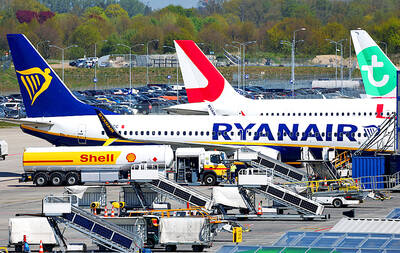
Ryanair, Transavia, Volotea and other low-cost airlines are feeling the financial pain from high jet fuel prices as a result of the Middle East war and are cutting flights. The closure of the Strait of Hormuz has taken a huge chunk of oil supplies off the market, sending the price of jet fuel soaring and triggering fears of shortages that could force airlines to cancel flights. Airlines are not waiting for a lack of supplies to react. “Travel alert: Airlines are cutting thousands of flights right now,” Travel Therapy host Karen Schaler said in an Instagram reel this past weekend.
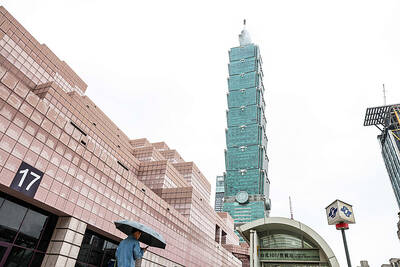
MANAGING RISKS: Taiwan has secured LNG sufficient to cover 95 percent of electricity demand for next month, UBS said, describing the government’s approach as proactive UBS Group AG has raised its forecast for Taiwan’s economic growth this year to 8 percent, up from 6.9 percent previously, and said expansion could reach as high as 8.6 percent if external energy shocks are avoided. The upgrade reflects a stronger-than-expected first-quarter performance and sustained momentum in artificial intelligence (AI)-driven exports, which UBS said are providing a firm foundation for growth despite geopolitical and energy risks. Taiwan’s GDP expanded 13.69 percent year-on-year in the first quarter, the fastest growth since the second quarter of 1987, the Directorate-General of Budget, Accounting and Statistics (DGBAS) reported on Thursday. On a seasonally
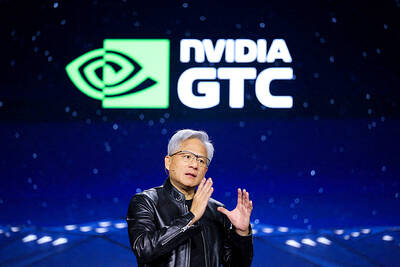
The list of Asian stocks that benefit from business partnership with Nvidia Corp is getting longer, as the region further integrates into the artificial intelligence (AI) chip giant’s business ecosystem. Just in the past week, South Korea’s LG Electronics Inc, Taiwan’s Nanya Technology Corp (南亞科技), as well as China’s Huizhou Desay SV Automotive Co (德賽西威) and Pateo Connect Technology Shanghai Corp (博泰車聯) have become the latest to rally on news of tie-ups, supply-chain participation or product collaboration with the US chip designer. Asian suppliers account for about 90 percent of Nvidia’s production costs, up from about 65 percent last year, data compiled

The Fair Trade Commission’s (FTC) ongoing review of Grab Holdings Ltd’s US$600 million acquisition of Foodpanda Taiwan’s operations, announced on March 23, has taken on fresh urgency as industry experts warn that the transaction could embed significant Chinese cybersecurity vulnerabilities into Taiwan’s digital infrastructure through Grab’s deep ties to autonomous-driving firm WeRide (文遠知行). Less than 16 months after the FTC blocked Uber Eats’ direct attempt to acquire Foodpanda Taiwan — citing potential combined market shares of 80 to 90 percent — the emergence of Grab as the buyer has prompted questions about whether the same competitive harm is simply being rerouted


 RSS
RSS