


CTCI Corp (中鼎工程), which builds refinery and power plant facilities, said that it is seeking new business opportunities in “green” energy and pollution reduction projects as demand from refinery clients weakens.
“Since last year, the battle between OPEC and US oil shale producers has led to a glut, forcing prices down amid waning demand from emerging markets, and we have been preparing for this tremendous shakeup,” CTCI spokesperson Hsiao Ming-cheng (蕭明證) told an investors conference on Wednesday.
The company is to bid for air pollution reduction contracts at power plants in Taiwan, Vietnam and Malaysia before the end of the year, Hsiao said.
The company also plans to continue improving its frontend engineering design services to attract more construction contracts and pursue additional maintenance revenues from existing clients, Hsiao added.
The company reported that sales in the first eight months of this year grew 13.93 percent to NT$40.8 billion (US$1.23 billion), while net income in the first half rose 14 percent year-on-year to NT$988.65 million, or NT$1.31 per share.
As of August, the company reported NT$18 billion in new contracts, compared with NT$77.9 billion last year, while backlog contracts reached NT$166.8 billion, compared with NT$187.1 billion a year earlier.
Refinery and petrochemical projects accounted for 37 percent and 8 percent respectively of new contracts this year, the company said.
To weather the downturn in global oil and petrochemical industries, the company is seeking higher value-added segments, such as contracts for natural gas field facilities, light natural gas export terminals, hydrogenated styrenic block copolymers, and C4 and C5 derivative product plants, Hsiao said.
The company also plans to bolster its service offerings by obtaining upstream technologies such as ethylene crackers, cryogenic tanks, and signal systems for mass rapid transit systems by with strategic partners and through acquisitions.
Next year the company is hoping to tap into the NT$570.6 billion in contract revenues across the globe, of which NT$181.2 billion are non-oil and petrochemical projects.
“As OPEC has established a marked price advantage over US oil shale producers, we anticipate oversupply to begin diminishing gradually, but the situation is more favorable for the US shale gas segment,” Hsiao said.
In the US market, the company is upbeat on continued investments in the country’s shale gas industries, as the cost of US shale gas as feedstock to produce ethylene is lower than naphtha sourced from Asia, seeing growth potential driven by ethylene glycol, ethylene oxide and low-density polyethylene.
CTCI shares rose 4.25 percent to close at NT$40.5 on Friday in Taipei trading outperforming the market’s 0.11 percent gain that day.
The Executive Yuan’s Public Construction Commission said that it has selected CTCI to spearhead its program to export the nation’s expertise in building power plants to the Middle East and Southeast Asian markets.
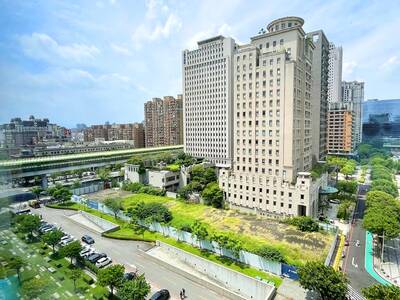
Taichung reported the steepest fall in completed home prices among the six special municipalities in the first quarter of this year, data compiled by Taiwan Realty Co (台灣房屋) showed yesterday. From January through last month, the average transaction price for completed homes in Taichung fell 8 percent from a year earlier to NT$299,000 (US$9,483) per ping (3.3m²), said Taiwan Realty, which compiled the data based on the government’s price registration platform. The decline could be attributed to many home buyers choosing relatively affordable used homes to live in themselves, instead of newly built homes in the city’s prime property market, Taiwan Realty
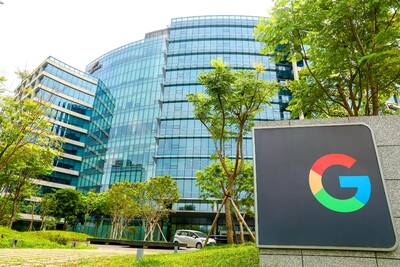
The government yesterday approved applications by Alphabet Inc’s Google to invest NT$27.08 billion (US$859.98 million) in Taiwan, the Ministry of Economic Affairs said in a statement. The Department of Investment Review approved two investments proposed by Google, with much of the funds to be used for data processing and electronic information supply services, as well as inventory procurement businesses in the semiconductor field, the ministry said. It marks the second consecutive year that Google has applied to increase its investment in Taiwan. Google plans to infuse NT$25.34 billion into Charter Investments Ltd (特許投資顧問) through its Singapore-based subsidiary Fructan Holdings Singapore Pte Ltd, and

JET JUICE: The war on Iran’s secondary effects have seen fuel prices skyrocket, knocking flight schedules down to earth in return as airlines struggle with costs Airline passengers should brace for more irritation in the next few months as carriers worldwide cancel flights and ground planes to cope with stratospheric increases in jet-fuel prices. Dutch flag carrier KLM is the latest company to cut its schedule, saying on Thursday that it would scrap 80 return flights at Amsterdam’s Schiphol Airport in the coming month. That puts it in the same league as United Airlines Holdings Inc, Deutsche Lufthansa AG and Cathay Pacific Airways Ltd, which have all pruned itineraries to mitigate costs. Global capacity for next month has been reduced by about 3 percentage points, with all

The US said it plans to help build a first-of-its-kind industrial hub in the Philippines to boost production of inputs crucial to US supply chains. The 4,000-acre hub is intended to be “a purpose-built platform for allied manufacturing” and “an investment acceleration hub where the specific industrial activities are shaped by market demand,” the US Department of State said on Thursday. The project — touted as an “economic security zone” — would be within the Luzon Economic Corridor, a flagship economic project backed by the US and Japan on the main Philippine island. The project was also described as “the first artificial intelligence


 RSS
RSS