


A narrowing interest spread following the central bank’s latest rate cut is expected to affect the financial sector’s bottom line, analysts said.
After its quarterly policymaking meeting on Thursday, the central bank said it would lower its key interest rates by 0.125 percentage points, the first cut in four years.
“This move signals additional earnings headwinds for the financial sector, both banks and life insurers. But state banks are likely to be impacted more than private banks and insurers given higher CASA [current and savings account] ratios and dependence on net interest income,” JPMorgan Securities Ltd analysts Jemmy Huang (黃聖翔) and Josh Klaczek said in a research note.
A higher CASA ratio indicates that a higher portion of a bank’s deposits must come from current and savings deposits.
JPMorgan said state-run First Financial Holding Co (第一金控) and Mega Financial Holding Co (兆豐金控) would suffer more than their peers.
The current macroeconomic headwinds would cap the upside of financial firms’ earnings and share prices, the brokerage said.
“On the back of lackluster economic momentum, delays in US rate hikes and domestic rate cuts, we expect further consensus downward earnings revisions for the sector in the near future,” Huang and Klaczek said in the note.
Shares of financial firms moved lower in Taipei trading on Friday, with the financial sub-index closing down 1.15 percent, compared with the TAIEX’s 0.11 percent increase.
The decline was led by CTBC Financial Holding Co’s (中信金控) 3.06 percent drop and Cathay Financial Holding Co’s (國泰金控) 2.71 percent fall. Shares of E.Sun Financial Holding Co (玉山金控) lost 1.85 percent, Mega Financial fell 1.54 percent, Shin Kong Financial Holding Co (新光金控) dropped 1.38 percent and First Financial 0.99 percent.
KGI Securities Investment Advisory Co (凱基證券投顧) analysts said the rate cut would decrease the financial sector’s earnings by between 2.5 and 3 percent this year.
Banking-centric financial groups with larger mortgage and corporate loan portfolios denominated in New Taiwan dollars would face more pressure, KGI said.
With banks’ net interest margin (NIM) expected to contract by between 1.6 and 2.7 basis points this year, earnings are likely to shrink by 2.9 percent for Cathay Financial, 2.6 percent for First Financial and 2.6 percent for Fubon Financial Holding Co (富邦金控), KGI analysts Eric Shih (施志鴻) and Jean Chen (陳柏均) said.
KGI expects Mega Financial to take a 1.8 percent hit in earnings this year, and E.Sun Financial might see profits slide by 1.7 percent.
“But the central bank’s move will affect life insurance-centric financial groups more than their banking-centric peers,” Shih and Chen said in a note on Friday.
As the US Federal Reserve chose not to raise rates in its policy meeting earlier this month, Taiwanese central bank’s rate cut might boost Cathay Financial’s efforts to reduce its negative net interest spread and delay Fubon Financial’s bid to expand on its positive net interest spread, the analysts said.
“Life insurers will continue to face challenges of rising market volatility for their equity portfolios,” Shih and Chen said.
Yuanta Securities Investment Consulting Co (元大投顧) analyst Peggy Shih (施姵帆) said that the average savings rate would decrease by 6.25 basis points to 0.71 percent from 0.78 percent, pushing the loan rate toward 2.125 percent, while interest spread is expected to drop by 2 basis points to 1.41 percent from 1.43 percent.
Assuming that banks allocate 60 percent of interest-bearing assets to loans, 10 percent to interbank loans and 16 percent to fixed-income instruments, the average NIM is expected to decrease by 4 basis points in response to the rate cut, overall return on equity for local banks is likely to fall to 9.6 percent from 11.4 percent last year.
Yuanta expects this year’s earnings to drop by 2.3 percent for Cathay Financial, 0.5 percent for Fubon Financial, 1.6 percent for Shin Kong Financial and 0.9 percent for China Life Insurance Co (中國人壽).

Taiwanese firms have increased investment in the Philippines in recent years as Manila’s ties with Washington deepen and global supply chains continue to shift away from China, an expert at the Chung-Hua Institution for Economic Research (CIER, 中華經濟研究院) said yesterday. The Philippines had not been among Taiwanese investors’ top choices in Southeast Asia, CIER Taiwan ASEAN Studies Center director Kristy Hsu (徐遵慈) said at a seminar in Taipei. However, Taiwan’s investment in the country has grown significantly since the COVID-19 pandemic, reaching US $257 million last year, a high in recent years, she said. Although Taiwan’s total investment in the Philippines still lags

Intel Corp regards Taiwan Semiconductor Manufacturing Co (TSMC, 台積電) as a longstanding partner, as the US chipmaker would continue outsourcing production of advanced chips to TSMC, Intel chief executive officer Lip-Bu Tan (陳立武) said yesterday. “I don’t look at people as competitors. I look at the collaboration... Nvidia is also, you know, a good friend,” Tan told a news conference following his keynote speech at the Computex trade show in Taipei. “It’s a very trusted partnership for us... We are a big, top customer for them, and we’re going to continue doing that,” he said, referring to TSMC, the world’s largest foundry

Artificial intelligence (AI) agents would supplant smartphones as the center of people’s digital lives, fundamentally reshaping personal devices and driving a major computing upgrade cycle, Qualcomm Inc CEO Cristiano Amon said yesterday. In his keynote speech for this year’s Computex trade show in Taipei, Amon said that the rise of "agentic AI" — AI systems capable of reasoning, planning and carrying out tasks autonomously — would transform how people interact with technology across phones, PCs, vehicles and wearable devices. Describing the technology as the next major evolution in computing, Amon said that "2026 is the year of agents.” For decades, smartphones have sat
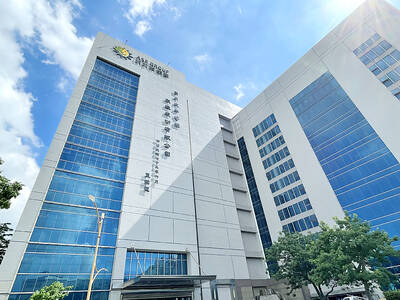
The average pay to employees by ASE Technology Holding Co (日月光投控) was the highest among the companies listed on the local main board last year, while contract chipmaker Taiwan Semiconductor Manufacturing Co (TSMC, 台積電) ranked seventh, the Taiwan Stock Exchange (TWSE) said on Monday. Data compiled by the exchange showed ASE Technology, the world’s largest chip packaging and testing services provider, paid its employees an average of NT$6.28 million (US$199,746) last year, up 40 percent from a year earlier. TSMC, the world’s largest contract chipmaker and the most profitable company in Taiwan, paid its employees NT$4.09 million on average, up


 RSS
RSS