


Taiwan is likely to have slipped into recession, as evidenced by a general slowdown in economic activity this and last quarter, driving the central bank on Thursday to cut interest rates in a bid to reverse the downturn, economists said yesterday.
The rate cut, the first in six years, may do little if companies shy away from investment and consumers tighten their belts, economists said.
“We are definitely in a recession, given sustained declines of economic data, though some may disagree about its definition,” Yuanta-Polaris Research Institute (元大寶華研究院) chairman Liang Kuo-yuan (梁國源) said by telephone.
The EU defines recession as two consecutive quarters of negative economic growth, as measured by the seasonal adjusted quarter-on-quarter figures for real GDP.
Taiwan already recorded a downturn of 6.56 percent last quarter in terms of the seasonally adjusted annual rate and is bound for further contraction this quarter, whether compared with last quarter or a year earlier, several research institutes have predicted.
That would signify a recession and suggest a need for stronger measures.
However, the Directorate-General of Budget, Accounting and Statistics (DGBAS) gauges the nation’s economic health by comparing current data with their levels in the previous year.
By that account, the shadow of recession is still escalating, especially if international crude prices fail to stabilize, hurting non-tech exports, despite an expected rebound in electronics shipments next quarter, Taiwan Institute of Economic Research (TIER, 台經院) economist Gordon Sun (孫明德) said.
The government’s forecast last month of 0.1 percent growth for this quarter looks increasingly unachievable, after latest data about exports, industrial production and commercial sales all fared worse than expected, a DGBAS official who declined to be named told the Taipei Times yesterday.
The official declined to elaborate, saying that the DGBAS will update its economic growth data for Taiwan at the end of next month.
Economists said interest rate cuts cannot spur private investment interest if the nation continues to concentrate on a few industries and export markets, given that global trade has slowed this year.
Exports account for 70 percent of Taiwan’s GDP — with 40 percent of the nation’s outbound shipments — mostly electronic devices — destined for China, according to government data.
“Monetary policy is no substitute for a structural reform if the government aims to reinvigorate the economy,” Liang said.
Local companies must actively tap Internet-linked business opportunities that promise higher added value, rather than struggle with low-margin business, he said.
KGI Securities Co (凱基證券) economist Andrew Tsai (蔡耀德) said the economy has sank into recession, if only technically, to which a rate cut of 12.5 basis points provides no remedy.
“A lack of investment opportunities drives up savings and lower borrowing costs cannot reverse the situation,” Tsai said.
A further rate cut would be counterproductive because it could send a negative message about the economy and deepen cautious sentiment, as happened when Wall Street stumbled after the US Federal Reserve left its rate unchanged last week, Tsai said.
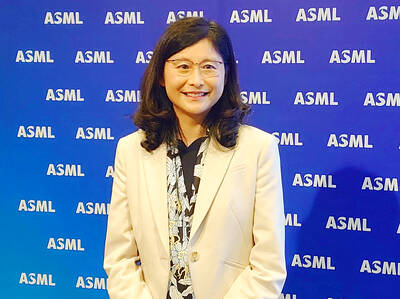
Netherlands-based semiconductor equipment supplier ASML Holding NV yesterday said that it is planning to hire an additional 1,000 people in Taiwan this year in response to growing demand from clients. ASML had previously planned to recruit 600 people this year, but that the plan has been adjusted upward, ASML vice president and ASML Taiwan general manager Grace Wang (汪佳慧) told reporters. ASML has a workforce of more than 4,500 in Taiwan, accounting for about 10 percent of its global total, Wang said. This year’s recruitment campaign would focus on adding people in the customer support, manufacturing and supply chain domains to assist ASML
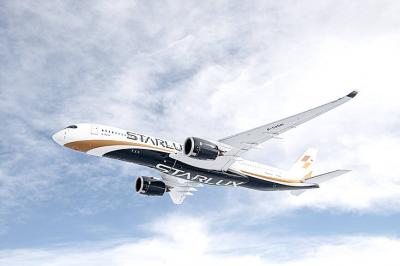
Starlux Airlines Co (星宇航空) today unveiled a long-haul network expansion plan at a shareholders’ meeting in Taipei, including direct flights to Barcelona, Spain, and Zurich, Switzerland, as well as a service connecting Taipei, Sydney and New Zealand. Starlux is to become the first Taiwanese carrier to offer non-stop services to the two European cities, while the inaugural oceanic route is expected to expand transit opportunities within the Australia-New Zealand market, Starlux said. Flight services to Chicago, Dallas, Washington and New York are under evaluation, the airline added. Prior to the shareholders’ meeting, the airline earlier this year announced that it would be

UNDER MICROSCOPE: Taiwan detained three people who allegedly conspired to buy servers in Taiwan and export them using fraudulent documentation, prosecutors said Nvidia Corp chief executive officer Jensen Huang (黃仁勳) on Saturday urged Super Micro Computer Inc to tighten up on compliance after Taiwan detained three people this week for allegedly making fraudulent declarations about artificial intelligence (AI) servers made by its US partner. The development marked the nation’s first crackdown on semiconductor smuggling, which grew after the US slapped restrictions on exports of high-end chips such as Nvidia AI accelerators to China. Nvidia is “rigorous” in explaining regulations to all of its partners, Huang told reporters after arriving in Taipei. “Ultimately Super Micro has to run their own company,” he said in response to

Nvidia Corp yesterday announced that CEO Jensen Huang (黃仁勳) would attend an employee meeting in Taipei tomorrow to celebrate the launch of the company’s Taiwan headquarters project. Huang would attend a gathering at the site of Nvidia’s planned headquarters in Beitou Shilin Technology Park (北投士林科技園區), the company said in a statement. After arriving in Taiwan on Saturday last week, Huang told reporters that he plans to meet with Quanta Computer Inc (廣達) chairman Barry Lam (林百里) and Taiwan Semiconductor Manufacturing Co (TSMC, 台積電) chairman C.C. Wei (魏哲家), and would attend the groundbreaking ceremony for Nvidia’s Taiwan headquarters tomorrow. Nvidia has not yet applied


 RSS
RSS