


Formosa Plastics Group’s (FPG, 台塑集團) corporate governance could see a ratings downgrade by the stock exchange regulator, after the group confirmed yesterday that several executives and employees had resigned amid a bribery scandal.
In addition, the conglomerate’s oversight might affect its major subsidiaries’ capital increase applications in the future, the Securities and Futures Bureau said.
“We will express our reservations toward FPG subsidiaries’ future capital increase applications if criminal charges are filed against those executives,” a bureau official who declined to be named said by telephone, after the group was engulfed in the biggest bribery scandal in its 61-year history.
Market watchers said a reduction of the group’s corporate governance rating by the Taiwan Stock Exchange (TWSE) could affect state-run funds' attitude towards shares of its subsidiaries.
“All appropriate actions will be taken,” TWSE Chairman Lee Sush-der (李述德) said yesterday, without elaborating.
About 20 executives of the group’s Formosa Plastics Corp (台塑), Formosa Chemicals & Fibre Corp (台灣化學纖維) and Nan Ya Plastics Corp (南亞塑膠) are said to be involved in the scandal.
However, as the scandal is considered an internal matter, the Financial Supervisory Commission will not step in and initiate tangible measures against the group in the absence of criminal convictions against the executives for breach of trust and for breaking the Securities and Exchange Act (證券交易法), the bureau official said.
Shares of the group’s major subsidiaries dropped in Taipei trading yesterday on the bribery news, prompting speculation regulators would suspend their trading.
“According to revised guidelines, [the situation] does not warrant a halt in the trading of FPG shares,” TWSE corporate communications department associate Vivien Hou (侯采雯) said.
Trading is only halted to prevent prolonged disruptions and uncertainty in the market when companies are unable to provide immediate verification of major issues affecting trading of their shares, Hou said.
Since the group has been forthcoming with disclosures regarding the matter and the case has been submitted to prosecutors, the situation does not warrant a halt in the trading of FPG shares, Hou said.
Last month, the legislature approved a mechanism that is allows trading suspensions if a listed company is hit by scandals or has material information that could affect its share price. The new measure is to take effect on Jan. 15 next year.
Nonetheless, the group’s listed members are likely to face heightened scrutiny and audits in the future, as the case involved problematic internal governance involving the companies’ management, board of directors and accountants, Hou said.
Financial services company PricewaterhouseCoopers said that the ramifications of the FPG scandal will materialize next year when the TWSE releases its annual corporate governance report, pending the outcome of court rulings.
“FPG is currently a strong performer in terms of corporate governance, but we expect the company to take a hit in that category next year, in addition to diminished investor confidence,” PricewaterhouseCoopers sustainable development services chairman Daniel Chu (朱竹元) said.

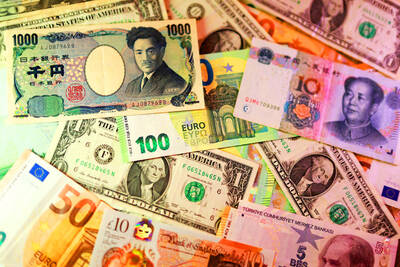
Taiwan’s foreign exchange reserves fell below the US$600 billion mark at the end of last month, with the central bank reporting a total of US$596.89 billion — a decline of US$8.6 billion from February — ending a three-month streak of increases. The central bank attributed the drop to a combination of factors such as outflows by foreign institutional investors, currency fluctuations and its own market interventions. “The large-scale outflows disrupted the balance of supply and demand in the foreign exchange market, prompting the central bank to intervene repeatedly by selling US dollars to stabilize the local currency,” Department of Foreign

Intel Corp is joining Elon Musk’s long-shot effort to develop semiconductors for Tesla Inc, Space Exploration Technologies Corp and xAI, marking a surprising twist in the chipmaker’s comeback bid. Intel would help the Terafab project “refactor” the technology in a chip factory, the company said on Tuesday in a post on X, Musk’s social media platform. That is a stage in the development process that typically helps make chips more powerful or reliable. The chipmaker’s shares jumped 4.2 percent to US$52.91 in New York trading on Tuesday. The Terafab project is a grand plan by Musk to eventually manufacture his own chips for
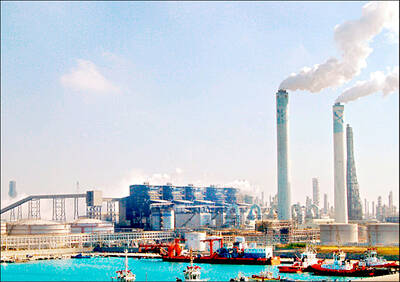
Taiwan Power Co (Taipower, 台電) yesterday said it plans to resume operations at two coal-fired power generators for three months to boost security of electricity supply as liquefied natural gas (LNG) supply risks are running high due to the Middle East conflict. The two coal-fired power generators are at Mailiao Power Plant in Yunlin County’s Mailiao Township (麥寮). The plant, operated by Formosa Plastics Group (台塑集團), supplied electricity to Taipower’s power grid until the end of last year. Taipower’s decision came about one month after Minister of Economic Affairs Kung Ming-hsin (龔明鑫) on March 10 said that the nation had no imminent

ENERGY ISSUES: The TSIA urged the government to increase natural gas and helium reserves to reduce the impact of the Middle East war on semiconductor supply stability Chip testing and packaging service provider ASE Technology Holding Co (日月光投控) yesterday said it planned to invest more than NT$100 billion (US$3.15 billion) in building a new advanced chip testing facility in Kaohsiung to keep up with customer demand driven by the artificial intelligence (AI) boom. That would be included in the company’s capital expenditure budget next year, ASE said. There is also room to raise this year’s capital spending budget from a record-high US$7 billion estimated three months ago, it added. ASE would have six factories under construction this year, another record-breaking number, ASE chief operating officer Tien Wu


 RSS
RSS