


Taiwan Semiconductor Manufacturing Co (TSMC, 台積電) is locked in an investment duel with Samsung Electronics Co to meet booming US demand for Apple Inc’s iPhone and other smartphones, benefiting electronics suppliers around the globe.
TSMC, the world’s biggest custom-chip maker, plans record spending on plants and equipment this year. It is spending US$12 billion on factories — more than Intel Corp has ever spent in one year — to counter investments that Samsung is making to win chip orders from Apple, Qualcomm Inc and its own handset division.
The spending is a boon for suppliers such as US firms Applied Materials Inc and Lam Research Corp and Dutch company ASML Holding NV, according to supply-chain data compiled by Bloomberg. Applied Materials, the largest maker of chip equipment, receives a third of its revenue from TSMC and Samsung. Globally, suppliers’ sales rose 19 percent last year to US$38 billion and might jump 15 percent this year, estimates from industry group SEMI show.
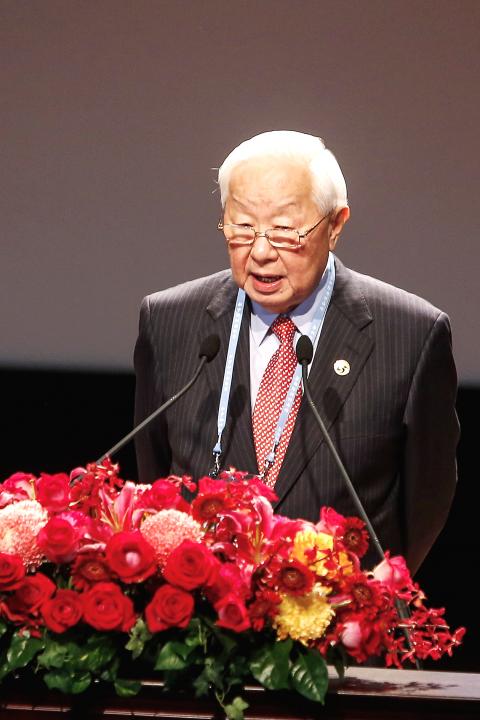
Photo: Bloomberg
The rush for smartphones, and the tools to make parts for them, is one reflection of economic growth prospects in the US — forecast to lead the G7 countries for the next two years — and in China, where even reduced estimates of 7 percent expansion is about five times that of the eurozone. For the fourth quarter of last year, Apple reported iPhone sales rose 46 percent to 74.5 million units, putting it just behind Samsung’s 75.1 million units, according to research firm International Data Corp (IDC).
“That’s the No. 1 thing that drives our business, and it’s the key competitive battleground for our customers,” Applied Materials chief executive officer Gary Dickerson said in an interview. “That battle is still playing itself out.”
To keep enticing consumers, new phones need more powerful and more power-efficient “brains.” That is where chipmakers come in, and why TSMC and Samsung are locked in an increasingly expensive battle to be first with new production technology.
By shrinking the circuit lines on semiconductors — measured in nanometers — manufacturers can improve chip capabilities or get more out of a production run. Modern plants cost more than US$5 billion to build and equip and are obsolete in five years or less, so they need to operate 24 hours a day.
The tables can turn quickly. Samsung had been the supplier of the most important chip in Apple’s iPhone since its debut in 1997. That changed in the iPhone 6 with Apple’s A8 chips, which are manufactured by TSMC.
Now the South Korean chipmaker is trying to leapfrog TSMC in production technology to win the next round. UBS AG estimates Samsung made US$3.7 billion in capital expenditures on its processor business alone last year and might raise that to US$4.9 billion this year. Samsung does not disclose such numbers, but executives on a Jan. 29 conference call confirmed they would boost spending this year.
“Samsung is in the lead because they’ve bet the farm on it,” IHS Corp analyst Len Jelinek said. “They’ve had to.”
Founded in 1987, TSMC forged a business model that lets chipmakers like Qualcomm and Broadcom Corp forgo expensive factories and outsource production of chips using their designs to facilities in Taiwan. Its annual revenue from the communications category more than doubled to US$14 billion in five years, now accounting for more than half of sales.
For the nation’s biggest company — which receives an average of US$8 in chip sales for every smartphone sold globally — keeping its factories equipped with the most advanced technology is important to compete with Samsung as well as other rivals including Globalfoundries Inc and Intel, which recently entered the business of making chips for other companies.
TSMC, Intel and Samsung’s processor businesses are set to account for about 60 percent of total spending on semiconductor equipment this year, according to Bloomberg calculations based on estimates from UBS and SEMI.
Applied Materials receives about 21 percent of its revenue from TSMC and 12 percent from Samsung, according to the supply-chain data compiled by Bloomberg. Lam Research, based in Fremont, California, gets about 37 percent of its sales from the two Asian companies.
Like Apple, other US companies buy from, rather than sell to, TSMC. The Taiwanese company’s biggest customer is Qualcomm, a San Diego-based designer of mobile-phone processors and modems that accounts for about 22 percent of TSMC’s revenue. Apple makes up about 8.2 percent, data show.
ASML Holding, based in the Netherlands, gets more than a third of its revenue from Samsung, with TSMC providing more than 8 percent. With Samsung and TSMC raising spending to add capacity, one of the two companies might be making bets that will not pay off.
While TSMC is boosting spending by as much 25 percent this year from US$9.5 billion last year, it is forecasting only a 5 percent rise in chip-industry sales and 12 percent for the custom foundry business. That suggests it intends to win market share.
“We don’t build capacity on speculation,” TSMC’s 83-year-old founder and chairman Morris Chang (張忠謀) told investors on Jan. 15, predicting his company would outgrow the broader foundry sector by a few percentage points this year. “We build capacity when we know that it’s already sold.”
Samsung expressed similar confidence on a conference call with investors, saying its investment slated for the second half “is already backed up by customers.”
The big budget announcements by TSMC and Samsung have not yet translated into a flood of orders for chip equipment. Applied Materials said orders from foundries fell in the three months ended on Jan. 25. The firn expects that pattern to reverse in the second half as the chipmakers work their way through the difficulties of shifting to more advanced production, Dickerson said.
While Apple is the main prize, Samsung’s phonemaking division, along with rivals like Lenovo and Xiaomi Corp (小米), are looking for better-performing parts themselves as they try to take on the iPhone.
“All of these guys are racing to be on the leading edge of technology with their phones,” Jelinek said. “TSMC are going to come forward and say we’re going to spend whatever it takes to win that next business. Right now they’re behind Samsung.”

KEEPING UP: The acquisition of a cleanroom in Taiwan would enable Micron to increase production in a market where demand continues to outpace supply, a Micron official said Micron Technology Inc has signed a letter of intent to buy a fabrication site in Taiwan from Powerchip Semiconductor Manufacturing Corp (力積電) for US$1.8 billion to expand its production of memory chips. Micron would take control of the P5 site in Miaoli County’s Tongluo Township (銅鑼) and plans to ramp up DRAM production in phases after the transaction closes in the second quarter, the company said in a statement on Saturday. The acquisition includes an existing 12 inch fab cleanroom of 27,871m2 and would further position Micron to address growing global demand for memory solutions, the company said. Micron expects the transaction to

Vincent Wei led fellow Singaporean farmers around an empty Malaysian plot, laying out plans for a greenhouse and rows of leafy vegetables. What he pitched was not just space for crops, but a lifeline for growers struggling to make ends meet in a city-state with high prices and little vacant land. The future agriculture hub is part of a joint special economic zone launched last year by the two neighbors, expected to cost US$123 million and produce 10,000 tonnes of fresh produce annually. It is attracting Singaporean farmers with promises of cheaper land, labor and energy just over the border.

US actor Matthew McConaughey has filed recordings of his image and voice with US patent authorities to protect them from unauthorized usage by artificial intelligence (AI) platforms, a representative said earlier this week. Several video clips and audio recordings were registered by the commercial arm of the Just Keep Livin’ Foundation, a non-profit created by the Oscar-winning actor and his wife, Camila, according to the US Patent and Trademark Office database. Many artists are increasingly concerned about the uncontrolled use of their image via generative AI since the rollout of ChatGPT and other AI-powered tools. Several US states have adopted

A proposed billionaires’ tax in California has ignited a political uproar in Silicon Valley, with tech titans threatening to leave the state while California Governor Gavin Newsom of the Democratic Party maneuvers to defeat a levy that he fears would lead to an exodus of wealth. A technology mecca, California has more billionaires than any other US state — a few hundred, by some estimates. About half its personal income tax revenue, a financial backbone in the nearly US$350 billion budget, comes from the top 1 percent of earners. A large healthcare union is attempting to place a proposal before


 RSS
RSS