


Inga Beale, the first female chief executive at the world’s largest insurance market, Lloyd’s of London, aims to raise the body’s penetration in the Asia-Pacific region on par with its GDP growth, as she sees a golden age for insurance and reinsurance.
Asia is the largest source of outward foreign direct investments and remains an attractive source of inward investment, suggesting business opportunity for insurance with complex risks, she said.
“GDP growth in this region has created new insurance markets for valuable assets that need protection and we are to raise our industry’s exposure in tandem with global GDP growth,” she said before joining the East Asian Insurance Congress in Taipei on Monday last week.
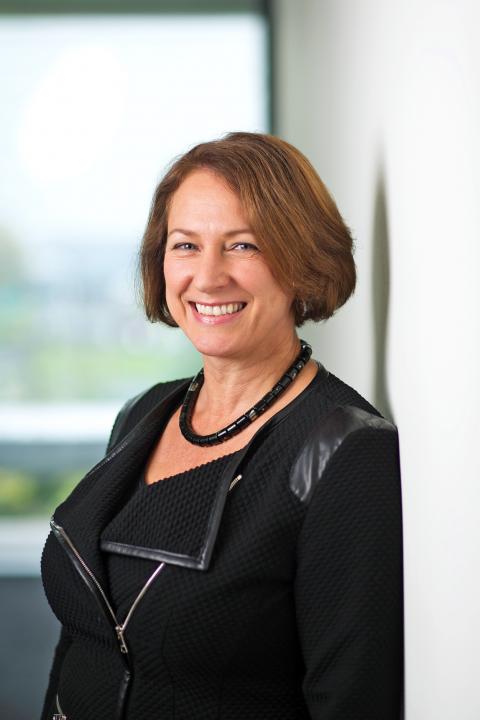
Photo: Bloomberg
Established 326 years ago, Lloyd’s has been a pioneer in insurance, underwriting some of the world’s first motor, aviation, space, energy and liability policies.
It remains a leading provider of customized and secure cover for all kinds of risk, from hurricanes and earthquakes to satellites and ships. In Taiwan, the market operates as a reinsurer with major local insurance companies.
Lloyd’s intends to underscore the need of insurance against business interruption, which made up a third of all claims after the Sept. 11, 2001, terrorist attacks in New York and Washington, she said.
Business interruption is a significant risk in Asia, given the high rate of natural catastrophes amid the region’s preponderance of globally significant manufacturing, Beale observed.
China’s Pearl River Delta, for instance, considered the world’s manufacturing base for high-tech electronics, machinery and chemicals, as well as clothes and toys, is highly vulnerable to rising sea levels, cyclones, flooding and storm surges caused by climate change, she said. The past year also witnessed how the destruction of factories in Vietnam halted production in clothing, furniture, toys and electronics on the part of Taiwanese firms, lending support for the need of reinsurance, she said.
UNDERINSURED
Another opportunity lies in penetration for natural catastrophe cover, though business leaders are underestimating the risks, Beale said, adding that Taiwan is prone to earthquakes and typhoons.
While Asia houses three of the five economies with the highest insurance penetration — Taiwan, Hong Kong and South Korea — the region is seriously underinsured in property and casualty (P&C) penetration.
Asia has borne almost half of the global economic costs of natural catastrophes over the past 20 years, but just 7.6 percent of its economic costs were insured last year, compared with 67 percent in the US, she said, citing the Asian Development Bank.
Lloyd’s sees a global insurance gap of US$168 billion in premiums needed to protect economies against catastrophe exposures, she said.
ANTICIPATED CHALLENGES
Beale is not naive to challenges down the road.
The chief executive appreciates a natural desire by policymakers to keep premiums in local markets, but argued that the point of reinsurance is to transfer out risks. Lloyd’s also needs to overcome the pricing issue and a shortage of talent to grow business in line with GDP growth, Beale added.
The low interest rate environment is driving capital to the insurance market, while constraining its yielding ability, she said.
Lloyd’s has guided underwriters and brokers to think hard on prudence and discipline and to make sure that pricing reflects risks.
“Prudence and growth are two sides of the same coin. We cannot achieve sustainably growing businesses without prudence,” she said.
A shortage of insurance talent poses a threat to the industry across the globe and is particularly evident in the US and Europe, Beale said.
TALENT SHORTAGE
The average age of a US insurance agent is 59, meaning that by 2018, 25 percent of the US insurance industry’s workforce is due to retire, she said, adding that up until last year, actuaries were on the UK government list of shortage occupations.
Surveys show many college graduates worldwide do not want to work in insurance because of its public image, Beale said.
Lloyd’s has not done enough to reverse the impression, she added.
In the future, Lloyd’s will work harder to advertise the benefits of the profession — one that adds real value to the ability of economies to withstand disaster, she said.

Cairo’s new monorail slices across the city skyline, running above the familiar chaos of blaring horns and aging buses’ exhaust fumes that mark rush hour below. The US$4.5 billion monorail, opened this month, is among Egypt’s most prominent new transport projects, part of a debt-funded infrastructure drive criticized for sapping state finances while bringing limited benefits to most of the country’s 109 million people. “It feels like you’re in a different country,” said Ramy Sayed, a restaurant manager, aboard a driverless Innovia 300 train. “No noise, no traffic, we’re not used to this.” The eastern line runs 56km from the bustling middle-class
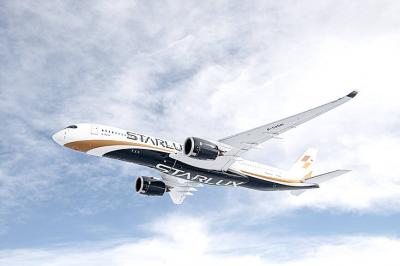
Starlux Airlines Co (星宇航空) today unveiled a long-haul network expansion plan at a shareholders’ meeting in Taipei, including direct flights to Barcelona, Spain, and Zurich, Switzerland, as well as a service connecting Taipei, Sydney and New Zealand. Starlux is to become the first Taiwanese carrier to offer non-stop services to the two European cities, while the inaugural oceanic route is expected to expand transit opportunities within the Australia-New Zealand market, Starlux said. Flight services to Chicago, Dallas, Washington and New York are under evaluation, the airline added. Prior to the shareholders’ meeting, the airline earlier this year announced that it would be

Taiwanese firms have increased investment in the Philippines in recent years as Manila’s ties with Washington deepen and global supply chains continue to shift away from China, an expert at the Chung-Hua Institution for Economic Research (CIER, 中華經濟研究院) said yesterday. The Philippines had not been among Taiwanese investors’ top choices in Southeast Asia, CIER Taiwan ASEAN Studies Center director Kristy Hsu (徐遵慈) said at a seminar in Taipei. However, Taiwan’s investment in the country has grown significantly since the COVID-19 pandemic, reaching US $257 million last year, a high in recent years, she said. Although Taiwan’s total investment in the Philippines still lags

Intel Corp regards Taiwan Semiconductor Manufacturing Co (TSMC, 台積電) as a longstanding partner, as the US chipmaker would continue outsourcing production of advanced chips to TSMC, Intel chief executive officer Lip-Bu Tan (陳立武) said yesterday. “I don’t look at people as competitors. I look at the collaboration... Nvidia is also, you know, a good friend,” Tan told a news conference following his keynote speech at the Computex trade show in Taipei. “It’s a very trusted partnership for us... We are a big, top customer for them, and we’re going to continue doing that,” he said, referring to TSMC, the world’s largest foundry


 RSS
RSS