


The EU and Ukraine on Friday agreed to delay the implementation of their free-trade pact until the end of next year in a concession to Russia, which had complained its industry would be hurt by the deal.
Russia and the West are bitterly at odds over Ukraine, and the EU and the US both imposed new sanctions against Moscow on Friday over what they say is its military backing for separatist rebels in the east of the country.
Russia, which denies involvement, said it would consider retaliating.
However, postponing the entry into the trade deal helps address one of the issues at the heart of the crisis.
Russia had threatened to slap import tariffs on Ukrainian goods from Nov. 1, arguing that the pact would squeeze it out of the Ukrainian market and provide a route for EU goods to flood into Russia.
The delay provides “breathing space to discuss whatever problems may arise, and then it will be up to the three parties concerned to see what they do after Jan. 1, 2016,” EU Trade Commissioner Karel De Gucht told a news conference.
“I hope by then we come to a solution,” De Gucht said after talks in Brussels with Russian Economy Minister Alexei Ulyukayev and Ukrainian Minister of Foreign Affairs Pavlo Klimkin.
Ukraine will continue to enjoy privileged access to the EU market until that date, but, in a concession by Brussels, it will not have to cut duties on imports from the EU in return, he said.
Kiev had been concerned that allowing EU products more cheaply onto its market could undercut local goods, creating more problems for its weak economy.
The European and Ukrainian parliaments are expected to go ahead with ratification next week of the ambitious political and trade agreement that has been at the heart of months of upheaval in Ukraine.
Klimkin welcomed the agreement, saying: “We are very grateful to the European Union for the unique proposal of one-sided access to the European market.”
“It will allow our traders to very effectively prepare themselves for further trade liberalization,” Klimkin added.

Taiwanese firms have increased investment in the Philippines in recent years as Manila’s ties with Washington deepen and global supply chains continue to shift away from China, an expert at the Chung-Hua Institution for Economic Research (CIER, 中華經濟研究院) said yesterday. The Philippines had not been among Taiwanese investors’ top choices in Southeast Asia, CIER Taiwan ASEAN Studies Center director Kristy Hsu (徐遵慈) said at a seminar in Taipei. However, Taiwan’s investment in the country has grown significantly since the COVID-19 pandemic, reaching US $257 million last year, a high in recent years, she said. Although Taiwan’s total investment in the Philippines still lags
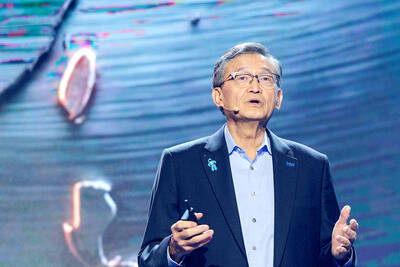
Intel Corp regards Taiwan Semiconductor Manufacturing Co (TSMC, 台積電) as a longstanding partner, as the US chipmaker would continue outsourcing production of advanced chips to TSMC, Intel chief executive officer Lip-Bu Tan (陳立武) said yesterday. “I don’t look at people as competitors. I look at the collaboration... Nvidia is also, you know, a good friend,” Tan told a news conference following his keynote speech at the Computex trade show in Taipei. “It’s a very trusted partnership for us... We are a big, top customer for them, and we’re going to continue doing that,” he said, referring to TSMC, the world’s largest foundry

Artificial intelligence (AI) agents would supplant smartphones as the center of people’s digital lives, fundamentally reshaping personal devices and driving a major computing upgrade cycle, Qualcomm Inc CEO Cristiano Amon said yesterday. In his keynote speech for this year’s Computex trade show in Taipei, Amon said that the rise of "agentic AI" — AI systems capable of reasoning, planning and carrying out tasks autonomously — would transform how people interact with technology across phones, PCs, vehicles and wearable devices. Describing the technology as the next major evolution in computing, Amon said that "2026 is the year of agents.” For decades, smartphones have sat
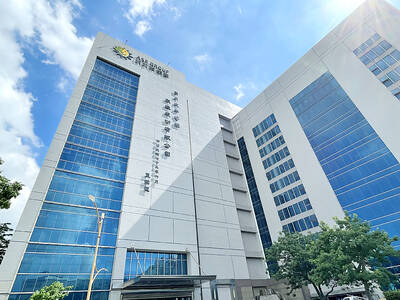
The average pay to employees by ASE Technology Holding Co (日月光投控) was the highest among the companies listed on the local main board last year, while contract chipmaker Taiwan Semiconductor Manufacturing Co (TSMC, 台積電) ranked seventh, the Taiwan Stock Exchange (TWSE) said on Monday. Data compiled by the exchange showed ASE Technology, the world’s largest chip packaging and testing services provider, paid its employees an average of NT$6.28 million (US$199,746) last year, up 40 percent from a year earlier. TSMC, the world’s largest contract chipmaker and the most profitable company in Taiwan, paid its employees NT$4.09 million on average, up


 RSS
RSS