


Thailand has dodged recession as its economy grew 0.9 percent in the second quarter, data showed yesterday, after the military ended months of political deadlock with a coup and promised to unshackle state spending.
From April to June the economy grew 0.9 percent after shrinking a revised 1.9 percent in the first quarter, Thailand’s National Economic and Social Development Board said.
The junta, led by Royal Thai Army Commander-in-Chief General Prayuth Chan-ocha has pegged its legitimacy on improving the economy after months of political protests paralyzed government spending, scared off tourists and battered consumer spending.

Photo: Bloomberg
Since seizing power on May 22, Prayuth has opened Thailand’s state coffers — kick-starting stalled investment projects and paying debts to rice farmers to help spur agriculture.
On a year-on-year basis, the economy grew 0.4 percent after contracting by 0.6 percent in the previous quarter, the board said.
Despite the positive momentum, the board cut its growth outlook for this year, forecasting 1.5 to 2 percent expansion, down from a previous estimate of 1.5 to 2.5 percent.
The board said the political turmoil of the first five months of this year would likely cause the economy to “perform below its potential” over the full year, with tourism numbers and car sales still disappointing.
The lucrative tourism sector was hammered by the protests and subsequent military takeover, with visitor numbers down just over 12 percent year-on-year.
However, Thai tourism officials have been at pains to reassure visitors that the country is safe, despite the retention of tough martial laws across the kingdom.
Yesterday, an army-appointed National Legislative Assembly began the process of agreeing a budget for next year, raising hopes it would free up more government spending.
Analysts expect domestic demand to creep back as the junta’s policies kick in.
“Growth prospects have brightened since the military takeover, which reduced political uncertainties and restored relative peace to the country,” Capital Economics analysts said in a briefing note.
“Nonetheless, the economy continues to face several headwinds, such as high household debt burdens. As such, growth is unlikely to return to its trend rate anytime soon,” the note said.
The kingdom had enjoyed a reputation as “Teflon Thailand” for its enviable record of economic resilience in the face of the last eight years of political upheaval as well as devastating floods in 2011.
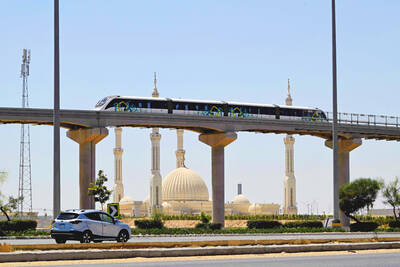
Cairo’s new monorail slices across the city skyline, running above the familiar chaos of blaring horns and aging buses’ exhaust fumes that mark rush hour below. The US$4.5 billion monorail, opened this month, is among Egypt’s most prominent new transport projects, part of a debt-funded infrastructure drive criticized for sapping state finances while bringing limited benefits to most of the country’s 109 million people. “It feels like you’re in a different country,” said Ramy Sayed, a restaurant manager, aboard a driverless Innovia 300 train. “No noise, no traffic, we’re not used to this.” The eastern line runs 56km from the bustling middle-class

Taiwanese firms have increased investment in the Philippines in recent years as Manila’s ties with Washington deepen and global supply chains continue to shift away from China, an expert at the Chung-Hua Institution for Economic Research (CIER, 中華經濟研究院) said yesterday. The Philippines had not been among Taiwanese investors’ top choices in Southeast Asia, CIER Taiwan ASEAN Studies Center director Kristy Hsu (徐遵慈) said at a seminar in Taipei. However, Taiwan’s investment in the country has grown significantly since the COVID-19 pandemic, reaching US $257 million last year, a high in recent years, she said. Although Taiwan’s total investment in the Philippines still lags
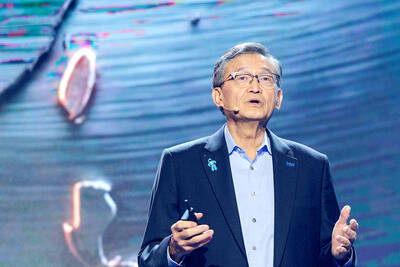
Intel Corp regards Taiwan Semiconductor Manufacturing Co (TSMC, 台積電) as a longstanding partner, as the US chipmaker would continue outsourcing production of advanced chips to TSMC, Intel chief executive officer Lip-Bu Tan (陳立武) said yesterday. “I don’t look at people as competitors. I look at the collaboration... Nvidia is also, you know, a good friend,” Tan told a news conference following his keynote speech at the Computex trade show in Taipei. “It’s a very trusted partnership for us... We are a big, top customer for them, and we’re going to continue doing that,” he said, referring to TSMC, the world’s largest foundry

Artificial intelligence (AI) agents would supplant smartphones as the center of people’s digital lives, fundamentally reshaping personal devices and driving a major computing upgrade cycle, Qualcomm Inc CEO Cristiano Amon said yesterday. In his keynote speech for this year’s Computex trade show in Taipei, Amon said that the rise of "agentic AI" — AI systems capable of reasoning, planning and carrying out tasks autonomously — would transform how people interact with technology across phones, PCs, vehicles and wearable devices. Describing the technology as the next major evolution in computing, Amon said that "2026 is the year of agents.” For decades, smartphones have sat


 RSS
RSS