


Cathay Financial Holding Co (國泰金控), Taiwan’s largest financial service provider by assets, yesterday said its embedded value had increased to NT$55 per share as of the end of December last year, from NT$53 a year earlier, on the back of unrealized property gains.
The conglomerate’s net worth increased 33.05 percent last year to NT$379.5 billion (US$12.61 billion) in December, and grew further to NT$394.8 billion last quarter, the company said.
Unrealized property gains contributed NT$124 billion in net worth last year, a net increase of more than NT$94.3 billion to the conglomerate, said Lin Chao-ting (林昭廷), an executive vice president at Cathay Life Insurance Co (國泰人壽), the group’s main subsidiary.
Cathay Life owns more than 200 landmark buildings in prime locations across Taiwan, making the insurer the biggest beneficiary of accounting rule changes that allow firms to book property values based on market rates instead of purchase costs.
The net worth increase helped lift Cathay Financial shares to end up 4.85 percent at NT$44.35 yesterday, stronger than the TAIEX’s 0.47 percent advance and the financial sector’s 1.77 percent rally, Taiwan Stock Exchange data showed.
Following the reappraisal, Cathay Life had an embedded value of NT$635 billion last year, or NT$119.7 per share, while the assessed value rose from NT$1.0 trillion to NT$1.09 trillion, company data indicated.
Cathay Life remains interested in real-estate investment, which made up 10.6 percent of its portfolio as of the end of last quarter, Lin said.
“We have found targets [whole office buildings] in London and Tokyo and will speed up transactions to boost overall rental income,” Lin said, as property investment at home grows increasingly difficult due to tightened yield requirements.
Cathay Financial president Lee Chang-ken (李長庚) voiced reservations about the Financial Supervisory Commission’s plan to ban insurers from voting in the board elections of companies in which they have capital investment.
The restriction is intended to prevent life insurers from growing into gigantic holding firms aided by customers’ money.
The ban is both unfair and unhealthy since foreign funds — including Chinese capital — can exercise their right to vote, Lee said.
The practice would give foreign funds easier and bigger influence over local firms, he said.
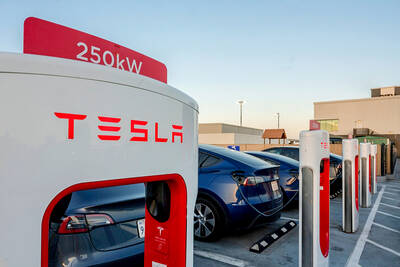
NEW IMPORTS: Car dealer PG Union Corp said it would consider introducing US-made models such as the Jeep Grand Cherokee and Stellantis’ RAM 1500 to Taiwan Tesla Taiwan yesterday said that it does not plan to cut its car prices in the wake of Washington and Taipei signing the Agreement on Reciprocal Trade on Thursday to eliminate tariffs on US-made cars. On the other hand, Mercedes-Benz Taiwan said it is planning to lower the price of its five models imported from the US after the zero tariff comes into effect. Tesla in a statement said it has no plan to adjust the prices of the US-made Model 3, Model S and Model X as tariffs are not the only factor the automaker uses to determine pricing policies. Tesla said
OpenAI has warned US lawmakers that its Chinese rival DeepSeek (深度求索) is using unfair and increasingly sophisticated methods to extract results from leading US artificial intelligence (AI) models to train the next generation of its breakthrough R1 chatbot, a memo reviewed by Bloomberg News showed. In the memo, sent on Thursday to the US House of Representatives Select Committee on China, OpenAI said that DeepSeek had used so-called distillation techniques as part of “ongoing efforts to free-ride on the capabilities developed by OpenAI and other US frontier labs.” The company said it had detected “new, obfuscated methods” designed to evade OpenAI’s defenses
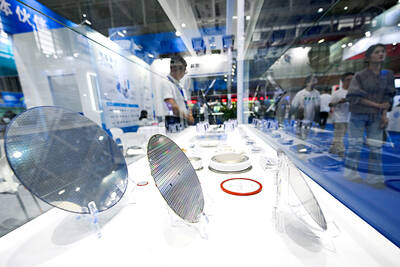
China’s top chipmaker has warned that breakaway spending on artificial intelligence (AI) chips is bringing forward years of future demand, raising the risk that some data centers could sit idle. “Companies would love to build 10 years’ worth of data center capacity within one or two years,” Semiconductor Manufacturing International Corp (SMIC, 中芯) cochief executive officer Zhao Haijun (趙海軍) said yesterday on a call with analysts. “As for what exactly these data centers will do, that hasn’t been fully thought through.” Moody’s Ratings projects that AI-related infrastructure investment would exceed US$3 trillion over the next five years, as developers pour eye-watering sums
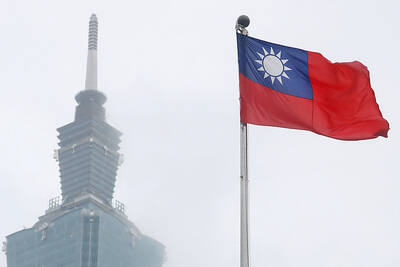
Bank of America Corp nearly doubled its forecast for the nation’s economic growth this year, adding to a slew of upgrades even after a rip-roaring last year propelled by demand for artificial intelligence (AI). The firm lifted its projection to 8 percent from 4.5 percent on “relentless global demand” for the hardware that Taiwanese companies make, according to a note dated yesterday by analysts including Xiaoqing Pi (皮曉青). Taiwan’s GDP expanded 8.63 percent last year, the fastest pace since 2010. The increase “reflects our sustained optimism over Taiwan’s technology driven expansion and is reinforced by several recent developments,” including a more stable currency,


 RSS
RSS