


Existing home sales are likely to shrink slightly next quarter compared with this quarter as the mismatch between supply and demand continues to widen, especially for high-end units, Evertrust Rehouse Co (永慶房屋), the nation’s largest broker by number of offices, said yesterday.
Houses for sale have increased by between 4 percent and 52 percent in major cities so far this year as investors seek to cash out, but many have yet to find buyers, Evertrust general manager Yeh Ling-chi (葉凌棋) told a media briefing.
Nearly 50 percent of respondents to a survey by the company said they plan to sell their homes within the next six months, up from 46 percent three months earlier, the quarterly survey indicated.
A separate poll by Cathay Financial Holding Co (國泰金控) arrived at similar findings, with 46.3 percent intent on selling, while 76.9 percent said now is not a good time to buy a home.
“The figures lend support to our observation over the past two years that affordable housing will dominate the market, while demand for luxury homes will shrink,” Yeh said.
Affordability translates into different price ranges in different parts of the nation, the survey said.
Houses for sale in Taipei rose by 4 percent this year, with those priced at NT$15 million (US$492,800) or lower in shortage, while those with price tags of NT$30 million or higher have difficulty finding buyers, according to the survey.
About 12.5 percent of houses for sale have asking prices of NT$60 million or more in the capital, but they accounted for only 4 percent of closed deals, Yeh said.
In New Taipei City, affordable homes are those priced at NT$9 million or lower, and houses priced at about NT$15 million are likely to remain on the market for a protracted period, Yeh said.
The affordable threshold is NT$7 million in Taoyuan County, where houses for sale rose 49 percent this year, making them vulnerable to price corrections, Yeh said.
Houses for sale in Greater Taichung increased the fastest by 52 percent this year, with homes priced NT$7 million or lower in great demand, while for those selling for more than NT$9 million, there is little demand, the survey found.
In Greater Kaohsiung, affordable houses are those priced around NT$4 million, while those selling for NT$7 million or more are in oversupply, the survey showed.
“The figures suggest a huge gap between housing prices across Taiwan, with homes in Taipei on average costing four times more than those in Kaohsiung,” Yeh said.
Chuang Meng-han (莊孟翰), a professor of industrial economics at Tamkang University, said house prices in areas with large supply are likely to fall if transactions remain sluggish.
Houses for sale increased by 34 percent in Greater Kaohsiung and by 43 percent in Greater Tainan this year, from their year-ago levels, the survey showed.


Taiwanese firms have increased investment in the Philippines in recent years as Manila’s ties with Washington deepen and global supply chains continue to shift away from China, an expert at the Chung-Hua Institution for Economic Research (CIER, 中華經濟研究院) said yesterday. The Philippines had not been among Taiwanese investors’ top choices in Southeast Asia, CIER Taiwan ASEAN Studies Center director Kristy Hsu (徐遵慈) said at a seminar in Taipei. However, Taiwan’s investment in the country has grown significantly since the COVID-19 pandemic, reaching US $257 million last year, a high in recent years, she said. Although Taiwan’s total investment in the Philippines still lags
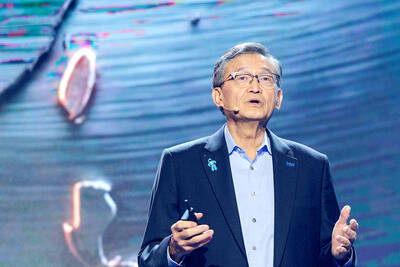
Intel Corp regards Taiwan Semiconductor Manufacturing Co (TSMC, 台積電) as a longstanding partner, as the US chipmaker would continue outsourcing production of advanced chips to TSMC, Intel chief executive officer Lip-Bu Tan (陳立武) said yesterday. “I don’t look at people as competitors. I look at the collaboration... Nvidia is also, you know, a good friend,” Tan told a news conference following his keynote speech at the Computex trade show in Taipei. “It’s a very trusted partnership for us... We are a big, top customer for them, and we’re going to continue doing that,” he said, referring to TSMC, the world’s largest foundry

Hon Hai Precision Industry Co (鴻海精密) yesterday said it would work with US chipmaker Intel Corp to jointly develop and deploy next-generation artificial intelligence (AI) infrastructure and intelligent computing platforms in a move to capture booming demand for AI computing systems. Hon Hai, also known as Foxconn Technology Group (富士康), said in a statement that the partnership would combine its global manufacturing scale, system integration expertise and AI data center deployment capabilities with Intel’s strengths in processor architecture, silicon technologies and software ecosystem. The companies said they plan to work on equipment used in AI data centers, including server racks powered by

Artificial intelligence (AI) agents would supplant smartphones as the center of people’s digital lives, fundamentally reshaping personal devices and driving a major computing upgrade cycle, Qualcomm Inc CEO Cristiano Amon said yesterday. In his keynote speech for this year’s Computex trade show in Taipei, Amon said that the rise of "agentic AI" — AI systems capable of reasoning, planning and carrying out tasks autonomously — would transform how people interact with technology across phones, PCs, vehicles and wearable devices. Describing the technology as the next major evolution in computing, Amon said that "2026 is the year of agents.” For decades, smartphones have sat


 RSS
RSS