


Global electronics companies are set to showcase a wide selection of new tablets, touch-enabled notebooks and all-in-one computers running Microsoft Corp’s Windows 8 during the annual Computex PC show in Taipei this week, one of the show’s organizers, the Taiwan External Trade Development Council (TAITRA, 外貿協會), said yesterday.
Windows 8-based PC products, including tablets, notebooks and desktops, are set to account for about one-third of new PC products on display at the fair, while another third are running Google Inc’s Android operating system, TAITRA exhibition department manager Thomas Huang (黃漢唐) said by telephone.
“Taiwanse notebook makers such as Acer Inc (宏碁) and Asustek Computer Inc (華碩) have regained confidence in Microsoft over the past few months after the Windows operating system developer vowed to make a greater effort to market its new platform this year,” Huang said.
Huang said that Asustek plans to launch a new convertible Windows 8-powered notebook called Taichi at the show, while Acer is set to display a touch-enabled and convertible ultrabook running the Microsoft system.
Both Acer and Asustek chose to unveil their latest products today, a day ahead of the start of the trade show. The two Taiwanese notebook makers have rented more than 50 booths at Computex to showcase their product lineups, making them the largest exhibitors at the fair this year.
In addition, top executives from technology giants such as Microsoft, Intel Corp, Qualcomm Inc and ARM Holdings PLC are to attend the fair and deliver speeches at forums, Huang said.
Microsoft last week said sales and marketing division vice president Nick Parker and chief marketing and financial officer Tami Reller will jointly present the company’s plans to roll out Windows 8.1, an updated version of its Windows 8 operating system, during Computex.
“Microsoft chose to give the PC industry in Taiwan more insight into its Windows 8.1 operating system to strengthen its relation with Taiwanese PC original-equipment manufacturers [OEMs], after many companies embraced Google’s free Android operating system to develop tablets and smartphones,” Huang said.
Huang told the Taipei Times that Microsoft has lowered its commission fee on PC manufacturers “by a substantial percentage” to enable them to lower the prices of Windows 8-based notebooks as they seek to compete with Apple Inc’s higher-priced Macbook series.
“Taiwanese PC OEMs are important partners to Microsoft. Microsoft has become more friendly toward and been more willing to negotiate with PC hardware manufacturers over the past few months,” Huang said, citing Computex exhibitors’ comments in discussions with TAITRA.
“Microsoft’s sales of its Surface tablet were not as strong as it expected. So, it’s a good sign to see the US firm reviewing its strategies and making changes,” Huang added.
According to TAITRA, the five-day fair is expected to attract 38,000 international buyers who could place up to US$25 billion worth of orders with the 1,724 exhibitors.
Forums addressing topics related to cloud-computing technologies, services and applications on mobile platforms will also be held during the trade show, TAITRA said.
This year’s edition of Computex, the world’s second-largest PC trade show, will run from tomorrow through Saturday. It will be held at the Taipei World Trade Center’s Nangang Exhibition Hall, Exhibition Halls 1 and 3, and the Taipei International Convention Center.
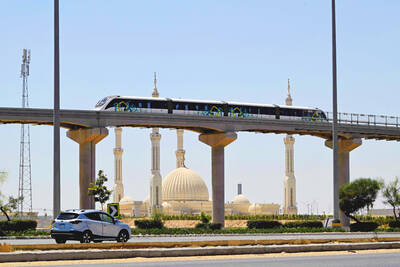
Cairo’s new monorail slices across the city skyline, running above the familiar chaos of blaring horns and aging buses’ exhaust fumes that mark rush hour below. The US$4.5 billion monorail, opened this month, is among Egypt’s most prominent new transport projects, part of a debt-funded infrastructure drive criticized for sapping state finances while bringing limited benefits to most of the country’s 109 million people. “It feels like you’re in a different country,” said Ramy Sayed, a restaurant manager, aboard a driverless Innovia 300 train. “No noise, no traffic, we’re not used to this.” The eastern line runs 56km from the bustling middle-class
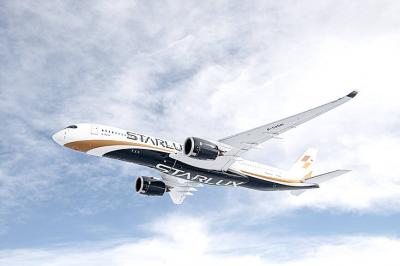
Starlux Airlines Co (星宇航空) today unveiled a long-haul network expansion plan at a shareholders’ meeting in Taipei, including direct flights to Barcelona, Spain, and Zurich, Switzerland, as well as a service connecting Taipei, Sydney and New Zealand. Starlux is to become the first Taiwanese carrier to offer non-stop services to the two European cities, while the inaugural oceanic route is expected to expand transit opportunities within the Australia-New Zealand market, Starlux said. Flight services to Chicago, Dallas, Washington and New York are under evaluation, the airline added. Prior to the shareholders’ meeting, the airline earlier this year announced that it would be
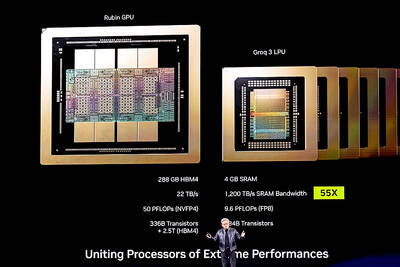
Taiwanese prosecutors suspect that three people successfully smuggled at least one shipment of Nvidia Corp artificial intelligence (AI) chips to China after first exporting them to Japan, people familiar with the matter said. The trio was detained last week by the Keelung District Prosecutors’ Office for allegedly falsifying documents related to exports of Super Micro Computer Inc servers containing advanced Nvidia chips, which the US has barred from sale to China without a license from Washington. The move marked Taiwan’s first public crackdown on AI chip diversion after years of pressure from the US to take a more active role in curtailing
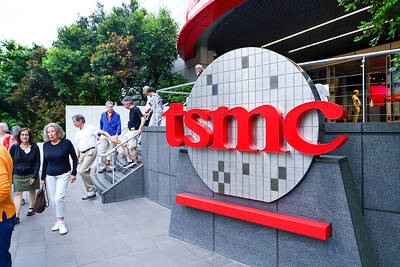
Taiwan Semiconductor Manufacturing Co (TSMC, 台積電) employee bonuses are likely to grow more than 30 percent this year, in line with the past few years as the company’s profits continue to set new records, an anonymous source cited TSMC chairman C.C. Wei (魏哲家) as saying yesterday. TSMC, the world’s largest contract chipmaker, is committed to taking care of its workers, the source said, citing Wei’s meeting with employees yesterday morning. Wei also expressed gratitude to employees for their contribution to the company’s improving bottom line, the source added. Since 2023, TSMC’s employee bonuses have grown at an annual rate of


 RSS
RSS