


From factory fires to slave labor, the growth of mass manufacturing in Southeast Asia has not been problem-free, but after shedding its sweatshop reputation, the region could have lessons for Bangladesh.
Last week’s building collapse near Bangladesh’s capital, Dhaka, that left 550 dead or missing has unleashed global concern about conditions in the factories that produce fast fashion — cheap, catwalk-inspired clothes — for top global brands.
Amid talk of consumer boycotts, Bangladesh needs to reform its industry before fashionistas wonder “if they should be wearing bloodstained dresses,” Kalpona Akter of the Bangladesh Center for Worker Solidarity told reporter.
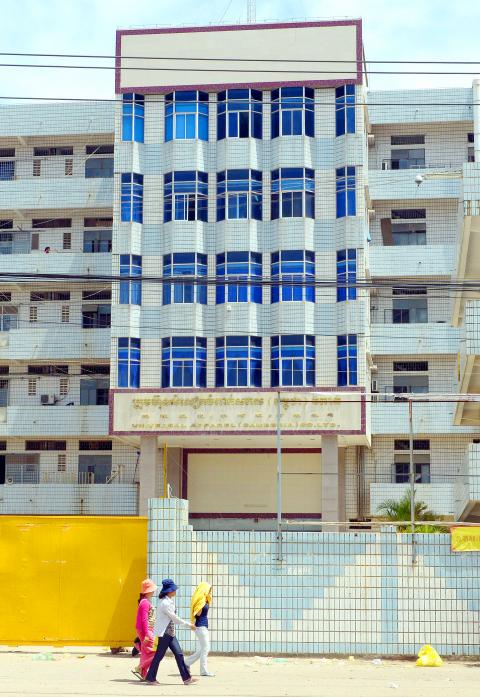
Photo: AFP
Communist Vietnam — which produces clothes for fashion industry giants Zara, Mango and H&M — shows it is possible to have strong labor laws, fair wages and a healthy garment industry, experts say.
“It is not a race to the bottom here,” Tara Rangarajan, program manager of the International Labour Organization’s Better Work project in Vietnam, told reporters.
“Sweatshops are part of a short-term, immediate payback, low-cost strategy. [Vietnam wants to] be competitive in the long term on something besides just cheap labor” so it is trying to enforce and improve its laws, she added.
Buyers are attracted to Vietnam — where wages are about three times higher than Bangladesh — if “they have reputations they are trying to maintain,” she added.
Conditions in factories have improved over the last decade and workers say they are now treated with more respect by employers eager to retain trained staff and receive perks such as free accommodation and meals.
“When I started work, the salary was US$40 a month, now a good worker can earn US$350 to US$400 a month,” Nguyen Huu Linh, who has worked in a Vietnamese luggage factory for 18 years, told reporters.
“Technology has helped — we used to do so much manually, but now we have machines,” added 36-year-old Linh, who started on the factory floor and is now a line manager at the Saigon Luggage Company.
Garment exports — US$3.1 billion in the first quarter of the year — were up 18.3 percent year-on-year. The Vietnamese government’s “No. 1 priority” is boosting technology, Vietnamese legal expert Nguyen Dinh Huan told reporters.
In contrast, Bangladesh has “specialized in low-cost production” and embraced the sweatshop model rather than investing in technology and upgrading, said Nayla Ajaltouni, coordinator of the campaign group Collectif Ethique sur L’etiquette.
“The industry has grown very quickly, [which] is why we’re seeing this concentration of chronic health and safety issues,” she said.
Outrage over the building collapse could prove a turning point, she said. Minimum wages were increased in Bangladesh in 2011 “not for philanthropic reasons, but because protests were starting to disturb the supply chain.”
“It is a bit cynical, but this disaster is also a critical point where brands can be pushed to move forward by the media, by citizens,” she added.
In Thailand, standards in factories improved significantly after a fire at a toy factory killed 188 people in 1993, although activists say conditions particularly in smaller factories can still be problematic.
In Cambodia, where the garment industry developed in the 1990s, avoiding the “sweatshop” label was a conscious strategy, with the country embracing an International Labour Organization’s Better Factories program — which union leaders say has only been minimally effective.
However, Exporters Association of Bangladesh president Abdus Salam Murshedy said that Bangladesh “already has world-class factories ... some buyers just avoid placing orders there to maximize their profits.”
The trouble is, “consumers are never really presented [with] the real relationship between cheap clothes and labor abuses and health and safety standards, because of marketing, branding,” said Anne Elizabeth Moore, an award-winning author.
“Buyers really aren’t motivated to care about labor issues unless they’re going for the altruism dollar, which is a long shot,” Moore, who has written extensively on the global garment industry, told media.
The recent accident in Bangladesh “is pressuring all companies, whether they were in that building or not, to tighten their supply chain — which is good,” said one Hong Kong-based manager with a global fashion brand who spoke on condition of anonymity.
“But ultimately buyers cannot go in and change the system in Bangladesh. [The government] needs to take responsibility,” the manager said, adding that unlike Vietnam, Dhaka neither imposes a standard annual minimum wage increase nor allows garment workers to unionize.
Unless standards improve, Dhaka should realize that its cash-cow industry — which accounts for about 80 percent of export earnings — is at risk, she said.
“A lot of buyers are looking into Myanmar, Kenya, Ethiopia. They don’t see Bangladesh as a long-term hub anymore ... there are too many problems,” she added.
Shares of contract chipmaker Taiwan Semiconductor Manufacturing Co (TSMC, 台積電) came under pressure yesterday after a report that Apple Inc is looking to shift some orders from the Taiwanese company to Intel Corp. TSMC shares fell NT$55, or 2.4 percent, to close at NT$2,235 on the local main board, Taiwan Stock Exchange data showed. Despite the losses, TSMC is expected to continue to benefit from sound fundamentals, as it maintains a lead over its peers in high-end process development, analysts said. “The selling was a knee-jerk reaction to an Intel-Apple report over the weekend,” Mega International Investment Services Corp (兆豐國際投顧) analyst Alex Huang
Taiwan Semiconductor Manufacturing Co (TSMC, 台積電) is expected to remain Apple Inc’s primary chip manufacturing partner despite reports that Apple could shift some orders to Intel Corp, industry experts said yesterday. The comments came after The Wall Street Journal reported on Friday that Apple and Intel had reached a preliminary agreement following more than a year of negotiations for Intel to manufacture some chips for Apple devices. Taiwan Institute of Economic Research (台灣經濟研究院) economist Arisa Liu (劉佩真) said TSMC’s advanced packaging technologies, including integrated fan-out and chip-on-wafer-on-substrate, remain critical to the performance of Apple’s A-series and M-series chips. She said Intel and Samsung
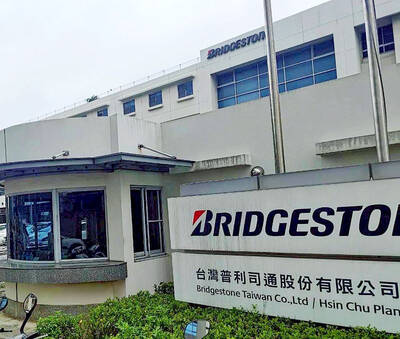
TRANSITION: With the closure, the company would reorganize its Taiwanese unit to a sales and service-focused model, Bridgestone said Bridgestone Corp yesterday announced it would cease manufacturing operations at its tire plant in Hsinchu County’s Hukou Township (湖口), affecting more than 500 workers. Bridgestone Taiwan Co (台灣普利司通) said in a statement that the decision was based on the Tokyo-based tire maker’s adjustments to its global operational strategy and long-term market development considerations. The Taiwanese unit would be reorganized as part of the closure, effective yesterday, and all related production activities would be concluded, the statement said. Under the plan, Bridgestone would continue to deepen its presence in the Taiwanese market, while transitioning to a sales and service-focused business model, it added. The Hsinchu
Taiwan Semiconductor Manufacturing Co (TSMC, 台積電) has approved a capital budget of US$31.28 billion for production expansion to meet long-term development needs during the artificial intelligence (AI) boom. The company’s board meeting yesterday approved the capital appropriation plan for purposes such as the installation of advanced technology capacity and fab construction, the world’s largest contract chipmaker said in a statement. At an earnings conference last month, TSMC forecast that its capital expenditure for this year would be at the higher end of the US$52 billion to US$56 billion range it forecast in January in response to robust demand for 5G, AI and


 RSS
RSS