


Taiwanese firms are not pulling out of China despite rising labor costs, but are moving from coastal to inland areas as they shift their investment focus from manufacturing to services, DBS Bank said in a report.
The report contradicted the popular belief that Taiwanese companies are relocating to South Asia to cut labor costs or moving home as the government is beckoning.
“We don’t see an exodus of Taiwanese firms from China though production costs have risen significantly in recent years,” DBS economist Ma Tieying (馬鐵英) said in the report.
From 2007 to last year, Taiwan’s foreign direct investment (FDI) in China gained 5.1 percent — although the total value slipped in 2011 and last year from the peak in 2010, Ma said.
The recent decline in Taiwanese FDI occurred mostly in China’s coastal areas — with investment in Guangdong and Jiangsu provinces falling from US$10.1 billion (NT$301.38 billion) in 2010 to US$7 billion last year.
During the same period, FDI reached a record US$5.8 billion in inland provinces, especially in Sichuan Province and the northeastern region of China, Ma said.
More affordable wages accounted for the migration, he said.
By relocating from Guangdong and Jiangsu to Sichuan and Liaoning, firms can lower labor costs by 15 percent, Ma said, adding that in the central part of China, such as Hubei, Hunan, Hebei, Henan and Jiangxi provinces, wages are 20 to 25 percent lower.
Investing in inner provinces also helps Taiwanese firms penetrate deeper into China’s markets, as the central, western and northeastern regions account for more than 60 percent of the population, the economist said.
China’s domestic market is also attractive to Taiwanese firms in the service sector, he said.
Investment in the service sector rose to a record US$5.1 billion last year, with the money mostly going into financial services, wholesale and retail trade, and real estate, DBS statistics showed.
An increasing per capita income and progress in urbanization are changing the lifestyles and spending behavior of Chinese consumers, leading to the upgrade of consumption structure toward services, the Singaporean bank said.
FDI is the only way to capitalize on China’s service demand given the non-tradable nature of services, Ma said.
By contrast, Taiwanese FDI in ASEAN grew by only US$0.2 billion in the past two years, most of which were concentrated on Vietnam, DBS said.
Poor infrastructure, a relatively low degree of policy predictability and large cultural differences remain barriers for Taiwanese firms, the bank said.
Moving back to Taiwan is not feasible for all firms because manufacturers in labor-intensive sectors would face even higher cost pressure, Ma said.
Nonetheless, since November last year, when the government launched a special program to facilitate repatriation, applications for investment have grown to US$5.9 billion as of February, a big jump from US$1.6 billion in the first 10 months of last year.
Shares of contract chipmaker Taiwan Semiconductor Manufacturing Co (TSMC, 台積電) came under pressure yesterday after a report that Apple Inc is looking to shift some orders from the Taiwanese company to Intel Corp. TSMC shares fell NT$55, or 2.4 percent, to close at NT$2,235 on the local main board, Taiwan Stock Exchange data showed. Despite the losses, TSMC is expected to continue to benefit from sound fundamentals, as it maintains a lead over its peers in high-end process development, analysts said. “The selling was a knee-jerk reaction to an Intel-Apple report over the weekend,” Mega International Investment Services Corp (兆豐國際投顧) analyst Alex Huang
Taiwan Semiconductor Manufacturing Co (TSMC, 台積電) is expected to remain Apple Inc’s primary chip manufacturing partner despite reports that Apple could shift some orders to Intel Corp, industry experts said yesterday. The comments came after The Wall Street Journal reported on Friday that Apple and Intel had reached a preliminary agreement following more than a year of negotiations for Intel to manufacture some chips for Apple devices. Taiwan Institute of Economic Research (台灣經濟研究院) economist Arisa Liu (劉佩真) said TSMC’s advanced packaging technologies, including integrated fan-out and chip-on-wafer-on-substrate, remain critical to the performance of Apple’s A-series and M-series chips. She said Intel and Samsung
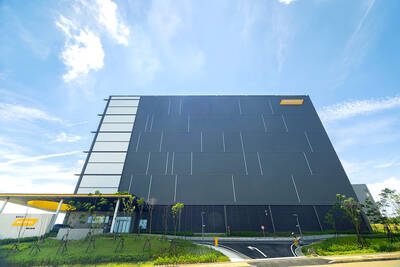
POWER BUILDUP: Powered by Nvidia’s B200 Blackwell chips, the data center would support MediaTek’s computing power demand and business growth, the company said Smartphone chip designer MediaTek Inc (聯發科) yesterday launched a new artificial intelligence (AI) data center with a maximum capacity of 45 megawatts to meet its rising demand for computing power required to develop new advanced chips for AI applications. The company has completed the first-phase computing power buildup at the data center in Miaoli County’s Tongluo Township (銅鑼), providing 15 megawatts of capacity to support its research and development (R&D) capabilities, despite an industrywide shortage of key components, MediaTek said. Supply constraints have plagued a wide range of key components, including memory chips, solid-state drives, power supply units and central
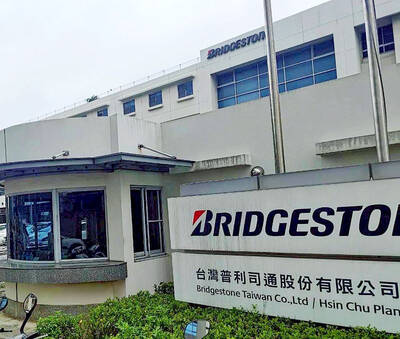
TRANSITION: With the closure, the company would reorganize its Taiwanese unit to a sales and service-focused model, Bridgestone said Bridgestone Corp yesterday announced it would cease manufacturing operations at its tire plant in Hsinchu County’s Hukou Township (湖口), affecting more than 500 workers. Bridgestone Taiwan Co (台灣普利司通) said in a statement that the decision was based on the Tokyo-based tire maker’s adjustments to its global operational strategy and long-term market development considerations. The Taiwanese unit would be reorganized as part of the closure, effective yesterday, and all related production activities would be concluded, the statement said. Under the plan, Bridgestone would continue to deepen its presence in the Taiwanese market, while transitioning to a sales and service-focused business model, it added. The Hsinchu


 RSS
RSS