


The G20 nations will not single out Japan over the weak yen and will disregard a call from G7 powers to refrain from using economic policy to target exchange rates, according to a text drafted for finance leaders.
A G20 delegate who has seen the communique — prepared by finance officials for their bosses — also said it would make no direct mention of new debt-cutting targets, something Germany is pressing for, but which the US wanted struck out.
If adopted by the G20 finance ministers and central bankers meeting, Japan will escape any censure for its expansionary policies, which have driven the yen lower and drawn demands for action from some quarters.
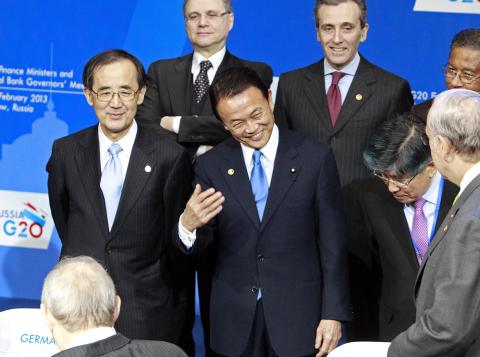
Photo: Reuters
“There will not be a heavy clash about currencies in the end, because nobody can risk such a negative signal,” another G20 delegation source said.
The currency market was thrown into turmoil this week after the G7 — the US, Japan, Germany, Britain, France, Canada and Italy — issued a joint statement stating that domestic economic policy must not be used to target currencies, which must remain determined by the market.
Tokyo said that reflected agreement that its bold monetary and fiscal policies were appropriate, but the show of unity was shattered by off-the-record briefings critical of Japan.
The G20 draft merely sticks to previous language on the need to avoid excessive currency volatility, the delegate said.
The yen has fallen by about 20 percent since November last year. Having firmed earlier on Friday, it turned tail and dropped about 0.6 percent against the US dollar and euro in response to the communique details.
“Although this week has been marked by volatility surrounding G7 and G20, it appears the path to currency weakness will remain intact,” Wells Fargo head of currency strategy Nick Bennenbroek said.
One senior G20 source said any reference to targeting exchange rates was also not acceptable to China, which is the world’s No. 2 economy and holds much of its US$3.3 trillion in foreign reserves in US Treasury bonds.
After a working dinner, Japanese Finance Minister Taro Aso said he had heard no criticism of his country’s policies.
“We explained our stance and other countries voiced no such opinions as approval or objection,” Aso told reporters.
“We stick to our policy, and consequently it [the yen weakening] happened, but that was not our target. Our target is getting out of recession and deflation,” he said.
Officials lined up to pour cold water on talk of a currency war where countries indulge in competitive devaluations.
European Central Bank President Mario Draghi said recent sparring over currencies was “inappropriate, fruitless and self-defeating” and US Treasury official Lael Brainard warned against “loose talk.”
France has been a lone voice calling for euro exchange rate targets.
Draghi said the currency was trading in line with long-term averages, a point endorsed by IMF Managing Director Christine Lagarde.
“The current talk of currency wars is overblown,” she told the G20 ministers and central bankers. “There is no major deviation from fair value of major currencies.”
Other policymakers in Moscow said Japan’s aggressive fiscal and monetary expansion aimed at raising the inflation rate to 2 percent was to be welcomed if it boosted growth.
Australian Treasurer Wayne Swan indicated support for Japan’s monetary policy saying “everybody’s got a stake” in its ability to foster growth.
And Indonesia, one of the rising Asia-Pacific economies, said it was also less concerned about the exchange rate of the yen than about Japanese recovery.
“If the Japanese increase their domestic demand, it will help Indonesia, especially from the export side,” Bank Indonesia Deputy Governor Hartadi Sarwono said.
Others have said that the US has created vast amounts of new money just as the Bank of Japan has, although US Federal Reserve Chairman Ben Bernanke said the US central bank was acting in line with the G7 statement, “using domestic policy tools to advance domestic objectives.”

Cairo’s new monorail slices across the city skyline, running above the familiar chaos of blaring horns and aging buses’ exhaust fumes that mark rush hour below. The US$4.5 billion monorail, opened this month, is among Egypt’s most prominent new transport projects, part of a debt-funded infrastructure drive criticized for sapping state finances while bringing limited benefits to most of the country’s 109 million people. “It feels like you’re in a different country,” said Ramy Sayed, a restaurant manager, aboard a driverless Innovia 300 train. “No noise, no traffic, we’re not used to this.” The eastern line runs 56km from the bustling middle-class
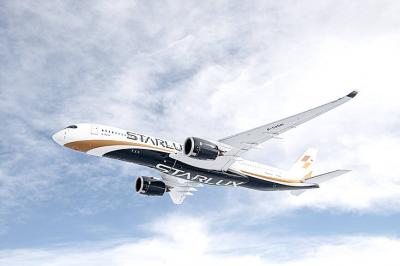
Starlux Airlines Co (星宇航空) today unveiled a long-haul network expansion plan at a shareholders’ meeting in Taipei, including direct flights to Barcelona, Spain, and Zurich, Switzerland, as well as a service connecting Taipei, Sydney and New Zealand. Starlux is to become the first Taiwanese carrier to offer non-stop services to the two European cities, while the inaugural oceanic route is expected to expand transit opportunities within the Australia-New Zealand market, Starlux said. Flight services to Chicago, Dallas, Washington and New York are under evaluation, the airline added. Prior to the shareholders’ meeting, the airline earlier this year announced that it would be

Taiwanese prosecutors suspect that three people successfully smuggled at least one shipment of Nvidia Corp artificial intelligence (AI) chips to China after first exporting them to Japan, people familiar with the matter said. The trio was detained last week by the Keelung District Prosecutors’ Office for allegedly falsifying documents related to exports of Super Micro Computer Inc servers containing advanced Nvidia chips, which the US has barred from sale to China without a license from Washington. The move marked Taiwan’s first public crackdown on AI chip diversion after years of pressure from the US to take a more active role in curtailing
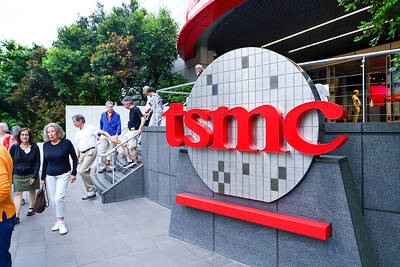
Taiwan Semiconductor Manufacturing Co (TSMC, 台積電) employee bonuses are likely to grow more than 30 percent this year, in line with the past few years as the company’s profits continue to set new records, an anonymous source cited TSMC chairman C.C. Wei (魏哲家) as saying yesterday. TSMC, the world’s largest contract chipmaker, is committed to taking care of its workers, the source said, citing Wei’s meeting with employees yesterday morning. Wei also expressed gratitude to employees for their contribution to the company’s improving bottom line, the source added. Since 2023, TSMC’s employee bonuses have grown at an annual rate of


 RSS
RSS