


The world’s biggest gadget show ended in Las Vegas on Friday and, like a prophet in the desert, revealed the future: bigger televisions, smarter watches, thinner humans and bendy phones.
That, at least, was the vision peddled by technology companies that unveiled 20,000 products over five frenzied days of networking and promotion at the Consumer Electronics Show (CES). About 150,000 industry professionals sifted through gadgets sublime and ridiculous, pointless and ingenious, seeking the next big innovation that will change the way we work, live and play.
Some ideas that provoked guffaws and headlines — the vibrating fork which chastises you to eat slower, the i-potty training system to keep your toddler on the bowl — may not endure, but others seemed certain to have a future.
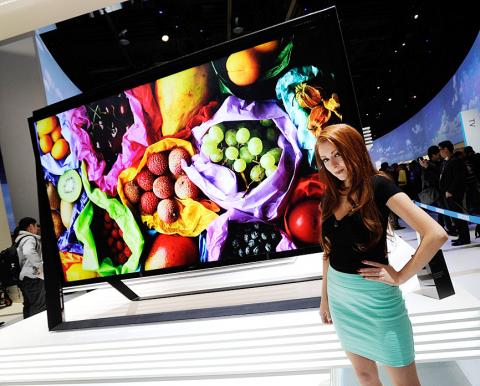
Photo: AFP
Samsung, Sony, Toshiba and other television manufactures unveiled bigger screens — ranging from 50 to 110 inches — with “ultra-high-definition” four times sharper than traditional HD. Prices range from US$20,000 upwards.
2D prototypes marked the quiet death of 3D television, a much-hyped innovation at last year’s CES that flopped in stores. The technology may resurrect if the likes of StreamTV Networks convince consumers to buy 3D TVs, due out later this year, which do not require glasses.
Pebble, a kickstarter darling, won instant acclaim by unveiling a much-ballyhooed smart watch with e-paper display that connects to a smartphone and can receive e-mails, control music and track your movement. Priced US$150, there are 85,000 pre-orders.
“We had to get it right, it’s on your wrist,” Pebble founder Eric Migicovsky said. “People won’t tolerate something bad being attached to their body.”
The show signaled an accelerating drive by tech firms to sell the idea that technology is key to mental and physical well-being, with a quarter of displays devoted to gadgets for losing weight, getting fitter and improving health.
They harnessed smartphones and tablets to “wearable” fitness devices that monitor your exertions and store them in the cloud. Diabetics were offered apps to monitor their condition.
“It’s an inherently data-driven activity,” Joseph Martorano of iHealth said.
Samsung unveiled a prototype phone — super-thin plastic replaces traditional glass — which lets you fold it almost like paper. The technology, called Youm, will spread to other devices.
However, all the gadgetry did not dispel doubts that the expo is losing relevance. The event focused on hardware in a software-obsessed world and contained no major surprises. Some tech gurus declared CES a dying giant. True or not, the hordes leaving Las Vegas with their bags of freebie “swag” were happy.
Shares of contract chipmaker Taiwan Semiconductor Manufacturing Co (TSMC, 台積電) came under pressure yesterday after a report that Apple Inc is looking to shift some orders from the Taiwanese company to Intel Corp. TSMC shares fell NT$55, or 2.4 percent, to close at NT$2,235 on the local main board, Taiwan Stock Exchange data showed. Despite the losses, TSMC is expected to continue to benefit from sound fundamentals, as it maintains a lead over its peers in high-end process development, analysts said. “The selling was a knee-jerk reaction to an Intel-Apple report over the weekend,” Mega International Investment Services Corp (兆豐國際投顧) analyst Alex Huang
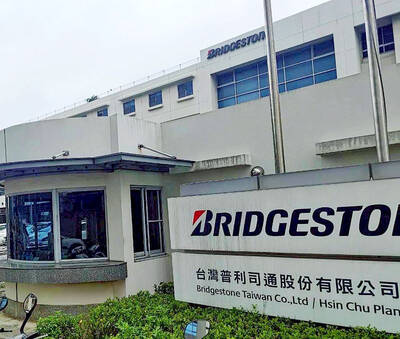
TRANSITION: With the closure, the company would reorganize its Taiwanese unit to a sales and service-focused model, Bridgestone said Bridgestone Corp yesterday announced it would cease manufacturing operations at its tire plant in Hsinchu County’s Hukou Township (湖口), affecting more than 500 workers. Bridgestone Taiwan Co (台灣普利司通) said in a statement that the decision was based on the Tokyo-based tire maker’s adjustments to its global operational strategy and long-term market development considerations. The Taiwanese unit would be reorganized as part of the closure, effective yesterday, and all related production activities would be concluded, the statement said. Under the plan, Bridgestone would continue to deepen its presence in the Taiwanese market, while transitioning to a sales and service-focused business model, it added. The Hsinchu
Taiwan Semiconductor Manufacturing Co (TSMC, 台積電) has approved a capital budget of US$31.28 billion for production expansion to meet long-term development needs during the artificial intelligence (AI) boom. The company’s board meeting yesterday approved the capital appropriation plan for purposes such as the installation of advanced technology capacity and fab construction, the world’s largest contract chipmaker said in a statement. At an earnings conference last month, TSMC forecast that its capital expenditure for this year would be at the higher end of the US$52 billion to US$56 billion range it forecast in January in response to robust demand for 5G, AI and
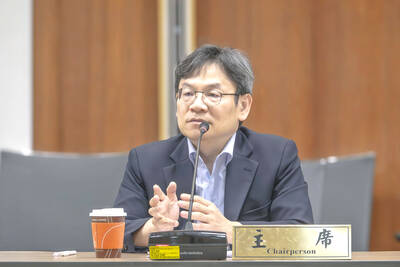
Taiwan Semiconductor Manufacturing Co’s (TSMC, 台積電) investment project in Arizona has progressed better than expected, but it still faces challenges such as water and labor shortages, National Development Council (NDC) Minister Yeh Chun-hsien (葉俊顯) said yesterday. Speaking with reporters after visiting TSMC’s Arizona hub and attending the SelectUSA Investment Summit in Maryland last week, Yeh said TSMC’s Arizona site turned a profit of NT$16.14 billion (US$514 million) last year in its first full year of mass production. “TSMC told me it was surprised by the smooth trial run of the first fab, which has left the company optimistic about the project’s outlook,”


 RSS
RSS