


The US will press senior Chinese officials this week for action on longstanding trade problems, and may face a rebuke from Beijing over the haphazard way it is managing its finances.
A delegation led by Chinese Vice Premier Wang Qishan (王岐山) will be in Washington today and tomorrow for talks with US Trade Representative Ron Kirk, acting US Commerce secretary Rebecca Blank and US Secretary of Agriculture Tom Vilsack.
“I don’t think we should be expecting sweeping changes, but I do think we will see tangible progress on some specific issues,” US-China Business Council president John Frisbie said. “China is definitely prioritizing its US relations and they are also discussing economic reforms back at home that could impact some of the issues that matter to US companies.”
Kirk and his colleagues have said they are pushing China to drop restrictions on US livestock and farm products, to take stronger action to stop counterfeiting and piracy of US goods and to reduce pressure on US companies to transfer valuable technology to do business in China.
Wang in turn is expected to convey Beijing’s strong interest in a deal in Washington to avoid the US$600 billion in spending cuts and tax hikes set to take hold at the start of the year, widely known as the “fiscal cliff.”
Economists warn that failure to avert that outcome could send the US back in recession, which would threaten growth in China and around the world.
US President Barack Obama and Republican leaders have so far made little visible progress toward a deal.
Given that China is the US’ largest creditor, it has a deep interest in Washington’s management of its budget.
Chinese officials are also expected to press on a range of other issues — from concerns about US anti-dumping measures on their exports, to restrictions on China’s ability to import US high-technology products and the often strong political resistance to Chinese investment in the US.
The annual US-China Joint Commission on Commerce and Trade (JCCT) meeting comes during a transition for both governments.
Obama is expected to bring in a new economic team for his second term. Chinese Vice President Xi Jinping (習近平) took helm of the Chinese Communist Party last month and will take over as head of state in March at the annual parliament meeting.
This week’s JCCT meeting could mark the start of the Xi era in US-China relations, but there remains a lot of uncertainty about how much reform the new Chinese administration will pursue, Frisbie said.
One US business official, speaking on condition he not be identified, said he was hoping for progress on troublesome “indigenous innovation” policies that put pressure on US companies that want to do business in China to transfer technology to Chinese partners.
US companies are also increasingly concerned about Chinese cyberattacks and other attempts to steal trade secrets, he said.
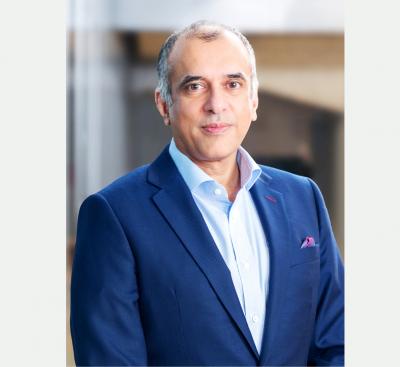
HSBC Holdings PLC is deepening its commitment to Taiwan as the economy emerges as one of the bank’s fastest-growing markets globally, driven by an artificial intelligence (AI) investment boom, expanding cross-border trade, and rising wealth creation. “The advantage that Taiwan has is a growth story linked to the semiconductor and broader AI industries, strong underlying corporate performance, and wealth creation,” said Surendra Rosha, HSBC’s co-chief executive for Asia and the Middle East, in an exclusive interview with the Taipei Times on June 2, during this year’s HSBC Taiwan Conference. That combination has helped HSBC cement its position as the most profitable international
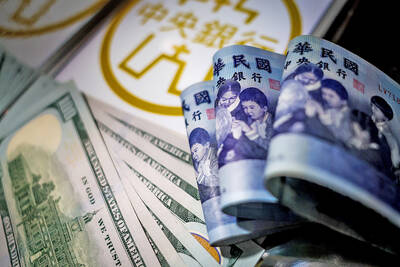
The New Taiwan dollar yesterday fell sharply against the US dollar to close at its lowest level since May 22 amid a massive outflow of funds from the country because of investors panicking over global equity markets. The NT dollar ended at NT$31.580 against the US dollar, slightly lower than its close of NT$31.568 on May 22, after moving between NT$31.5 and NT$31.648 on combined turnover of US$3.062 billion on the Taipei Foreign Exchange and the Cosmos Foreign Exchange. The NT dollar received a significant hit in the morning session, slumping as much as NT$0.173 at a time when other Asian currencies
Taiwan Semiconductor Manufacturing Co (TSMC, 台積電) is now ranked ninth among the world’s 100 most valuable companies after its market capitalization more than doubled over the past year, PricewaterhouseCoopers (PwC) Taiwan said in a report last month. TSMC’s market capitalization surged 101 percent year-on-year to US$1.427 trillion as of March 31, the accounting and consulting firm’s 2026 Global Top 100 Companies by Market Capitalization report said. The gain catapulted the world’s largest contract chipmaker from 12th place to ninth in the rankings, and it was the fastest-growing among the global top 10, it said. TSMC was the only Taiwanese company among the top
Taiwan Semiconductor Manufacturing Co (TSMC, 台積電) yesterday reported record revenue of NT$416.975 billion (US$13.17 billion) for last month, putting the world’s largest contract chipmaker on track to set a record for quarterly revenue. Last month’s figure surpassed March’s record NT$415.19 billion and represented increases of 1.5 percent from April and 30.1 percent from a year earlier. For the first five months of the year, TSMC generated NT$1.96 trillion in revenue, up 30 percent year-on-year, it said in a statement. TSMC has forecast second-quarter revenue of between US$39 billion and US$40.2 billion, representing sequential growth of about 10 percent and year-on-year growth of about


 RSS
RSS