


India’s bitter colonial past hangs heavily over the government’s renewed drive to open the inward-looking economy to foreign investment, even 65 years after independence, analysts said.
Despite a dramatic economic transformation in the past two decades, the emerging market giant’s 200 years under British domination still evoke painful memories.
“The evils of British colonization are etched in our minds and Indians fear foreign companies have the power and strategies to recolonize India,” said Mridula Mukherjee, a history professor at New Delhi’s Jawaharlal Nehru University (JNU).
Those worries came to the fore last week as lawmakers debated a government move to let in foreign supermarkets — a key plank of its economic reform agenda and aimed at drawing in more investment from overseas.
Opponents fear that allowing the entry of retail giants such as US-based Wal-Mart Stores Inc will force India’s millions of small shopkeepers out of business.
The Congress party-led government of Indian Prime Minister Manmohan Singh won the vote to permit the entry of big retailers, even as opposition parties accused it of wishing to revive the rule of foreign traders.
“Vote against the entry of foreign retail giants — think of your duty to your country,” Sharad Yadav, head of the socialist Janata Dal (United) party, implored lawmakers in parliament’s decision-making lower house.
“America and other countries will never want India to develop — it only loves the market here. Don’t let another East India Company enter the country,” he said.
Yadav was referring to Britain’s former East India Company, dubbed the world’s first multinational, which held sway over vast parts of India and set up trading posts to ship cargoes of textiles, indigo, sugar and spices.
The East India Company was disbanded after the bloody 1857 uprising known in India as the country’s First War of Independence. The revolt which was savagely repressed made way for the British Raj — direct rule by the British government.
The anti-foreign tone was the same in the elected upper house of parliament.
“The East India Company entered through Kolkata and ruled,” said Naresh Agarwal of the regional socialist Samajwadi Party. “This time, they are coming through New Delhi.”
The chief minister of West Bengal, Mamata Banerjee, has been among the most strident opponents of allowing foreign traders access to India’s vast consumer market, calling it a “historical economic blunder.”
Banerjee’s office is in Kolkata’s sprawling red-brick secretariat built by the East India Company more than 200 years ago for trading in opium, cloth, tea and indigo.
“Indians trusted the British and we know what happened. We were slaves,” she said. “Again, we are inviting the British and other countries to rule us.”
Akshaya Deb, a historian at the University of Calcutta, said that “British brutality in India cannot be forgotten. They came in as traders and ended up ruling India.”
Defending the policy of economic liberalization, the left-leaning government said the country cannot be subservient to what it called the “East India Company complex.”
“We talk about East India Company, but we forget Indian firms like Tata are buying out international companies and are going global,” Indian Heavy Industries and Public Enterprises Minister Praful Patel told parliament.
“Let’s not get emotional,” Patel said. “There is no way the East India Company story will be repeated here. Foreign companies need new markets — even we need them.”
The market-opening push comes as India faces a sharply slowing economy, a gaping fiscal deficit and high inflation, which has stoked pressure on an administration already under fire for corruption.
Mukherjee said Indians need to overcome their political and economic insecurity.
“Why are we getting nervous about foreign giants entering the markets? India is not mortgaging its future and history will not repeat itself,” she said.
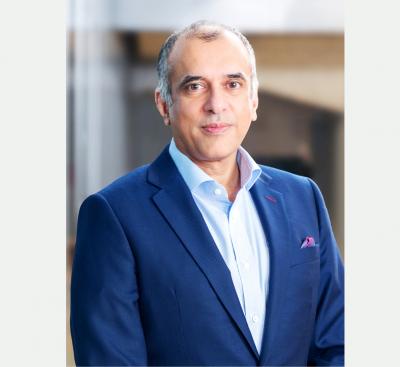
HSBC Holdings PLC is deepening its commitment to Taiwan as the economy emerges as one of the bank’s fastest-growing markets globally, driven by an artificial intelligence (AI) investment boom, expanding cross-border trade, and rising wealth creation. “The advantage that Taiwan has is a growth story linked to the semiconductor and broader AI industries, strong underlying corporate performance, and wealth creation,” said Surendra Rosha, HSBC’s co-chief executive for Asia and the Middle East, in an exclusive interview with the Taipei Times on June 2, during this year’s HSBC Taiwan Conference. That combination has helped HSBC cement its position as the most profitable international
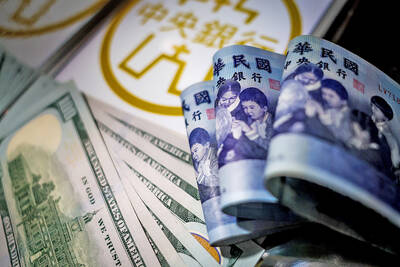
The New Taiwan dollar yesterday fell sharply against the US dollar to close at its lowest level since May 22 amid a massive outflow of funds from the country because of investors panicking over global equity markets. The NT dollar ended at NT$31.580 against the US dollar, slightly lower than its close of NT$31.568 on May 22, after moving between NT$31.5 and NT$31.648 on combined turnover of US$3.062 billion on the Taipei Foreign Exchange and the Cosmos Foreign Exchange. The NT dollar received a significant hit in the morning session, slumping as much as NT$0.173 at a time when other Asian currencies
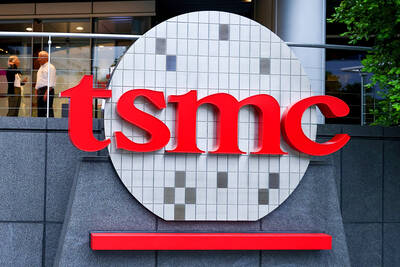
Taiwan Semiconductor Manufacturing Co (TSMC, 台積電) is now ranked ninth among the world’s 100 most valuable companies after its market capitalization more than doubled over the past year, PricewaterhouseCoopers (PwC) Taiwan said in a report last month. TSMC’s market capitalization surged 101 percent year-on-year to US$1.427 trillion as of March 31, the accounting and consulting firm’s 2026 Global Top 100 Companies by Market Capitalization report said. The gain catapulted the world’s largest contract chipmaker from 12th place to ninth in the rankings, and it was the fastest-growing among the global top 10, it said. TSMC was the only Taiwanese company among the top
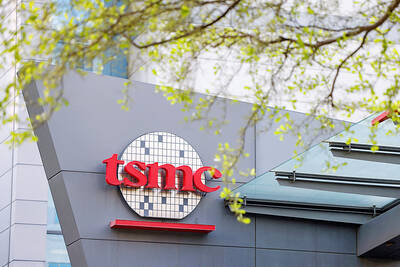
Taiwan Semiconductor Manufacturing Co (TSMC, 台積電) yesterday reported record revenue of NT$416.975 billion (US$13.17 billion) for last month, putting the world’s largest contract chipmaker on track to set a record for quarterly revenue. Last month’s figure surpassed March’s record NT$415.19 billion and represented increases of 1.5 percent from April and 30.1 percent from a year earlier. For the first five months of the year, TSMC generated NT$1.96 trillion in revenue, up 30 percent year-on-year, it said in a statement. TSMC has forecast second-quarter revenue of between US$39 billion and US$40.2 billion, representing sequential growth of about 10 percent and year-on-year growth of about


 RSS
RSS