


China’s US$20 billion solar industry is avoiding loan defaults and mergers by taking aid from local governments, preserving jobs at money-losing companies such as LDK Solar Co (江西賽維), the world’s second-biggest maker of solar cells.
LDK agreed last month to sell a 19.9 percent stake to a renewable-energy investor part-owned by the city of Xinyu, home to its headquarters. Suntech Power Holdings Co (尚德電力), the world’s largest solar-panel maker, got a US$32 million loan in September organized partly by Wuxi, the city where it is based. The aid helps as the companies prepare to report combined losses of US$987 million for this year, analyst forecasts compiled by Bloomberg show.
The moves counter efforts by the central government to engineer mergers that create a handful of larger solar companies, said Jeremy Haft, founder of BChinaB Inc, a New York-based consulting company that specializes in Chinese business practices. The country has previously pushed consolidation to strengthen industries such as steel and coal.
Provincial governments mostly want solar manufacturers “to keep the lights on and not lay people off,” Haft said.
“There are a lot of people unemployed” in China and local government officials do not want to see solar factories close, he said.
Local aid efforts have not sparked a rally in LDK and Suntech. They have lost 38 percent and 17 percent respectively in the last three months, outpacing the 9.6 percent loss for the 17-member Bloomberg Global Large Solar Energy index over the same period. LDK gained 1.1 percent to US$0.90 at the close in New York on Friday. Suntech closed at US$0.906.
At the same time, GCL-Poly Energy Holdings Ltd (保利協鑫能源), the world’s biggest solar wafer maker, has increased 15 percent in the last three months. The company has been mentioned in Chinese news reports as a possible merger partner.
The China Securities Journal said national government-run China Development Bank Corp (國家開發銀行) is encouraging consolidation between panel makers, pledging financial support for 12 companies. The move may lead other struggling solar manufacturers to close their doors or agree to be bought, the journal said in a Sept. 25 report.
China Development Bank is motivated to keep struggling solar firms afloat, especially those that have borrowed from it, Washington-based Center for American Progress policy analyst Melanie Hart said. The lender is putting pressure on local governments to support companies so they will repay loans, she said.
The bank is telling local officials “we won’t lend anymore to anyone in your region until they pay us back,” she said.
Those local efforts contrast with China’s national goals, which are commonly described as “grasping the big, letting go of the small,” Hart said.
Help from local governments may be the biggest obstacle to making China’s solar industry competitive, Boston-based GTM Research solar analyst Shyam Mehta said.
“Until they stop supporting the uncompetitive manufacturers, this won’t go away,” Mehta said. “If LDK was allowed to fail, the market reaction would actually be positive.”
Suntech is evaluating various financing options and cutting costs, and in September temporarily reduced production in Wuxi, Suntech spokesman Rory Macpherson said in e-mail. He did not say whether the company expects additional support from the community. Telephone calls to LDK spokesman Li Longji went unanswered.
The country’s state-owned electricity distributor, China State Grid Corp (國家電網), announced incentives on Oct. 26 to encourage smaller solar projects, with capacity of less than 6 megawatts, such as rooftop systems. It will buy the electricity and exempt owners from certain fees.
Other Chinese communities are supporting local solar manufacturers. A company controlled by Dongying, a city in Shandong Province, offered US$10 million for a 50.38 percent stake in CNPV Solar Power SA’s sole asset, CNPV Dongying, on Nov. 1.
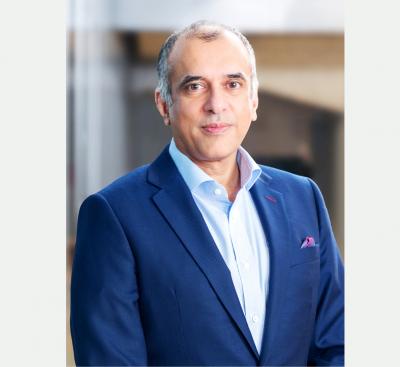
HSBC Holdings PLC is deepening its commitment to Taiwan as the economy emerges as one of the bank’s fastest-growing markets globally, driven by an artificial intelligence (AI) investment boom, expanding cross-border trade, and rising wealth creation. “The advantage that Taiwan has is a growth story linked to the semiconductor and broader AI industries, strong underlying corporate performance, and wealth creation,” said Surendra Rosha, HSBC’s co-chief executive for Asia and the Middle East, in an exclusive interview with the Taipei Times on June 2, during this year’s HSBC Taiwan Conference. That combination has helped HSBC cement its position as the most profitable international
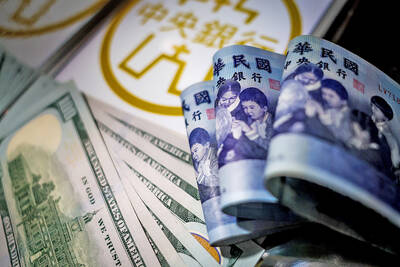
The New Taiwan dollar yesterday fell sharply against the US dollar to close at its lowest level since May 22 amid a massive outflow of funds from the country because of investors panicking over global equity markets. The NT dollar ended at NT$31.580 against the US dollar, slightly lower than its close of NT$31.568 on May 22, after moving between NT$31.5 and NT$31.648 on combined turnover of US$3.062 billion on the Taipei Foreign Exchange and the Cosmos Foreign Exchange. The NT dollar received a significant hit in the morning session, slumping as much as NT$0.173 at a time when other Asian currencies
Taiwan Semiconductor Manufacturing Co (TSMC, 台積電) is now ranked ninth among the world’s 100 most valuable companies after its market capitalization more than doubled over the past year, PricewaterhouseCoopers (PwC) Taiwan said in a report last month. TSMC’s market capitalization surged 101 percent year-on-year to US$1.427 trillion as of March 31, the accounting and consulting firm’s 2026 Global Top 100 Companies by Market Capitalization report said. The gain catapulted the world’s largest contract chipmaker from 12th place to ninth in the rankings, and it was the fastest-growing among the global top 10, it said. TSMC was the only Taiwanese company among the top
Taiwan Semiconductor Manufacturing Co (TSMC, 台積電) yesterday reported record revenue of NT$416.975 billion (US$13.17 billion) for last month, putting the world’s largest contract chipmaker on track to set a record for quarterly revenue. Last month’s figure surpassed March’s record NT$415.19 billion and represented increases of 1.5 percent from April and 30.1 percent from a year earlier. For the first five months of the year, TSMC generated NT$1.96 trillion in revenue, up 30 percent year-on-year, it said in a statement. TSMC has forecast second-quarter revenue of between US$39 billion and US$40.2 billion, representing sequential growth of about 10 percent and year-on-year growth of about


 RSS
RSS