


Taipei Times (TT): The sentiment in the local tourism sector has been good recently since Taiwan was included in the US Visa-Waiver Program. How is that likely to benefit Phoenix Tours International Inc (鳳凰國際旅行社)?
Anthony Liao (廖文澄): Experience has shown that the launch of a Visa-Waiver Program usually helps raise the number of visitors to the destination country by about 30 percent in the first year after it takes effect. Therefore, the US visa-waiver program will definitely boost the company’s business on US routes next year, with revenue from travel to the US expected to increase to account for about 10 percent of our total revenue, from 3.6 percent recorded in the first half of the year.
TT: Do you plan to increase the company’s presence in the US in the near future? Or do you intend to remain focused on the European market?
Liao: We re-established a subsidiary in Los Angeles in March, in anticipation of the visa-waiver program boosting business on the US routes.
Given that the security procedures in the US remain stricter than in other countries, the visa-free program may not benefit the US routes as much as the EU visa-waiver program boosted European routes.
Despite the weak economic sentiment this year, sales generated by the European routes remain the largest contributor to the total revenue of Phoenix Tours, accounting for 33 percent of overall revenue in the first half of this year and likely reaching 40 percent by the end of the year.
TT: Other than the US and EU visa-waiver programs, have you seen any positive drivers for the tourism sector next year?
Liao: Next year will be a “traveling year” for Taiwan, as the government has designated a total of 115 holiday days for the year, including a nine-day Lunar New Year holiday, the longest in recent years.
Moreover, the higher-than-expected sales derived from the company’s online international travel fair — launched a month earlier than the four-day Taipei International Travel Fair [ITF] that opened on Friday last week — provided more proof of strong sentiment toward the tourism sector.
Originally, we expected revenue from the online international travel fair and the ITF to remain flat compared with last year, with revenue of about NT$300 million (US$10.24 million), but the online international travel has exhibited a 10 percent growth in revenue.
Consequently, we have raised the sales target of the online international travel fair and the ITF this year to about 20 percent.
TT: In the first nine months of the year, Phoenix Tours posted NT$2.15 billion in revenue, up 4.96 percent from a year earlier. Is it still possible for the company to reach the 20 percent sales growth target this year?
Liao: I can only say that the company will maintain the same target for now. I still believe the sales performance in the fourth quarter will help the company achieve its goal.
TT: Do you think the slowing economy has caused the company’s revenue and profitability to expand slower than expected this year?
Liao: The travel market has declined slightly this year because of the impact of slowing consumption, but it has not affected Phoenix Tours that much because the company focuses on high-end clients with strong consumption ability.
Our net profit in the first half showed some improvement from a year ago, which also provideds evidence that travel agencies selling high-end products are likely to face fewer risks.
[Phoenix Tours posted a net profit of NT$101.95 million (US$3.4 million), or earnings per share of NT$1.67, in the first six months, higher than NT$70.58 million, or NT$1.16 per share, recorded during the same period last year.]
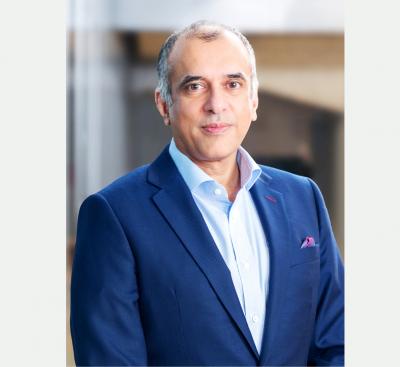
HSBC Holdings PLC is deepening its commitment to Taiwan as the economy emerges as one of the bank’s fastest-growing markets globally, driven by an artificial intelligence (AI) investment boom, expanding cross-border trade, and rising wealth creation. “The advantage that Taiwan has is a growth story linked to the semiconductor and broader AI industries, strong underlying corporate performance, and wealth creation,” said Surendra Rosha, HSBC’s co-chief executive for Asia and the Middle East, in an exclusive interview with the Taipei Times on June 2, during this year’s HSBC Taiwan Conference. That combination has helped HSBC cement its position as the most profitable international

The New Taiwan dollar yesterday fell sharply against the US dollar to close at its lowest level since May 22 amid a massive outflow of funds from the country because of investors panicking over global equity markets. The NT dollar ended at NT$31.580 against the US dollar, slightly lower than its close of NT$31.568 on May 22, after moving between NT$31.5 and NT$31.648 on combined turnover of US$3.062 billion on the Taipei Foreign Exchange and the Cosmos Foreign Exchange. The NT dollar received a significant hit in the morning session, slumping as much as NT$0.173 at a time when other Asian currencies
Taiwan Semiconductor Manufacturing Co (TSMC, 台積電) is now ranked ninth among the world’s 100 most valuable companies after its market capitalization more than doubled over the past year, PricewaterhouseCoopers (PwC) Taiwan said in a report last month. TSMC’s market capitalization surged 101 percent year-on-year to US$1.427 trillion as of March 31, the accounting and consulting firm’s 2026 Global Top 100 Companies by Market Capitalization report said. The gain catapulted the world’s largest contract chipmaker from 12th place to ninth in the rankings, and it was the fastest-growing among the global top 10, it said. TSMC was the only Taiwanese company among the top
Taiwan Semiconductor Manufacturing Co (TSMC, 台積電) yesterday reported record revenue of NT$416.975 billion (US$13.17 billion) for last month, putting the world’s largest contract chipmaker on track to set a record for quarterly revenue. Last month’s figure surpassed March’s record NT$415.19 billion and represented increases of 1.5 percent from April and 30.1 percent from a year earlier. For the first five months of the year, TSMC generated NT$1.96 trillion in revenue, up 30 percent year-on-year, it said in a statement. TSMC has forecast second-quarter revenue of between US$39 billion and US$40.2 billion, representing sequential growth of about 10 percent and year-on-year growth of about


 RSS
RSS