


Apple has a new iPhone, two new iPads and three new PCs as it heads into the holiday quarter, the biggest selling season of the year. However, paradoxically, it expects these new gadgets to bring down its profits compared with last year.
The reason: The new gadgets are expensive to make, Apple executives said on Thursday, and the company is not interested in cutting corners for the sake of short-term returns.
On top of the holiday-quarter warning, the company reported earnings for its just-ended quarter that missed Wall Street’s expectations for the second quarter in a row — something that hasn’t happened in more than a decade.
In part, the issues facing Apple are a normal consequence of having so many new products, chief financial officer Peter Oppenheimer said. When a production line is new, it costs more to run and the components are more expensive.
“The difference this time is the sheer number of products we’re introducing at a short time,” Oppenheimer told analysts on a call.
Apple expects a gross profit margin of 36 percent in this quarter, the lowest in at least four years. In the holiday quarter last year, its gross margin was 44.7 percent.
CEO Tim Cook justified the projected profit drop in similar terms.
“We’re unwilling to cut corners in delivering the best product experience in the world,” he said. “We’re managing the company for the long run.”
Apple said it expects earnings of US$11.75 per share in the holiday quarter, below the US$13.87 per share it earned in the same period last year. Apple routinely lowballs its estimates, but this time the forecast was further from the analyst estimate than usual. Analysts polled by FactSet were expecting earnings of US$15.59, on average.
Apple expects sales of US$52 billion, roughly in line with analyst expectations of US$56 billion, considering the company’s conservative forecasts.
Apple shares fell US$6.33, or 1 percent, to US$603.47, extending a downward trend for the stock, which hit an all-time high of US$705.07 a month ago, on the day the iPhone 5 went on sale.
A slowdown in the growth of iPad sales was a major contributor to earnings miss for the latest quarter. Cook said there’s usually a slowdown in the September-ending quarter, and the 14 million iPads sold exceeded Apple’s forecast. Analysts, however, had been expecting 17 million to 18 million.
Sales were also hurt by slowing growth in China. Apple’s sales in China more than doubled in fiscal 2010 and last year, but in the latest quarter, the Asia-Pacific segment grew just 15 percent, year on year. Growth in the July-September quarter was also slow in Europe.
Shares of contract chipmaker Taiwan Semiconductor Manufacturing Co (TSMC, 台積電) came under pressure yesterday after a report that Apple Inc is looking to shift some orders from the Taiwanese company to Intel Corp. TSMC shares fell NT$55, or 2.4 percent, to close at NT$2,235 on the local main board, Taiwan Stock Exchange data showed. Despite the losses, TSMC is expected to continue to benefit from sound fundamentals, as it maintains a lead over its peers in high-end process development, analysts said. “The selling was a knee-jerk reaction to an Intel-Apple report over the weekend,” Mega International Investment Services Corp (兆豐國際投顧) analyst Alex Huang
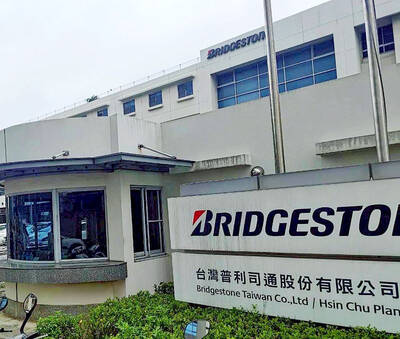
TRANSITION: With the closure, the company would reorganize its Taiwanese unit to a sales and service-focused model, Bridgestone said Bridgestone Corp yesterday announced it would cease manufacturing operations at its tire plant in Hsinchu County’s Hukou Township (湖口), affecting more than 500 workers. Bridgestone Taiwan Co (台灣普利司通) said in a statement that the decision was based on the Tokyo-based tire maker’s adjustments to its global operational strategy and long-term market development considerations. The Taiwanese unit would be reorganized as part of the closure, effective yesterday, and all related production activities would be concluded, the statement said. Under the plan, Bridgestone would continue to deepen its presence in the Taiwanese market, while transitioning to a sales and service-focused business model, it added. The Hsinchu
Taiwan Semiconductor Manufacturing Co (TSMC, 台積電) has approved a capital budget of US$31.28 billion for production expansion to meet long-term development needs during the artificial intelligence (AI) boom. The company’s board meeting yesterday approved the capital appropriation plan for purposes such as the installation of advanced technology capacity and fab construction, the world’s largest contract chipmaker said in a statement. At an earnings conference last month, TSMC forecast that its capital expenditure for this year would be at the higher end of the US$52 billion to US$56 billion range it forecast in January in response to robust demand for 5G, AI and

Taiwan Semiconductor Manufacturing Co’s (TSMC, 台積電) investment project in Arizona has progressed better than expected, but it still faces challenges such as water and labor shortages, National Development Council (NDC) Minister Yeh Chun-hsien (葉俊顯) said yesterday. Speaking with reporters after visiting TSMC’s Arizona hub and attending the SelectUSA Investment Summit in Maryland last week, Yeh said TSMC’s Arizona site turned a profit of NT$16.14 billion (US$514 million) last year in its first full year of mass production. “TSMC told me it was surprised by the smooth trial run of the first fab, which has left the company optimistic about the project’s outlook,”


 RSS
RSS