


Brazil threatened on Friday to further clampdown on speculative foreign capital, firing a warning shot in a “currency war” its finance minister blamed on money-printing by Western central banks.
Finance Minister Guido Mantega said Brazil would not allow its currency, the real, to strengthen as a result of aggressive monetary stimulus by the US and other developed nations.
“If necessary ... we have [the option] of short-term capital taxes,” he told reporters on the sidelines of a conference in London.
Mantega’s comments reflect growing tension between the South American nation and the US over its lax monetary policy, which Brazilian officials blame for an avalanche of cheap imports crippling local producers.
Since 2009, the Brazilian government has introduced a number of measures intended to curb excess inflows of foreign investors’ dollars, but recently reduced their scope after the real weakened.
Brazil shocked investors in October of that year by taxing some categories of foreign capital flowing into stocks and bonds. It said at the time that some of the flows constituted hot money and were harming the economy.
Brazil has also raised duties on dozens of foreign-made goods to help a local industry struggling with a stronger real as well as some of the world’s highest input costs.
US Trade Representative Ron Kirk’s calls for Brazil to reconsider plans for more tariff increases prompted a stinging response from Brasilia on Thursday. In a letter, the Brazilian government said the hike was a legitimate tool unlike the “illegal subsidization of farm products by the US, which impact Brazil and other developing countries.” Mantega has become one of the fiercest critics of the asset buying programs that Western central banks have been using to shore up their economies, accusing them of in effect devaluing their currencies to boost competitiveness.
The real held steady around 2.0245 per dollar for the fourth consecutive session on Friday following Mantega’s threats to ramp up capital controls. His remarks added to the perception that the central bank will keep intervening if the real nears the level of 2 per dollar.
Some of the extra funds generated by quantitative easing have in the past found their way into emerging markets, lured by higher interest rates and yields, driving gains in currencies including the real and Indonesia’s rupiah.
Mantega said the US Federal Reserve’s decision this month to embark on a third round of bond-buying, followed by a similar move by Japan, would revive global “currency wars” by forcing other countries to act to protect their own economies.
“[The US and Japan] will be stimulating the currency wars as [they] will lead all countries also to pursue these wars,” Mantega said. “It’s natural other countries will defend themselves.”
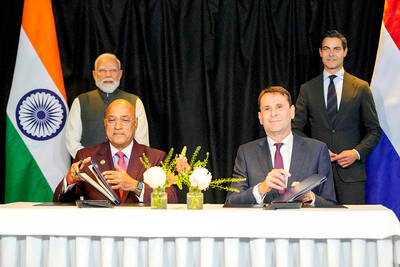
NEW MARKET: The partnership opens up India to the Dutch company, which already has a strong hold in the semiconductor market of South Korea, Taiwan and China ASML Holding NV entered into a partnership agreement with Tata Electronics Pvt Ltd aimed at ramping up India’s goal to develop domestic chip-manufacturing capabilities. The Dutch company’s technology would help power Tata Electronics’ planned 300 millimeter (mm) semiconductor foundry in Gujarat, according to a joint statement from the two companies on Saturday. The signing of a memorandum of understanding coincides with a visit by Indian Prime Minister Narendra Modi to the Netherlands, which is looking to deepen bilateral relations with New Delhi. ASML, whose top customers include Taiwan Semiconductor Manufacturing Co (台積電) and Samsung Electronics Co, makes lithography machines that can print
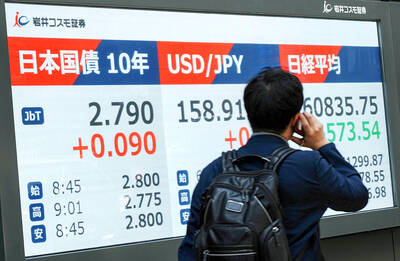
ROUGH RECORDS: Bonds in Japan, as well is in New Zealand, Australia and the US, are seeing the effects of a nervy market as stock exchanges across Asia edge down A deepening slump in Japanese government bonds added fuel to the selloff in global debt markets as rising oil prices stoked inflation fears and pushed yields to multi-decade highs. Japan’s 30-year yield yesterday surged as much as 20 basis points to the highest level since the tenor’s debut in 1999, before paring some of the move. Shorter-maturity Japanese debt was also under pressure, underscored by weak demand at a sale of five-year notes that offered a record-high coupon of 2 percent. Concerns over inflation and government spending rippling through markets including the US, Australia and New Zealand are being amplified in Japan,
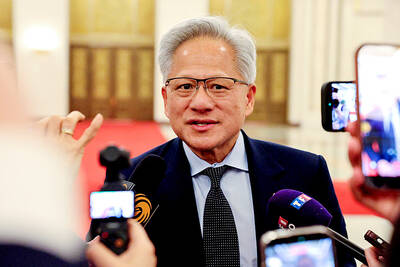
The US has cleared about 10 Chinese firms to buy Nvidia Corp’s second-most powerful artificial intelligence (AI) chip, the H200, but not a single delivery has been made so far, three people familiar with the matter said, leaving a major technology deal in limbo as chief executive officer Jensen Huang (黃仁勳) seeks a breakthrough in China this week. Huang, who was not initially listed in a White House delegation to Beijing, joined the trip after an invitation from US President Donald Trump, a source said. Trump picked him up in Alaska en route to a summit with Chinese President Xi Jinping
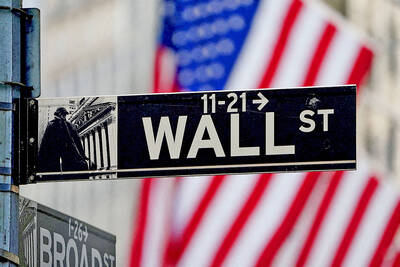
Wall Street is licking its chops over an unprecedented slate of massive initial public offerings (IPOs) set to arrive in the coming months, beginning with Elon Musk’s Space Exploration Technologies Corp (SpaceX) next month. That is expected to be followed by artificial intelligence (AI) rivals OpenAI and Anthropic PBC. The trio of mega listings, each eyeing valuations around US$1 trillion or more, constitutes a heady period of elevated risk and reward. SpaceX is targeting an IPO that would raise up to US$80 billion — about double the funds generated from all IPOs last year. OpenAI and Anthropic are eyeing IPOs raising US$60 billion. “We’re


 RSS
RSS