


The world’s mobile phone market fell 2.3 percent year-on-year in the second quarter, after declining 2 percent in the first quarter, with LG Electronics Inc and Research In Motion Ltd (RIM) leading the decline, while Samsung Electronics Co widened its lead over rivals, according to a Gartner Inc report released yesterday.
The latest Gartner report also showed Taiwan’s HTC Corp (宏達電) sold 15.57 percent fewer mobile phones in the second quarter from the first quarter amid negative macroeconomic conditions and still-intensifying market competition.
With sales of 9.3 million phones in the second quarter, the Taiwanese company saw its global market share rise to 2.2 percent from 1.8 percent in the first quarter, while its world ranking fell to No. 8 from No. 7, the research firm said.
LG Electronics reported the largest quarterly decline in sales of mobile phones to end users, selling 14.35 million phones in the second quarter, a decline of 41.26 percent from a year earlier and down 2.51 percent from the previous quarter.
The South Korean company’s global market share shrank to 3.4 percent from 3.5 percent in the first quarter, Gartner’s report showed.
Struggling BlackBerry maker RIM also sold far fewer phones than it expected for the quarter.
The report showed the Canadian company sold 7.99 million units in the second quarter, 36.84 percent less than it sold in the same period last year and 19.62 percent less than it sold in the first quarter, with its market share narrowing to 1.9 percent from 2.4 percent in the first quarter.
However, Samsung not only maintained its No. 1 phone brand status in the second quarter, but also widened its lead over rivals Apple Inc and Nokia Corp.
In the April-to-June period, Samsung saw its handset sales increase 29.51 percent from the same period last year and 4.46 percent from the previous quarter to 90.43 million units, with market share rising to 21.6 percent from 20.7 percent in the first quarter, Gartner said.
The researcher said Samsung’s growth in the second quarter was driven by record sales of its Galaxy smartphones, adding that smartphones now account for 50.4 percent of all Samsung mobile devices, or 45.6 million units.
Nokia stayed put in second place during the second quarter, with sales of 83.42 million units, down 14.76 percent year-on-year, but up 0.31 percent quarter-on-quarter. The Finnish company saw its market share little changed at 19.9 percent in the quarter, the report showed.
Apple Inc came third, with sales of 28.94 million units and a market share of 6.9 percent. While the US company’s phone sales jumped 47.71 percent from a year earlier, the figure was 12.64 percent lower than its first-quarter level, the report showed.
Gartner said Apple might experience another weaker-than-usual quarter in the third quarter, as consumers wait for the new iPhone.
Overall, worldwide mobile phones sales totaled 419.01 million units in the second quarter, compared with 428.66 million units last year and 419.11 million units in the first quarter. Smartphone sales accounted for 36.7 percent of total phone sales and grew 42.7 percent in the second quarter, the report said.
“Demand slowed further in the second quarter of 2012,” Anshul Gupta, a principal research analyst at Gartner, said in a statement. “Demand of feature phones continued to decline, significantly weakening the overall mobile phone market.”
Gupta also attributed the decline to the challenging global economy and to consumers' postponing upgrades to take advantage of high-profile device launches and promotions available later in the year, including Apple's upcoming iPhone 5 and Chinese makers' new 3G model launches in the second half.
"Samsung and Apple continued to dominate the smartphone market, together taking about half the market share, and widening the gap to other manufacturers. No other smartphone vendors had share close to 10 percent," he said.
Smartphones powered by Google's Android software totaled 98.53 million units and accounted for 64.1 percent of the global market in the second quarter, while the Apple's iOS was the next most popular with 28.94 million units and 18.8 percent market share, Gartner said.
This story has been updated since it was first published.
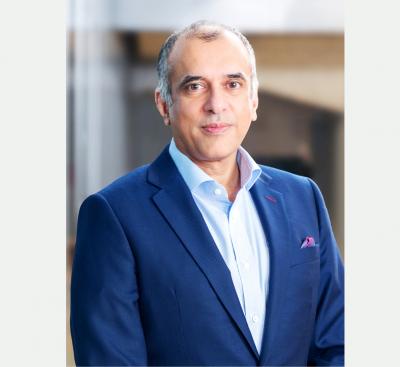
HSBC Holdings PLC is deepening its commitment to Taiwan as the economy emerges as one of the bank’s fastest-growing markets globally, driven by an artificial intelligence (AI) investment boom, expanding cross-border trade, and rising wealth creation. “The advantage that Taiwan has is a growth story linked to the semiconductor and broader AI industries, strong underlying corporate performance, and wealth creation,” said Surendra Rosha, HSBC’s co-chief executive for Asia and the Middle East, in an exclusive interview with the Taipei Times on June 2, during this year’s HSBC Taiwan Conference. That combination has helped HSBC cement its position as the most profitable international
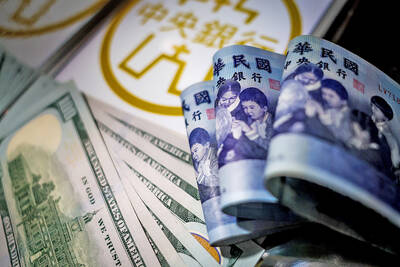
The New Taiwan dollar yesterday fell sharply against the US dollar to close at its lowest level since May 22 amid a massive outflow of funds from the country because of investors panicking over global equity markets. The NT dollar ended at NT$31.580 against the US dollar, slightly lower than its close of NT$31.568 on May 22, after moving between NT$31.5 and NT$31.648 on combined turnover of US$3.062 billion on the Taipei Foreign Exchange and the Cosmos Foreign Exchange. The NT dollar received a significant hit in the morning session, slumping as much as NT$0.173 at a time when other Asian currencies
Taiwan Semiconductor Manufacturing Co (TSMC, 台積電) is now ranked ninth among the world’s 100 most valuable companies after its market capitalization more than doubled over the past year, PricewaterhouseCoopers (PwC) Taiwan said in a report last month. TSMC’s market capitalization surged 101 percent year-on-year to US$1.427 trillion as of March 31, the accounting and consulting firm’s 2026 Global Top 100 Companies by Market Capitalization report said. The gain catapulted the world’s largest contract chipmaker from 12th place to ninth in the rankings, and it was the fastest-growing among the global top 10, it said. TSMC was the only Taiwanese company among the top
Taiwan Semiconductor Manufacturing Co (TSMC, 台積電) yesterday reported record revenue of NT$416.975 billion (US$13.17 billion) for last month, putting the world’s largest contract chipmaker on track to set a record for quarterly revenue. Last month’s figure surpassed March’s record NT$415.19 billion and represented increases of 1.5 percent from April and 30.1 percent from a year earlier. For the first five months of the year, TSMC generated NT$1.96 trillion in revenue, up 30 percent year-on-year, it said in a statement. TSMC has forecast second-quarter revenue of between US$39 billion and US$40.2 billion, representing sequential growth of about 10 percent and year-on-year growth of about


 RSS
RSS