


The majority of Germans think their country would be better off without the euro, a poll suggested yesterday, as the German economy minister reiterated doubts over whether Greece can stay in the single currency.
The Emnid poll for the Bild am Sonntag mass circulation weekly showed 51 percent of Germans believed Europe’s top economy would be better outside the 17-country eurozone. Twenty-nine percent said it would be worse off.
The survey also showed that 71 percent of Germans wanted Greece to leave the euro if it did not live up to its austerity promises.

Photo: Reuters
German Minister of Economics and Vice Chancellor Philipp Roesler told the Bild am Sonntag there were “considerable doubts whether Greece is living up to its reform promises.”
“The implementation [of the reforms] is faltering. There is still no functioning tax office. Also, almost nothing has happened in terms of the promised privatization of public assets,” Roesler told the paper. “If Greece does not fulfill its obligations, there can be no more money. Then Greece would be insolvent.”
Roesler and his party — junior partners in Germany’s ruling coalition — have frequently expressed doubts about whether Greece is prepared to follow through with the painful reforms necessary to stay in the single currency club.
Debt-wracked Greece is under immense pressure to carry out a structural reform program, part of a package worth billions of euros that have been keeping its economy alive since 2010.
International auditors are currently in Greece, assessing the Greek government’s progress toward reforms seen as essential to get the country back on its feet.
The audit report will determine whether Greece will receive the next tranche of 31.5 billion euros (US$38.8 billion) from its aid program that it needs to keep the economy afloat.
Meanwhile, German Finance Minister Wolfgang Schaeuble on Saturday threw cold water on speculation that the eurozone’s bailout fund will buy Spanish public debt.
Spanish and French media have suggested that the European Financial Stability Facility would start buying bonds issued by Italy and Spain in a coordinated action with the European Central Bank (ECB).
“No, these speculations are unfounded,” Schaeuble said in an interview with the German weekly Die Welt am Sonntag that was to appear on yesterday.
The ECB could resume its own purchases of sovereign bonds on secondary markets to ease pressure on borrowing costs for Rome and Madrid that have climbed to what many consider to be unsustainable levels.
Many economists have also begun to expect some kind of combined effort on the part of eurozone governments and the central bank, especially after ECB President Mario Draghi said on Thursday that the bank would “do whatever it takes to preserve the euro.”
Yet Madrid has rejected the notion of a financial rescue and ruled it out again on Friday.
“A bailout is not an option,” Spanish Deputy Prime Minister Soraya Saenz de Santamaria said.
The Spanish economic daily El Economista spoke on Wednesday of an overall plan worth 300 billion euros that would allow Spain to finance its public deficit for at least a year-and-a-half.
The eurozone has already approved up to 100 billion euros in aid for the Spanish banking sector.
Schaeuble told Die Welt am Sonntag that Spain “has taken all necessary decisions and is putting them into effect.”
The German finance minister said financial markets had not yet taken account of efforts made to resolve Spain’s banking sector crisis, but added: “That will come.”
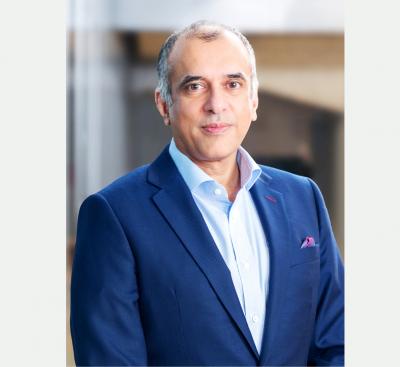
HSBC Holdings PLC is deepening its commitment to Taiwan as the economy emerges as one of the bank’s fastest-growing markets globally, driven by an artificial intelligence (AI) investment boom, expanding cross-border trade, and rising wealth creation. “The advantage that Taiwan has is a growth story linked to the semiconductor and broader AI industries, strong underlying corporate performance, and wealth creation,” said Surendra Rosha, HSBC’s co-chief executive for Asia and the Middle East, in an exclusive interview with the Taipei Times on June 2, during this year’s HSBC Taiwan Conference. That combination has helped HSBC cement its position as the most profitable international

The New Taiwan dollar yesterday fell sharply against the US dollar to close at its lowest level since May 22 amid a massive outflow of funds from the country because of investors panicking over global equity markets. The NT dollar ended at NT$31.580 against the US dollar, slightly lower than its close of NT$31.568 on May 22, after moving between NT$31.5 and NT$31.648 on combined turnover of US$3.062 billion on the Taipei Foreign Exchange and the Cosmos Foreign Exchange. The NT dollar received a significant hit in the morning session, slumping as much as NT$0.173 at a time when other Asian currencies
Taiwan Semiconductor Manufacturing Co (TSMC, 台積電) is now ranked ninth among the world’s 100 most valuable companies after its market capitalization more than doubled over the past year, PricewaterhouseCoopers (PwC) Taiwan said in a report last month. TSMC’s market capitalization surged 101 percent year-on-year to US$1.427 trillion as of March 31, the accounting and consulting firm’s 2026 Global Top 100 Companies by Market Capitalization report said. The gain catapulted the world’s largest contract chipmaker from 12th place to ninth in the rankings, and it was the fastest-growing among the global top 10, it said. TSMC was the only Taiwanese company among the top
Taiwan Semiconductor Manufacturing Co (TSMC, 台積電) yesterday reported record revenue of NT$416.975 billion (US$13.17 billion) for last month, putting the world’s largest contract chipmaker on track to set a record for quarterly revenue. Last month’s figure surpassed March’s record NT$415.19 billion and represented increases of 1.5 percent from April and 30.1 percent from a year earlier. For the first five months of the year, TSMC generated NT$1.96 trillion in revenue, up 30 percent year-on-year, it said in a statement. TSMC has forecast second-quarter revenue of between US$39 billion and US$40.2 billion, representing sequential growth of about 10 percent and year-on-year growth of about


 RSS
RSS