


Asian stocks rose, with the regional benchmark gauge posting its largest weekly gain this month, amid speculation China and the US will do more to boost growth in the world’s two largest economies.
The MSCI Asia Pacific Index gained 1.2 percent to 116.66, its largest weekly advance in three weeks. Concern that growth in China’s economy would slow as Europe’s debt crisis deepens has dragged down the regional benchmark gauge 9.4 percent from this year’s peak in February.
“China is the only country where they have more power to stimulate the economy,” Pu Yonghao (浦永灝), Hong Kong-based regional chief investment officer for the Asia-Pacific at UBS Wealth Management, said in a Bloomberg TV interview.
The Swiss bank oversees about US$1.5 trillion in assets.
“We are betting that in the second half of the year they should be able to turn the economy around. On a long-term valuation basis, we expect some kind of 10 percent upside by year-end” for Asian equities, without specifying any particular benchmark.
The MSCI Asia Pacific trades at 11.8 times estimated earnings, compared with a multiple of 13.3 for the Standard & Poor’s 500 Index and 11 for the Stoxx Europe 600 Index, according to data compiled by Bloomberg.
Japan’s Nikkei 225 Stock Average slid 0.6 percent this week and the broader TOPIX lost 1.7 percent. Of the 1,671 companies on the TOPIX, 209 companies are scheduled to report earnings next week, according to data compiled by Bloomberg News.
South Korea’s KOSPI increased 0.6 percent. Australia’s S&P/ASX 200 Index climbed 2.9 percent, its biggest weekly gain of the year and close to its highest in two months.
Hong Kong’s Hang Seng Index gained 2.9 percent, while China’s Shanghai Composite Index slid 0.8 percent.
Shares also rose on easing prospects as swap market indicators suggested China will cut banks’ reserve requirements and encourage corporate lending as the cabinet meets to discuss efforts to revive economic growth.
China has “relatively large” room to boost fiscal spending to support economic growth, Zhang Peng, a Beijing-based researcher at the Ministry of Finance, said on Wednesday in a telephone interview.
The TAIEX rose 0.2 percent on Friday to 7,164.68, capping a 0.9 percent gain this week.
On Friday, the local bourse moved in a narrow range amid lingering concerns over global demand, although the index closed in positive territory, dealers said.
A warning from Taiwan Semiconductor Manufacturing Co (台積電), the world’s largest contract chip maker, about possible inventory adjustments has made the market more wary of corporate earnings outlook, they said.
The reduced turnover indicated many investors preferred to stay on the sidelines, watching anxiously how companies in Taiwan and Wall Street will report their second quarter results and give guidance for the third quarter in the coming week, they added.
The market opened down 0.17 percent on a lackluster performance on Wall Street overnight and continued ranged trade throughout the trading session as worries over the world’s economic fundamentals kept weighing on investors sentiment, dealers said.
“Look at the low turnover. The local bourse appeared very quiet with many investors on the sidelines,” Grand Cathay Securities (大華證券) analyst Mars Hsu (徐振家) said. “They simply did not want to trade at the moment.”
“The warning issued by TSMC, the market heavyweight, has raised concerns over demand and local high-tech exporters’ bottom lines,” Hsu said.
In other markets on Friday:
Wellington fell 0.63 percent, or 22.07 points, from Thursday to 3,463.70.
Manila closed 0.41 percent higher, adding 21.52 points from Thursday to 5,210.89.
Mumbai fell 0.70 percent, or 120.41 points, from Thursday to 17,158.44.
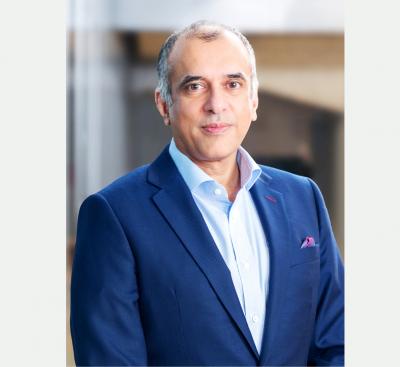
HSBC Holdings PLC is deepening its commitment to Taiwan as the economy emerges as one of the bank’s fastest-growing markets globally, driven by an artificial intelligence (AI) investment boom, expanding cross-border trade, and rising wealth creation. “The advantage that Taiwan has is a growth story linked to the semiconductor and broader AI industries, strong underlying corporate performance, and wealth creation,” said Surendra Rosha, HSBC’s co-chief executive for Asia and the Middle East, in an exclusive interview with the Taipei Times on June 2, during this year’s HSBC Taiwan Conference. That combination has helped HSBC cement its position as the most profitable international
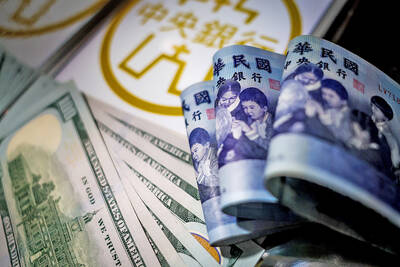
The New Taiwan dollar yesterday fell sharply against the US dollar to close at its lowest level since May 22 amid a massive outflow of funds from the country because of investors panicking over global equity markets. The NT dollar ended at NT$31.580 against the US dollar, slightly lower than its close of NT$31.568 on May 22, after moving between NT$31.5 and NT$31.648 on combined turnover of US$3.062 billion on the Taipei Foreign Exchange and the Cosmos Foreign Exchange. The NT dollar received a significant hit in the morning session, slumping as much as NT$0.173 at a time when other Asian currencies
Taiwan Semiconductor Manufacturing Co (TSMC, 台積電) is now ranked ninth among the world’s 100 most valuable companies after its market capitalization more than doubled over the past year, PricewaterhouseCoopers (PwC) Taiwan said in a report last month. TSMC’s market capitalization surged 101 percent year-on-year to US$1.427 trillion as of March 31, the accounting and consulting firm’s 2026 Global Top 100 Companies by Market Capitalization report said. The gain catapulted the world’s largest contract chipmaker from 12th place to ninth in the rankings, and it was the fastest-growing among the global top 10, it said. TSMC was the only Taiwanese company among the top
Taiwan Semiconductor Manufacturing Co (TSMC, 台積電) yesterday reported record revenue of NT$416.975 billion (US$13.17 billion) for last month, putting the world’s largest contract chipmaker on track to set a record for quarterly revenue. Last month’s figure surpassed March’s record NT$415.19 billion and represented increases of 1.5 percent from April and 30.1 percent from a year earlier. For the first five months of the year, TSMC generated NT$1.96 trillion in revenue, up 30 percent year-on-year, it said in a statement. TSMC has forecast second-quarter revenue of between US$39 billion and US$40.2 billion, representing sequential growth of about 10 percent and year-on-year growth of about


 RSS
RSS