


TAIEX up on Wall Street rally
The TAIEX came off an early high yesterday as selling emerged after the index briefly breached the technical resistance level of around 7,100 points following a rally on Wall Street overnight, dealers said.
Turnover remained thin, with many investors staying on the sidelines amid lingering concerns over a possible capital gains tax on stock investments, dealers said. Worries over the upcoming elections in Greece also prevented investors from entering the trading floor, they added.
The weighted index closed up 24.16 points, or 0.34 percent, at 7,080.31, after moving between 7,052.36 and 7,139.16. Turnover totaled NT$64.97 billion (US$2.17 billion) during the session.
China cuts base lending rate
China has cut its benchmark lending rate for the first time in nearly four years as it tries to reverse a sharp economic slowdown.
The Chinese central bank said yesterday the interest rate on a one-year loan would be reduced by 0.25 percentage points to 6.31 percent effective today, while the one-year deposit rate would fall by the same amount, according to a statement.
The rate cut adds to a string of measures in recent weeks to boost slowing economic growth.
Beijing has promised extra spending on public works and has approved a multibillion US dollar series of corporate investments to pump money into the economy.
Investment to hit US$39.5bn
Semiconductor Equipment and Materials International predicted on Wednesday that the capital spending of wafer foundries will reach US$39.5 billion this year, up 2 percent from last year.
Moreover, spending by foundries should rise to a record high of US$46.3 billion next year, the US-based trade organization said in a report.
Wafer companies in South Korea will spend the most at US$11 billion this year, while Taiwan will spend up to US$8.5 billion, followed by US$8.3 billion to be spent by companies in the US, according to the report.
This year, construction work on 11 wafer plants will begin and a total of 45 projects will be launched, the association said.
In addition, the group said it expected seven plants and 24 new projects to be carried out next year, with the industry in South Korea remaining the world’s major investor with capital spending rising to US$12.5 billion. The US will become the second-largest investor with spending reaching US$11.5 billion, while Taiwan is due to invest around US$8 billion next year.
First Steamship to raise stake
First Steamship Co (益航), a local bulk carrier, said yesterday in a statement it planned to increase its stakeholding in Grand Ocean Retail Group (大洋百貨) from its current 47.06 percent.
The company said it would spend NT$600 million (US$20million) to purchase shares in Grand Ocean, a department store chain operator in China, on the open market.
Grand Ocean started trading on the Taiwan Stock Exchange on Wednesday, but saw its share price fall below the initial listing price of NT$120 to end at NT$119.50, amid concerns over a slowdown in the Chinese economy.
NT dollar follows region up
The New Taiwan dollar rose against the US dollar yesterday, edging up NT$0.029 to close at NT$29.906 as the local currency continued to gain momentum in line with its regional counterparts on hopes that the US Federal Reserve will further loosen liquidity to boost the US economy, dealers said.
Turnover totaled US$732 million during the trading session.
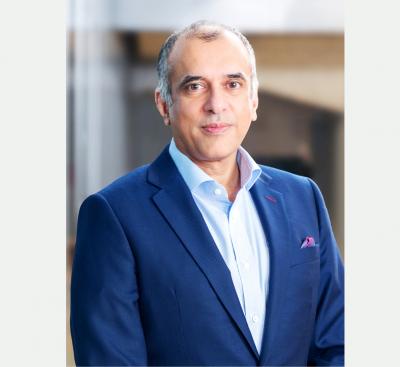
HSBC Holdings PLC is deepening its commitment to Taiwan as the economy emerges as one of the bank’s fastest-growing markets globally, driven by an artificial intelligence (AI) investment boom, expanding cross-border trade, and rising wealth creation. “The advantage that Taiwan has is a growth story linked to the semiconductor and broader AI industries, strong underlying corporate performance, and wealth creation,” said Surendra Rosha, HSBC’s co-chief executive for Asia and the Middle East, in an exclusive interview with the Taipei Times on June 2, during this year’s HSBC Taiwan Conference. That combination has helped HSBC cement its position as the most profitable international
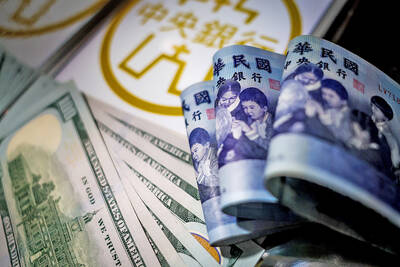
The New Taiwan dollar yesterday fell sharply against the US dollar to close at its lowest level since May 22 amid a massive outflow of funds from the country because of investors panicking over global equity markets. The NT dollar ended at NT$31.580 against the US dollar, slightly lower than its close of NT$31.568 on May 22, after moving between NT$31.5 and NT$31.648 on combined turnover of US$3.062 billion on the Taipei Foreign Exchange and the Cosmos Foreign Exchange. The NT dollar received a significant hit in the morning session, slumping as much as NT$0.173 at a time when other Asian currencies
Taiwan Semiconductor Manufacturing Co (TSMC, 台積電) is now ranked ninth among the world’s 100 most valuable companies after its market capitalization more than doubled over the past year, PricewaterhouseCoopers (PwC) Taiwan said in a report last month. TSMC’s market capitalization surged 101 percent year-on-year to US$1.427 trillion as of March 31, the accounting and consulting firm’s 2026 Global Top 100 Companies by Market Capitalization report said. The gain catapulted the world’s largest contract chipmaker from 12th place to ninth in the rankings, and it was the fastest-growing among the global top 10, it said. TSMC was the only Taiwanese company among the top
Taiwan Semiconductor Manufacturing Co (TSMC, 台積電) yesterday reported record revenue of NT$416.975 billion (US$13.17 billion) for last month, putting the world’s largest contract chipmaker on track to set a record for quarterly revenue. Last month’s figure surpassed March’s record NT$415.19 billion and represented increases of 1.5 percent from April and 30.1 percent from a year earlier. For the first five months of the year, TSMC generated NT$1.96 trillion in revenue, up 30 percent year-on-year, it said in a statement. TSMC has forecast second-quarter revenue of between US$39 billion and US$40.2 billion, representing sequential growth of about 10 percent and year-on-year growth of about


 RSS
RSS