


One year after its implementation, the government’s “luxury tax” has had some effect in curbing speculative transactions in the real--estate market, but it has been far from perfect and more work is needed, pundits said.
The Ministry of Finance introduced a special sales tax, also known as the luxury tax, on June 1 last year, in a bid to deal with soaring property prices in some of Taiwan’s major urban areas.
The government imposed a 15 percent tax on properties resold within one year of purchase and a 10 percent tax on those resold within two years of purchase.
Chien Hsi-chieh, convener of the Anti-Poverty Alliance (反貧困聯盟), said the luxury tax had proven to be almost useless, because it had done little to cool speculative transactions in the property market. In particular, the tax failed to cover real-estate transactions on pre-sale housing, offering speculators a loophole, he said.
Chien said the tax had also made only a limited contribution to the nation’s coffers.
As of the end of April, the government had collected NT$3.4 billion (US$113.86 million) from the luxury tax, with NT$2.19 billion attributable to real-estate -transactions, according to the ministry’s latest data.
The ministry previously said the tax would generate about NT$15 billion in annual revenue.
“The luxury tax is like the appendix, a useless organ connected to the cecum that can be removed anytime,” Chien said.
Taxation Agency Deputy -Director-General Wu Yin-shih (吳英世) disagreed.
Wu said the luxury tax helped deter some property speculators, halting the trend of rising house prices and lowering the number of property transactions.
As for the lower-than-expected revenue from the levy, he said the major goal of the tax was not to increase tax revenue.
“The lower-than-expected revenue indicates speculative real--estate transactions have contracted more than the ministry forecast,” Wu said.
Real-estate experts believe the luxury tax has helped reduce the risk of a burst property bubble, though the measure did not bring down housing prices as some have highly anticipated.
“With the tax, the government achieved its initial goal of reducing trading volume. Moreover, the rise in house prices has decelerated,” said Stanley Su (蘇啟榮), head researcher at Sinyi Realty Inc (信義房屋), the nation’s biggest real-estate agency.
House prices climbed at an annual rate of 4.9 percent in April in Taipei and New Taipei City (新北市), compared with a 10 percent annual increase in June last year, according to the property agency’s figures.
“Speculator demand was somewhat curbed because they have to pay a higher tax,” Su said.
Chang Chin-oh (張金鶚), a land economics professor at National Chengchi University, said the luxury tax did have some positive impact on the nation’s property market.
“Just take a look at falling trading volume, you will find the difference,” Chang said.
Transactions declined 20 percent in the period between June and December last year to 192,000 units, compared with 241,000 units in the same period in 2010, according to statistics compiled by Sinyi Realty.
The effect is even more pronounced in Taipei and New Taipei City, which are the favorites for housing speculators, as transactions contracted 30 percent in the six-month period after the luxury tax took effect.
Nonetheless, academics and industry experts say the government’s heavy-handed tax should be just a first step to cool the property market and prevent overheating, which means more measures need to be taken to return the market to good health.
Building up a complete system for a capital gains tax on property transactions is something that would help to solve the supply shortage and the risk of a property bubble, they added.
“The luxury tax should be a temporary measure, rather than a permanent one,” Su said. “The government should let market mechanisms lead the way.”
To bring the property market back on track, the government should adopt sound regulations, implement housing transaction registration at market prices and impose a reasonable capital gains tax on property transactions, according to experts.
Chien said the government should accelerate the implementation of a capital gains tax on property transactions, as it is the only way to ease speculative transactions and increase supply, while Chang said the central bank’s selective credit tightening measures could be one of the most useful approaches to help reduce speculation.
The Chinese-language Apple Daily reported on Monday that the central bank was considering cutting bank loans for luxury housing purchases to 50 percent, from 70 percent, when homebuyers buy a second home in Taipei or New Taipei City.
To resolve the issue of rising housing prices, Su said the government needed to solve the problem of supply shortages and that it should continue to promote urban renewal programs in Taipei and New Taipei City, as demand for housing in those areas is still rising, he said.
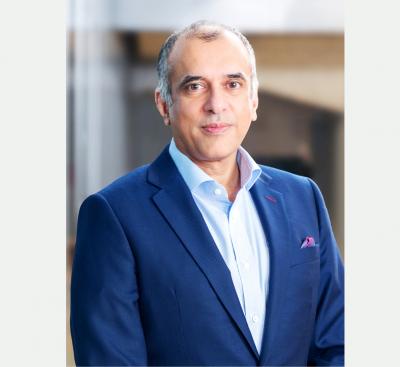
HSBC Holdings PLC is deepening its commitment to Taiwan as the economy emerges as one of the bank’s fastest-growing markets globally, driven by an artificial intelligence (AI) investment boom, expanding cross-border trade, and rising wealth creation. “The advantage that Taiwan has is a growth story linked to the semiconductor and broader AI industries, strong underlying corporate performance, and wealth creation,” said Surendra Rosha, HSBC’s co-chief executive for Asia and the Middle East, in an exclusive interview with the Taipei Times on June 2, during this year’s HSBC Taiwan Conference. That combination has helped HSBC cement its position as the most profitable international
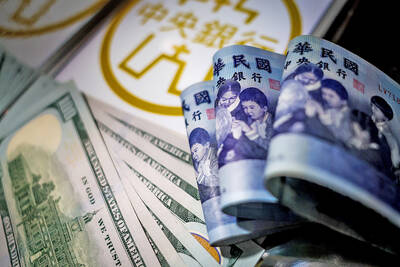
The New Taiwan dollar yesterday fell sharply against the US dollar to close at its lowest level since May 22 amid a massive outflow of funds from the country because of investors panicking over global equity markets. The NT dollar ended at NT$31.580 against the US dollar, slightly lower than its close of NT$31.568 on May 22, after moving between NT$31.5 and NT$31.648 on combined turnover of US$3.062 billion on the Taipei Foreign Exchange and the Cosmos Foreign Exchange. The NT dollar received a significant hit in the morning session, slumping as much as NT$0.173 at a time when other Asian currencies
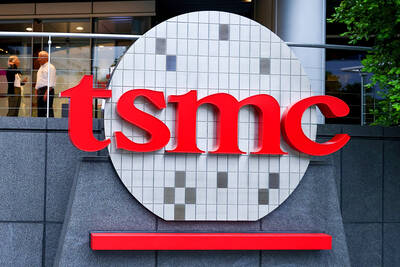
Taiwan Semiconductor Manufacturing Co (TSMC, 台積電) is now ranked ninth among the world’s 100 most valuable companies after its market capitalization more than doubled over the past year, PricewaterhouseCoopers (PwC) Taiwan said in a report last month. TSMC’s market capitalization surged 101 percent year-on-year to US$1.427 trillion as of March 31, the accounting and consulting firm’s 2026 Global Top 100 Companies by Market Capitalization report said. The gain catapulted the world’s largest contract chipmaker from 12th place to ninth in the rankings, and it was the fastest-growing among the global top 10, it said. TSMC was the only Taiwanese company among the top
Taiwan Semiconductor Manufacturing Co (TSMC, 台積電) yesterday reported record revenue of NT$416.975 billion (US$13.17 billion) for last month, putting the world’s largest contract chipmaker on track to set a record for quarterly revenue. Last month’s figure surpassed March’s record NT$415.19 billion and represented increases of 1.5 percent from April and 30.1 percent from a year earlier. For the first five months of the year, TSMC generated NT$1.96 trillion in revenue, up 30 percent year-on-year, it said in a statement. TSMC has forecast second-quarter revenue of between US$39 billion and US$40.2 billion, representing sequential growth of about 10 percent and year-on-year growth of about


 RSS
RSS