


The small town of Wilhelmshaven on Germany’s North Sea coast, with a population of only 81,000, is already the country’s largest naval base.
With its new Jade-Weser-Port container hub, Wilhelmshaven became Germany’s only deep water port and hopes to give Rotterdam and Antwerp a run for their money and become the main stopping point in Europe for supersize container ships arriving from Asia.
Since the mid-1950s, Wilhelmshaven has become the largest German import terminal for crude oil, with pipelines supplying refineries in the Rhine-Ruhr region and Hamburg, and also a major handling location for goods such as petroleum products, coal and chemical products.
Nevertheless, the Jade-Weser-Port Container Terminal will catapult the port into the world’s premier league, with the capacity to handle the largest container ships — including the future triple-E class ships that have a carrying capacity of 18,000 TEU or “twenty-foot equivalent unit,” which is the unit of measure in the sector.
Wilhelmshaven’s 18m deep port will allow these huge new giants to dock fully loaded independent of the tide at any time of night or day.
At the moment, the site is a vast stretch of sand with a few diggers and excavators, a scattering of buildings still under construction.
On the waterfront sit four giant 83m high cranes newly arrived from China, which will load and unload vast container ships that Wilhelmshaven hopes to soon welcome.
“They are the highest in the world,” boasts Jan Miller, director of the logistics zone next to the new container hub.
However, just when the cranes will start their work is still not certain. Officially, the port, which is costing more than 1 billion euros (US$1.25 billion) mostly from the regional state of Lower Saxony, is scheduled to open for business on Aug. 5. A ship of Danish group Maersk will be among the first to dock there, a spokesman said for the company, which is currently the only customer of the new port.
“We’re in talks with others, but we haven’t yet signed any concrete agreements,” Marcel Egger, director of the port operator Eurogate, said.
A neighboring industrial zone will be home to logistics and services companies, but there is only a single one there at the moment.
“Sure, there’s not going to be frenetic activity on the first day,” concedes Miller, but he predicted the port would be operating at full steam “in five or seven years.”
Shares of contract chipmaker Taiwan Semiconductor Manufacturing Co (TSMC, 台積電) came under pressure yesterday after a report that Apple Inc is looking to shift some orders from the Taiwanese company to Intel Corp. TSMC shares fell NT$55, or 2.4 percent, to close at NT$2,235 on the local main board, Taiwan Stock Exchange data showed. Despite the losses, TSMC is expected to continue to benefit from sound fundamentals, as it maintains a lead over its peers in high-end process development, analysts said. “The selling was a knee-jerk reaction to an Intel-Apple report over the weekend,” Mega International Investment Services Corp (兆豐國際投顧) analyst Alex Huang
Taiwan Semiconductor Manufacturing Co (TSMC, 台積電) is expected to remain Apple Inc’s primary chip manufacturing partner despite reports that Apple could shift some orders to Intel Corp, industry experts said yesterday. The comments came after The Wall Street Journal reported on Friday that Apple and Intel had reached a preliminary agreement following more than a year of negotiations for Intel to manufacture some chips for Apple devices. Taiwan Institute of Economic Research (台灣經濟研究院) economist Arisa Liu (劉佩真) said TSMC’s advanced packaging technologies, including integrated fan-out and chip-on-wafer-on-substrate, remain critical to the performance of Apple’s A-series and M-series chips. She said Intel and Samsung
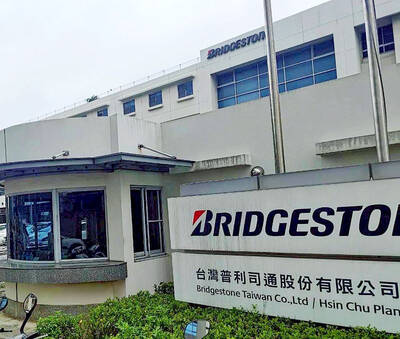
TRANSITION: With the closure, the company would reorganize its Taiwanese unit to a sales and service-focused model, Bridgestone said Bridgestone Corp yesterday announced it would cease manufacturing operations at its tire plant in Hsinchu County’s Hukou Township (湖口), affecting more than 500 workers. Bridgestone Taiwan Co (台灣普利司通) said in a statement that the decision was based on the Tokyo-based tire maker’s adjustments to its global operational strategy and long-term market development considerations. The Taiwanese unit would be reorganized as part of the closure, effective yesterday, and all related production activities would be concluded, the statement said. Under the plan, Bridgestone would continue to deepen its presence in the Taiwanese market, while transitioning to a sales and service-focused business model, it added. The Hsinchu
Taiwan Semiconductor Manufacturing Co (TSMC, 台積電) has approved a capital budget of US$31.28 billion for production expansion to meet long-term development needs during the artificial intelligence (AI) boom. The company’s board meeting yesterday approved the capital appropriation plan for purposes such as the installation of advanced technology capacity and fab construction, the world’s largest contract chipmaker said in a statement. At an earnings conference last month, TSMC forecast that its capital expenditure for this year would be at the higher end of the US$52 billion to US$56 billion range it forecast in January in response to robust demand for 5G, AI and


 RSS
RSS