


A corruption case against Hong Kong’s two richest property tycoons is a black mark on the city’s clean image and could fuel public anger over links between government and business, analysts said.
The Asian financial hub has been gripped by the arrest of billionaire brothers Thomas Kwok (郭炳江) and Raymond Kwok (郭炳聯), co-chairmen of the city’s largest property developer, as well as former senior government official Rafael Hui (許仕仁).
The Kwoks have yet to be charged with any crime but anti-graft investigators are believed to be focusing on alleged malpractices involving the developers’ huge “land bank” of rural, undeveloped property, analysts said.
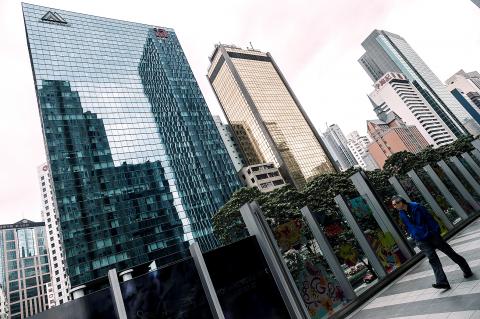
Photo: AFP
The case has sent shockwaves through a city that has earned a reputation as one of the world’s most open and transparent markets, even as its growth has enriched a clique of tycoons who control everything from ports to telecoms.
Lyncean Holdings managing director Francis Lun (藺常念) said the Kwok case “reinforces the perception that there is collusion between the big developers and the government.”
“This is a black eye for the civil service,” the financial adviser said.
The Kwoks are worth an estimated US$18.3 billion and jointly chair the Sun Hung Kai Properties (新鴻基地產) group, builder of many of the tallest landmarks in Hong Kong’s glittering skyline.
The brothers insist they have done nothing wrong and the company has stood by them, but investors wiped almost US$5 billion off Sun Hung Kai’s market value the day after the arrests were made on March 29.
“There is limited disclosure on the corruption investigation, which poses a level of uncertainty as to the impact on the company,” said Moody’s, which like Standard & Poor’s has cut the firm’s outlook to negative.
The Kwoks’ Sun Hung Kai, Li Ka-shing’s (李嘉誠) Cheung Kong Holdings (長江實業), Cheng Yu-tung’s (鄭裕彤) New World Development (新世界發展) and Lee Shau-kee’s (李兆基) Henderson Land Development (恆基地產) are popularly dubbed the “Big Four” developers in the city of 7 million people.
As their wealth from land sales and development grew in the 1970s and 1980s, they expanded into other sectors such as utilities, hotels, telecommunications, supermarkets and restaurant chains.
“They control just about every profitable business in Hong Kong. They collect ransom from the people of Hong Kong, basically,” Lun said.
Chinese University of Hong Kong political scientist Ma Ngok (馬嶽) said the tycoons “have their hands in almost every sector” and influenced government policy to protect their interests.
“They are so dominant that if you try to do something to the housing market it won’t be very meaningful,” he said, referring to property prices that are among the highest in the world.
The Kwok arrests came days after a leadership vote in which a textile tycoon’s son competed against a wealthy property consultant for the approval of a 1,200-member election committee packed with tycoons and their proxies.
The winner, Leung Chun-ying (梁振英), has vowed to make housing more affordable for the middle and working classes without affecting price “stability.” He will replace outgoing Hong Kong Chief Executive Donald Tsang (曾蔭權), who last month apologized for accepting favors from his business friends in the form of trips on luxury yachts and private jets.
The bow-tie-wearing career bureaucrat, whose term expires in June after seven years as the city’s chief, appeared to hold back tears as he defended the “system” against allegations of widespread collusion.
Like Sun Hung Kai, other major developers in Hong Kong also hold land banks of undeveloped property, and analysts said investors are jittery over whether the Independent Commission Against Corruption (ICAC) will turn to them next.
Critics have long complained that Hong Kong’s big developers hold onto undeveloped land leased from the government, waiting years or even decades for favorable conditions, while most of the public is priced out of the market.
However, analysts said that Hong Kong was served well by the fact that two of Asia’s richest tycoons have drawn the attention of the ICAC.
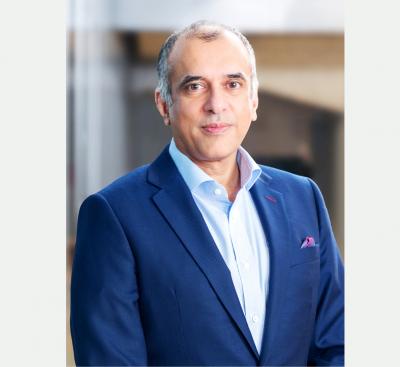
HSBC Holdings PLC is deepening its commitment to Taiwan as the economy emerges as one of the bank’s fastest-growing markets globally, driven by an artificial intelligence (AI) investment boom, expanding cross-border trade, and rising wealth creation. “The advantage that Taiwan has is a growth story linked to the semiconductor and broader AI industries, strong underlying corporate performance, and wealth creation,” said Surendra Rosha, HSBC’s co-chief executive for Asia and the Middle East, in an exclusive interview with the Taipei Times on June 2, during this year’s HSBC Taiwan Conference. That combination has helped HSBC cement its position as the most profitable international
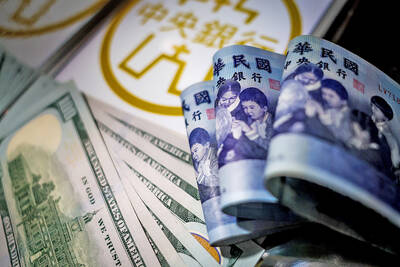
The New Taiwan dollar yesterday fell sharply against the US dollar to close at its lowest level since May 22 amid a massive outflow of funds from the country because of investors panicking over global equity markets. The NT dollar ended at NT$31.580 against the US dollar, slightly lower than its close of NT$31.568 on May 22, after moving between NT$31.5 and NT$31.648 on combined turnover of US$3.062 billion on the Taipei Foreign Exchange and the Cosmos Foreign Exchange. The NT dollar received a significant hit in the morning session, slumping as much as NT$0.173 at a time when other Asian currencies
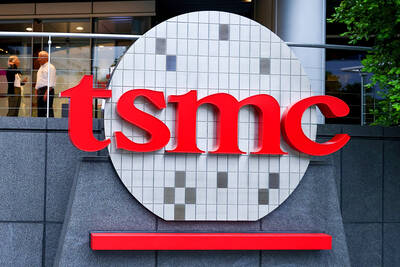
Taiwan Semiconductor Manufacturing Co (TSMC, 台積電) is now ranked ninth among the world’s 100 most valuable companies after its market capitalization more than doubled over the past year, PricewaterhouseCoopers (PwC) Taiwan said in a report last month. TSMC’s market capitalization surged 101 percent year-on-year to US$1.427 trillion as of March 31, the accounting and consulting firm’s 2026 Global Top 100 Companies by Market Capitalization report said. The gain catapulted the world’s largest contract chipmaker from 12th place to ninth in the rankings, and it was the fastest-growing among the global top 10, it said. TSMC was the only Taiwanese company among the top
Taiwan Semiconductor Manufacturing Co (TSMC, 台積電) yesterday reported record revenue of NT$416.975 billion (US$13.17 billion) for last month, putting the world’s largest contract chipmaker on track to set a record for quarterly revenue. Last month’s figure surpassed March’s record NT$415.19 billion and represented increases of 1.5 percent from April and 30.1 percent from a year earlier. For the first five months of the year, TSMC generated NT$1.96 trillion in revenue, up 30 percent year-on-year, it said in a statement. TSMC has forecast second-quarter revenue of between US$39 billion and US$40.2 billion, representing sequential growth of about 10 percent and year-on-year growth of about


 RSS
RSS