


Apple Inc’s latest iPad sports a crisper display and an array of technology advances that, while less than revolutionary, may prove enough for now to keep rivals like Amazon.com Inc and Samsung Electronics Co at bay.
While stopping short of vaulting ahead of Motorola and Samsung, the device — which comes 4G-ready and boasts a quad-core graphics processor — is capable enough to help safeguard its two-thirds market share.
“The screen is a notable feature for non-techie customers, as is the faster connectivity. That’s something that mainstream consumers can identify with,” Morningstar analyst Michael Holt said.

Photo: AFP
“There’s pent-up demand because a new device was widely anticipated. I they’ve made enough incremental improvements to do well,” he said.
Other analysts say the faster processing may begin to draw heavy gamers, encroaching on turf now dominated by gaming-hardware makers such as Microsoft or Sony.
Chief executive Tim Cook, presiding over his second major product launch after debuting with last year’s voice-enabled iPhone 4S, introduced the highly anticipated third iteration of the tablet, which is available for pre-orders from Wednesday and will hit store shelves on March 16.
However, he stumped many in the audience by breaking away from the tradition of calling the third-generation tablet the iPad 3, as some had expected, referring to it simply as the “new iPad.”
The company said it will continue to sell the iPad 2, but dropped its price by US$100. The older tablet now starts at US$399 while the new third-generation Wi-Fi-only iPad starts at US$499.
The high-end model of Apple’s latest iPad starts at US$629 and will be capable of operating on a high-speed 4G “LTE,” or Long-Term Evolution, network. At speeds roughly 10 times faster than current 3G technology, that may help banish the sometimes shaky video quality of older devices.
“While the hardware is notably enhanced, with an impressive retina display, better camera and faster processor, there are still some areas of improvement that Apple needs to work on, in order to stay ahead of its encroaching competitors,” said Fred Huet, managing partner at Greenwich Consulting.
“As tablets are increasingly being used for personal media consumption, it is promising to see a better screen resolution. But will this be enough to ensure Apple’s competitive lead in the marketplace? No,” he said.
Until now, buyers have been reluctant to shell out extra cash even for iPads with slower 3G connections. The cheaper WiFi-only model, with much more limited Web access, is by far Apple’s top-selling one today.
An updated version of the Wi-Fi-only model remains at US$499. The most expensive 4G model, with 64 gigabytes of storage, will go for US$829. The previous iPad2 with 3G also sold for US$629 to US$829. The cheapest model of the previous-generation iPad 2 now retails at US$399.
In an apparent departure from naming conventions, Apple’s third-generation tablet will not be called the iPad 3, but simply referred to as the latest iPad.
Regardless of the name, the company is counting on a warm reception to its latest tablet to fend off an increasingly aggressive challenge from tablets powered by Google Inc’s Android technology, with Microsoft Corp software-driven devices slated to come soon.
“Everyone’s been wondering who will come out with a product that’s more amazing than the iPad 2,” Cook said. “Stop wondering: We are.”
Earlier in the proceedings, Cook again held forth on what he called a “post-PC world,” in which users move increasingly away from traditional desktop and laptop computing and toward an array of portable devices, including tablets.
Smartphones and tablets are starting to eat into PC sales as mobile technology gets more advanced and available content expands.
The global tablet user base reached 67 million last year, according to researcher Strategy Analytics. Analysts expect double-digit growth in tablet sales in coming years.
Cook also announced that the company’s new US$99 Apple TV set-top box, a concept that late CEO Steve Jobs had called a “hobby,” now supports high-definition 1080p screen technology.
“Last year alone we sold 172 million post-PC devices,” Cook told the audience at the Yerba Buena Center in downtown San Francisco, Apple’s preferred venue for product unveilings. “And this made up 76 percent of our revenues. This is incredible.”

Cairo’s new monorail slices across the city skyline, running above the familiar chaos of blaring horns and aging buses’ exhaust fumes that mark rush hour below. The US$4.5 billion monorail, opened this month, is among Egypt’s most prominent new transport projects, part of a debt-funded infrastructure drive criticized for sapping state finances while bringing limited benefits to most of the country’s 109 million people. “It feels like you’re in a different country,” said Ramy Sayed, a restaurant manager, aboard a driverless Innovia 300 train. “No noise, no traffic, we’re not used to this.” The eastern line runs 56km from the bustling middle-class

Taiwanese firms have increased investment in the Philippines in recent years as Manila’s ties with Washington deepen and global supply chains continue to shift away from China, an expert at the Chung-Hua Institution for Economic Research (CIER, 中華經濟研究院) said yesterday. The Philippines had not been among Taiwanese investors’ top choices in Southeast Asia, CIER Taiwan ASEAN Studies Center director Kristy Hsu (徐遵慈) said at a seminar in Taipei. However, Taiwan’s investment in the country has grown significantly since the COVID-19 pandemic, reaching US $257 million last year, a high in recent years, she said. Although Taiwan’s total investment in the Philippines still lags
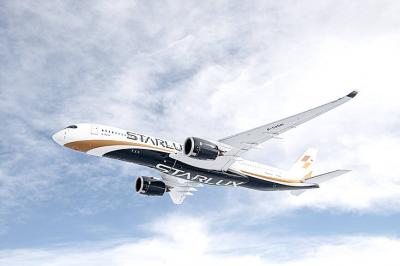
Starlux Airlines Co (星宇航空) today unveiled a long-haul network expansion plan at a shareholders’ meeting in Taipei, including direct flights to Barcelona, Spain, and Zurich, Switzerland, as well as a service connecting Taipei, Sydney and New Zealand. Starlux is to become the first Taiwanese carrier to offer non-stop services to the two European cities, while the inaugural oceanic route is expected to expand transit opportunities within the Australia-New Zealand market, Starlux said. Flight services to Chicago, Dallas, Washington and New York are under evaluation, the airline added. Prior to the shareholders’ meeting, the airline earlier this year announced that it would be
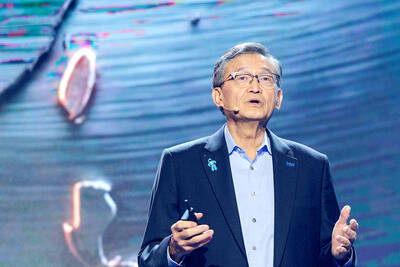
Intel Corp regards Taiwan Semiconductor Manufacturing Co (TSMC, 台積電) as a longstanding partner, as the US chipmaker would continue outsourcing production of advanced chips to TSMC, Intel chief executive officer Lip-Bu Tan (陳立武) said yesterday. “I don’t look at people as competitors. I look at the collaboration... Nvidia is also, you know, a good friend,” Tan told a news conference following his keynote speech at the Computex trade show in Taipei. “It’s a very trusted partnership for us... We are a big, top customer for them, and we’re going to continue doing that,” he said, referring to TSMC, the world’s largest foundry


 RSS
RSS