


Hong Kong looks set to retain its crown as the world’s biggest initial public offering (IPO) market for the third year in a row, pipping New York, but analysts warn of a tough year ahead as market volatility continues.
Hong Kong overtook New York in 2009 to become the top venue for new listings, as a slew of companies turned to the Asian financial hub in a bid to tap China’s explosive growth and cash-rich investors.
Despite a choppy year, exacerbated by the eurozone debt crisis that saw some firms shelve or downsize their IPOs, Hong Kong is likely to have held its top spot last year, according to latest industry data.
The Hong Kong stock exchange raised about US$36 billion through new listings as of Friday, against US$31.4 billion raised in New York, according to data provider Dealogic, which tracks IPOs in major markets.
London took the third spot with US$18.1 billion, while companies raised a combined US$42.4 billion in China’s Shanghai and Shenzhen bourses.
Final official figures on IPOs, which are issued by the World Federation of Exchanges, are expected in the next few weeks.
Last year was a bumper year for Hong Kong, with big-name IPOs from Italian luxury fashion house Prada, US handbag maker Coach, luggage-maker Samsonite and Swiss commodities giant Glencore, which made the year’s biggest share sale.
More was to come with Chow Tai Fook Jewellery Co (周大福珠寶), the world’s largest jewellery chain, making its US$2 billion debut, while shares in local -second-hand handbag retailer Milan Station were more than 2,000 times oversubscribed.
However, despite the deluge of stock debuts, the funds raised fell nearly 47 percent below the US$67.9 billion harvest raised in 2010, Dealogic said.
Even worse, analysts say the knock-on effect of wider global economic problems has since ground down the value of the new shares issued.
“Overall the economy is doing poorly due to the euro debt crisis and the US economy, so the Hong Kong market and investor sentiment has also been affected,” said Philip Mok, a research analyst at Hong Kong’s Phillip Securities.
“Most of the IPOs only did well in their first few days of trading and are now trading below their IPO price,” he added.
Milan Station ended the year’s trading on Friday closing down 0.75 percent at HK$1.33, compared to its HK$1.67 IPO price. Prada closed at HK$35.15, also well below its HK$39.50 offering price.
The Hang Seng Index fell 20 percent over the year.
Analysts say the gap between last year and the previous year may not be as stark as it seems, as share sales by Asian insurer AIA and Agricultural Bank of China (中國農業銀行), raising a combined US$42.6 billion, skewed the 2010 figures.
Hong Kong’s attraction as an IPO destination can largely be traced to Beijing’s move to privatize some state-owned enterprises, although many were laden with crippling debt and questionable balance sheets.
“The larger companies in China have mostly listed and we are now seeing the second wave of mid-tier companies seeking to list,” said analyst Arjan van Veen of Credit Suisse, on the shrinking funds seen last year.
Firms that shelved plans to list in Hong Kong include Shanghai-listed China Everbright Bank (中國光大銀行), which was aiming to raise up to US$6 billion, and Australian miner Resourcehouse, which planned to raise US$3.6 billion.
“It will be tough for Hong Kong in terms of IPO fundraising at the moment since the global economy is not so satisfactory,” said Timothy Li, senior research analyst at investment bank Core Pacific--Yamaichi International.
Fears over a slowdown in China, threatened by the eurozone turmoil that could drag the global economy back into crisis, could also dampen the appetite for IPOs.
“The market sentiment in China and in Hong Kong ... may affect the amount of fundraising and therefore some companies will think twice before deciding on listing here [in Hong Kong],” Li added.
However, the Hong Kong bourse, which said it has a “good chance” to remain the top IPO destination, downplayed fears over its attractiveness for new listings.
“Regardless of its ranking, the most important thing is Hong Kong has established itself as one of the world’s leading capital formation centers,” a spokesman said.
Mok is optimistic for the coming year, citing several new Hong Kong listings said to be in the pipeline, including Angry Birds maker Rovio and London-based jeweler Graff Diamonds.
“The China economy is likely to do better than the US in the coming year. This isn’t the end yet for the story of China. Surely there will be big challenges, but I still have faith in Hong Kong,” he said.
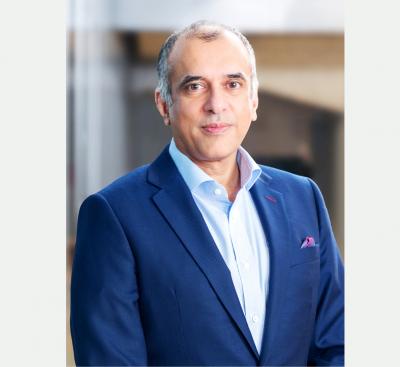
HSBC Holdings PLC is deepening its commitment to Taiwan as the economy emerges as one of the bank’s fastest-growing markets globally, driven by an artificial intelligence (AI) investment boom, expanding cross-border trade, and rising wealth creation. “The advantage that Taiwan has is a growth story linked to the semiconductor and broader AI industries, strong underlying corporate performance, and wealth creation,” said Surendra Rosha, HSBC’s co-chief executive for Asia and the Middle East, in an exclusive interview with the Taipei Times on June 2, during this year’s HSBC Taiwan Conference. That combination has helped HSBC cement its position as the most profitable international
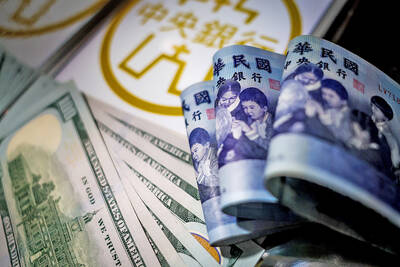
The New Taiwan dollar yesterday fell sharply against the US dollar to close at its lowest level since May 22 amid a massive outflow of funds from the country because of investors panicking over global equity markets. The NT dollar ended at NT$31.580 against the US dollar, slightly lower than its close of NT$31.568 on May 22, after moving between NT$31.5 and NT$31.648 on combined turnover of US$3.062 billion on the Taipei Foreign Exchange and the Cosmos Foreign Exchange. The NT dollar received a significant hit in the morning session, slumping as much as NT$0.173 at a time when other Asian currencies
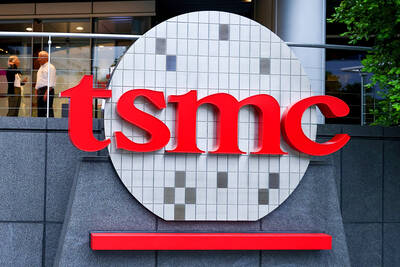
Taiwan Semiconductor Manufacturing Co (TSMC, 台積電) is now ranked ninth among the world’s 100 most valuable companies after its market capitalization more than doubled over the past year, PricewaterhouseCoopers (PwC) Taiwan said in a report last month. TSMC’s market capitalization surged 101 percent year-on-year to US$1.427 trillion as of March 31, the accounting and consulting firm’s 2026 Global Top 100 Companies by Market Capitalization report said. The gain catapulted the world’s largest contract chipmaker from 12th place to ninth in the rankings, and it was the fastest-growing among the global top 10, it said. TSMC was the only Taiwanese company among the top
Taiwan Semiconductor Manufacturing Co (TSMC, 台積電) yesterday reported record revenue of NT$416.975 billion (US$13.17 billion) for last month, putting the world’s largest contract chipmaker on track to set a record for quarterly revenue. Last month’s figure surpassed March’s record NT$415.19 billion and represented increases of 1.5 percent from April and 30.1 percent from a year earlier. For the first five months of the year, TSMC generated NT$1.96 trillion in revenue, up 30 percent year-on-year, it said in a statement. TSMC has forecast second-quarter revenue of between US$39 billion and US$40.2 billion, representing sequential growth of about 10 percent and year-on-year growth of about


 RSS
RSS