


Bank of America Corp (BOA) CEO Brian Moynihan told employees in a year-end letter that he bolstered the firm against risk and will make more improvements next year.
“We greatly strengthened our risk culture in 2011, and that work has laid the foundation that will carry us through whatever turbulent times may lie ahead,” Moynihan wrote in a letter posted on Friday to an internal employee Web site.
A copy of the message was obtained by Bloomberg News.
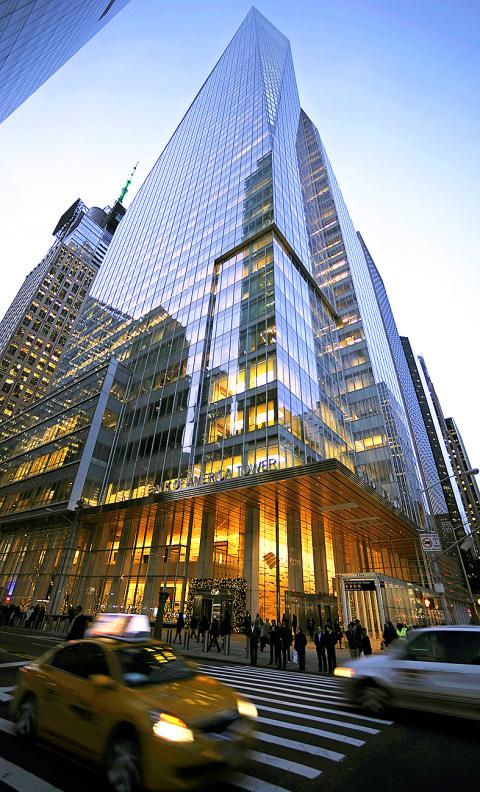
Photo: Bloomberg
The bank is “simplifying our business model and organization, continuing to shed non-core assets and businesses and reducing risk-weighted assets,” he wrote. “2012 will be a year for continued improvement in risk-management practices across the company.”
Moynihan, 52, plans to trim about US$5 billion in annual costs by 2014 at the second-biggest US lender to combat stagnant revenue and a sagging stock price.
Shares of the Charlotte, North Carolina-based bank dropped 58 percent this year amid rising costs tied to faulty mortgages and concern that Europe’s debt crisis will derail the global economic recovery.
BOA cut riskier assets by US$117 billion from the third quarter of last year and reduced risks tied to European sovereign and corporate debt by 43 percent since 2009, Moynihan wrote in the letter.
His predecessor, Kenneth Lewis, spent more than US$130 billion on acquisitions to create the largest US lender by assets, a rank the company held until this year.
To improve capital levels ahead of stricter international rules, Moynihan has agreed to sell more than US$47 billion in assets and units since taking over at the start of last year. The bank is mostly done with such divestitures, he wrote.
“We can focus all our energy and [US]$3 billion in technology investments — the ‘peace dividend’ that derives from no acquisitions/integrations — on increasing the pace of innovations” and improving service, he wrote.
Meanwhile, US regulators will extend the comment period for the so-called Volcker rule, giving lawmakers and banks more time to seek changes in the proposed proprietary trading ban required by the Dodd-Frank Act.
The comment deadline, initially set for Jan. 13, will be pushed back 30 days to Feb. 13, according to a joint statement released on Friday by the four agencies that issued the proposal in October.
The change may extend the comment period until a vote by the US Commodity Futures Trading Commission, the last of five agencies required to approve the measure.
The proposed rule, named for former Federal Reserve chairman Paul Volcker, was included in the regulatory overhaul to rein in risky trading by banks that benefit from deposit insurance and Fed borrowing privileges.
The Fed, Federal Deposit Insurance Corp, Office of the Comptroller of the Currency and the Securities and Exchange Commission released a joint notice of proposed rule-making for the measure that would take effect on July 21, with a two-year transition period.
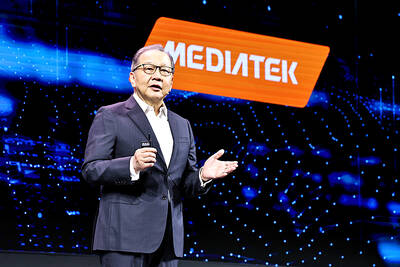
CHIP HANG-UP: Surging memorychip prices would deal a blow to smartphone sales this year, potentially hindering one of MediaTek’s biggest sources of revenue MediaTek Inc (聯發科), the world’s biggest smartphone chip designer, yesterday said its new artificial intelligence (AI) chips used in data centers are to account for 20 percent of its total revenue next year, as cloud service providers race to deploy AI infrastructure to meet voracious demand. MediaTek is believed to be developing tensor processing units for Google, which are used in AI applications. While it did not confirm such reports, MediaTek said its new application-specific IC (ASIC) business would be a new growth engine for the company. It again hiked its forecast for the addressable ASIC market to US$70 billion by 2028, compared

Motorists ride past a mural along a street in Varanasi, India, yesterday.
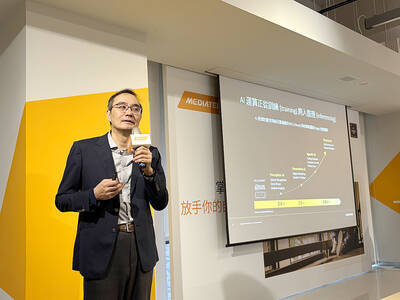
MediaTek Inc (聯發科), the world’s biggest smartphone chip supplier, yesterday said it plans to double investment in data center-related technologies, including advanced packaging and high-speed interconnect technologies, to broaden the new business’ customer and service portfolios. The chip designer is redirecting its resources to data centers, mainly designing application-specific integrated circuits (ASIC) with artificial intelligence (AI) capabilities for cloud service providers. The data center business is forecast to lead growth in the next three years and become the company’s second-biggest revenue source, replacing chips used in smart devices, MediaTek president Joe Chen (陳冠州) told a media event in Taipei. “Three or four years

AT HIGH CAPACITY: Three-month order visibility on stable customer demand would push factory utilization to between 80 and 85 percent, Vanguard’s president said Foundry service provider Vanguard International Semiconductor Corp (世界先進) yesterday said it is unable to fully satisfy surging demand for chips used in artificial intelligence (AI) servers and data centers, amid an AI infrastructure investment boom that is crowding out production of less advanced chips. Vanguard is facing an “undersupply of chips” made using mature process technologies, due to strong demand for AI products and improving demand from customers in the commercial, industrial and auto sectors, which are digesting excess inventory to a healthier level, company chairman Fang Leuh (方略) told a virtual investors’ conference. However, Vanguard gave a more conservative view on


 RSS
RSS