


Greece’s creditors are resisting pressure from the IMF to accept bigger losses on holdings of the indebted nation’s government bonds, three people with direct knowledge of the discussions said.
Lenders want the 70 billion euros (US$91.6 billion) of new bonds the government will issue in return for existing securities to carry a coupon of about 5 percent, said the people, who declined to be identified because the negotiations are private.
The IMF is pushing for creditors to accept a smaller coupon in order to reduce Greece’s debt-to-GDP ratio to 120 percent by 2020, a key element of the Oct. 27 agreement by EU leaders, the people said.

Photo: EPA
Greece’s debt will balloon to almost twice the size of its economy next year without a write-off accord with investors, the IMF said last week Tuesday. The IMF and EU leaders are trying to bring the country’s debt down to a sustainable level.
As part of Greece’s 130 billion euro second bailout, investors would take a 50 percent hit on the nominal value of 206 billion euros of privately owned debt. Exchanging bonds for securities with a 5 percent coupon would leave investors with a 65 percent loss in the net present value of their holdings of Greek government debt, the people said.
Both sides have agreed that the new bonds should be governed by British law and that private bondholders should have the same seniority after the swap as the IMF and the European Financial Stability Facility, two of the people said.
The sides have also agreed that the deal should include collective action clauses that would ensure lenders participate in the swap, the people said.
Vega Asset Management LLC resigned this month from a committee of Greek creditors negotiating the debt swap with European authorities, because the Madrid-based hedge fund refused to accept a net present value loss exceeding 50 percent, according to a Dec. 7 e-mail sent to other panel members, which was obtained by Bloomberg News.
The committee includes representatives of AXA SA, Commerzbank AG, ING Groep NV and the National Bank of Greece SA.
“Vega needs to start considering all available legal options to refuse and challenge any exchange” that leads to a loss of more than 50 percent, Vega wrote in the e-mail. “Vega wants to avoid any conflicts of interest where its own legal strategy could compromise the ability of other members of the committee to reach an agreement.”
Vega CEO Ian Shackleton declined to comment on the hedge fund’s resignation from the committee.
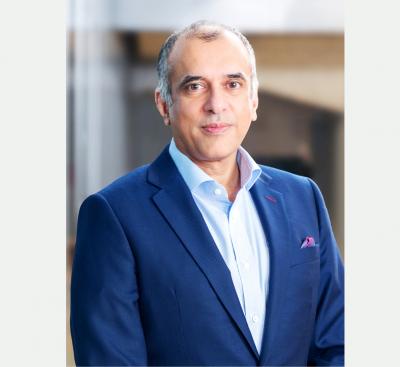
HSBC Holdings PLC is deepening its commitment to Taiwan as the economy emerges as one of the bank’s fastest-growing markets globally, driven by an artificial intelligence (AI) investment boom, expanding cross-border trade, and rising wealth creation. “The advantage that Taiwan has is a growth story linked to the semiconductor and broader AI industries, strong underlying corporate performance, and wealth creation,” said Surendra Rosha, HSBC’s co-chief executive for Asia and the Middle East, in an exclusive interview with the Taipei Times on June 2, during this year’s HSBC Taiwan Conference. That combination has helped HSBC cement its position as the most profitable international
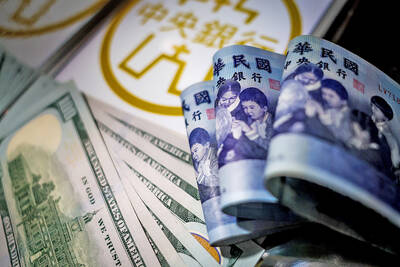
The New Taiwan dollar yesterday fell sharply against the US dollar to close at its lowest level since May 22 amid a massive outflow of funds from the country because of investors panicking over global equity markets. The NT dollar ended at NT$31.580 against the US dollar, slightly lower than its close of NT$31.568 on May 22, after moving between NT$31.5 and NT$31.648 on combined turnover of US$3.062 billion on the Taipei Foreign Exchange and the Cosmos Foreign Exchange. The NT dollar received a significant hit in the morning session, slumping as much as NT$0.173 at a time when other Asian currencies
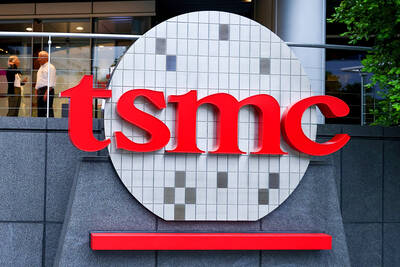
Taiwan Semiconductor Manufacturing Co (TSMC, 台積電) is now ranked ninth among the world’s 100 most valuable companies after its market capitalization more than doubled over the past year, PricewaterhouseCoopers (PwC) Taiwan said in a report last month. TSMC’s market capitalization surged 101 percent year-on-year to US$1.427 trillion as of March 31, the accounting and consulting firm’s 2026 Global Top 100 Companies by Market Capitalization report said. The gain catapulted the world’s largest contract chipmaker from 12th place to ninth in the rankings, and it was the fastest-growing among the global top 10, it said. TSMC was the only Taiwanese company among the top
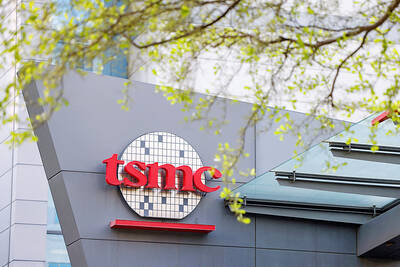
Taiwan Semiconductor Manufacturing Co (TSMC, 台積電) yesterday reported record revenue of NT$416.975 billion (US$13.17 billion) for last month, putting the world’s largest contract chipmaker on track to set a record for quarterly revenue. Last month’s figure surpassed March’s record NT$415.19 billion and represented increases of 1.5 percent from April and 30.1 percent from a year earlier. For the first five months of the year, TSMC generated NT$1.96 trillion in revenue, up 30 percent year-on-year, it said in a statement. TSMC has forecast second-quarter revenue of between US$39 billion and US$40.2 billion, representing sequential growth of about 10 percent and year-on-year growth of about


 RSS
RSS