


Hewlett-Packard (HP), the technology giant that has stumbled through repeated embarrassments, was preparing on Wednesday to fire its chief executive, less than one year after naming him to the post, according to several people with knowledge of the board’s actions.
The leading candidate to replace HP chief Leo Apotheker was former eBay CEO Meg Whitman, who was sought for her ability to run a large technology company, said the people, who asked for anonymity because they were not authorized by the board to speak publicly.
With the move to fire its third chief executive in a row, HP risks looking like the tech company that cannot find its way.
It is one of the oldest and most successful tech companies, and yet in recent years it has been surpassed by far more innovative and better-managed companies like Google, Apple and Facebook in symbolizing innovation in Silicon Valley. The question facing HP is whether a new chief executive can restore its leadership position.
On a day last month that crystallized the company’s careening strategy, Apotheker made a series of announcements: poor quarterly earnings; an US$11.7 billion purchase of Autonomy, a British software company that analysts immediately branded as overpriced; discontinuation of its TouchPad tablet and its WebOs software that had been introduced only months before; and the possible sale or spinoff of HP’s mainstay PC business. The stock lost about a quarter of its value on the news.
The company’s stock has fallen 47 percent, a loss of more than US$40 billion in its market value, on Apotheker’s watch. However, investors liked the prospect of new leadership. HP’s stock rose 6.72 percent on Wednesday to close at US$23.98.
However, it was not clear that Whitman could undo much of what Apotheker had done or for that matter whether HP’s board would want her to. Analysts say it would be difficult for the company to walk away from the Autonomy bid, though the board may be considering hanging on to the PC business.
Whitman, who ran eBay as it grew from a startup to a major online retailer, left the company just as growth began to stall. She unsuccessfully ran for governor of California and was hired in March by Kleiner Perkins Caufield & Byers, a venture capital firm, as a strategic adviser.
The board conversations about Whitman are fluid, though, and might not result in her hiring, said a person briefed on the discussions who asked for anonymity because he was not authorized by the board to speak publicly.
However, if Whitman were hired, she would most likely be a permanent, not an interim, replacement for Apotheker, this person said. While she lacks experience running a technology company as complex and mature as HP, the company’s board considers her communications skills and understanding of customers to be her strongest qualifications for the job, the person said. Whitman joined the HP board in January, several months after Apotheker was hired.
Though HP’s board is comfortable with the strategy laid out last month by Apotheker, its members have increasingly begun to raise questions about his ability to communicate that strategy effectively within the company and to outsiders, especially investors.
Last week, HP was hit with a lawsuit claiming that its executives misled investors about the health of the company, including its PC and mobile device business, before its recently announced a strategy shift.
Some outside observers see the board itself as the problem. Since naming Carly Fiorina chief executive in 1999, HP has endured proxy wars with some of its founders’ children over the merger with Compaq; board room squabbles that culminated in Fiorina’s ouster; scandals involving spying on journalists, its own employees and board members; and the firing of Mark Hurd, for expense account irregularities involving a female contract employee.
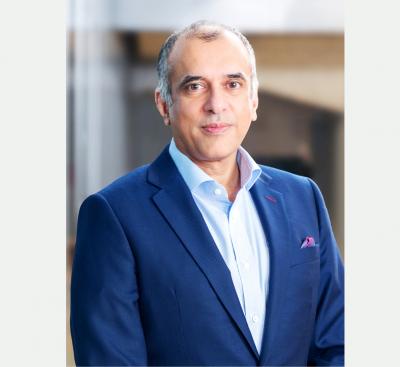
HSBC Holdings PLC is deepening its commitment to Taiwan as the economy emerges as one of the bank’s fastest-growing markets globally, driven by an artificial intelligence (AI) investment boom, expanding cross-border trade, and rising wealth creation. “The advantage that Taiwan has is a growth story linked to the semiconductor and broader AI industries, strong underlying corporate performance, and wealth creation,” said Surendra Rosha, HSBC’s co-chief executive for Asia and the Middle East, in an exclusive interview with the Taipei Times on June 2, during this year’s HSBC Taiwan Conference. That combination has helped HSBC cement its position as the most profitable international
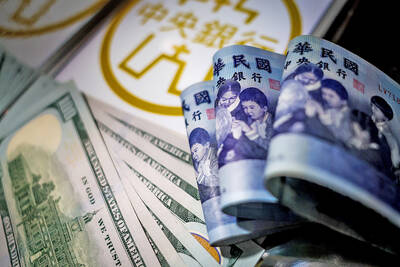
The New Taiwan dollar yesterday fell sharply against the US dollar to close at its lowest level since May 22 amid a massive outflow of funds from the country because of investors panicking over global equity markets. The NT dollar ended at NT$31.580 against the US dollar, slightly lower than its close of NT$31.568 on May 22, after moving between NT$31.5 and NT$31.648 on combined turnover of US$3.062 billion on the Taipei Foreign Exchange and the Cosmos Foreign Exchange. The NT dollar received a significant hit in the morning session, slumping as much as NT$0.173 at a time when other Asian currencies
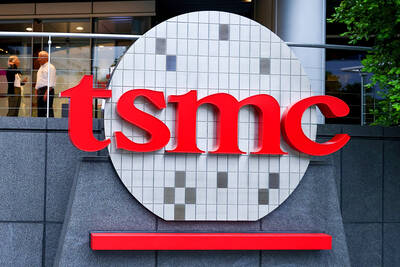
Taiwan Semiconductor Manufacturing Co (TSMC, 台積電) is now ranked ninth among the world’s 100 most valuable companies after its market capitalization more than doubled over the past year, PricewaterhouseCoopers (PwC) Taiwan said in a report last month. TSMC’s market capitalization surged 101 percent year-on-year to US$1.427 trillion as of March 31, the accounting and consulting firm’s 2026 Global Top 100 Companies by Market Capitalization report said. The gain catapulted the world’s largest contract chipmaker from 12th place to ninth in the rankings, and it was the fastest-growing among the global top 10, it said. TSMC was the only Taiwanese company among the top
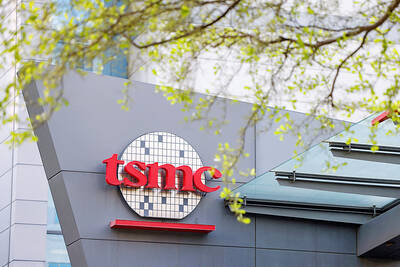
Taiwan Semiconductor Manufacturing Co (TSMC, 台積電) yesterday reported record revenue of NT$416.975 billion (US$13.17 billion) for last month, putting the world’s largest contract chipmaker on track to set a record for quarterly revenue. Last month’s figure surpassed March’s record NT$415.19 billion and represented increases of 1.5 percent from April and 30.1 percent from a year earlier. For the first five months of the year, TSMC generated NT$1.96 trillion in revenue, up 30 percent year-on-year, it said in a statement. TSMC has forecast second-quarter revenue of between US$39 billion and US$40.2 billion, representing sequential growth of about 10 percent and year-on-year growth of about


 RSS
RSS