


TAIEX stages rebound
The TAIEX staged a technical rebound yesterday following sell-offs in the previous session, with buying focusing on bellwether tech stocks, dealers said.
However, turnover shrank as many investors stayed on the sidelines amid lingering concerns over the weakening US economy and the debt crisis in the eurozone, they said.
The index closed up 161.82 points, or 2.2 percent, at the day’s high of 7,529.01, off an early low of 7,428.70, on turnover of NT$91.49 billion (US$3.14 billion).
Chunghwa Picture’s sales up
Panel maker Chunghwa Picture Tubes Ltd (華映) yesterday reported net sales of NT$5.17 billion last month, up 10 percent month-on-month, but down 22.2 percent year-on-year.
Net sales from its panel business units hit NT$4.88 billion last month, up 12 percent from July, but down 18.6 percent from the same month last year, according to a statement.
Of that, shipments of large-sized panels were up 9.7 percent month-on-month, but down 42.2 percent from last year.
Shipments of small and medium-sized panels climbed 22 percent from a month earlier and 26.9 percent from last year, the company said.
Chinatrust, Mega profits slide
Chinatrust Financial Holding Co (中信金控), the nation’s third-largest financial service provider, yesterday posted a net profit of NT$1.21 billion last month, down 23.66 percent from one month earlier and 9.7 percent from a year ago, as the company set aside more loan loss reserves linked to loss-making ProMOS Technologies Inc (茂德科技), the company said in a statement.
For the first eight months of the year, Chinatrust’s net earnings totaled NT$13.94 billion, or earnings of NT$1.33 per share, the statement said.
The firm said net income would have outpaced July’s figures without the NT$1.03 billion in bad loan provision.
Meanwhile, Mega Financial Holding Co (兆豐金控) posted a net profit of NT$1.34 billion last month, down 37.2 percent from one month earlier, but up 5.5 percent from a year ago, according to its stock exchange filing.
Cumulative net income for the first eight months of the year reached NT$12.92 billion, or NT$1.15 per share.
Taiwan at green tech show
Taiwan has doubled its presence at this year’s International Greentech & Eco Products Exhibition and Conference in Malaysia, a four-day event that opened yesterday at the Kuala Lumpur Convention Center.
The nation is being represented this year by 33 exhibitors at 35 booths, compared with only 14 companies and booths last year, Deputy Representative to Malaysia Lin Ming-li (林明禮) said.
Trade delegation on tour
A Taiwanese delegation has concluded a trade promotion visit to Mexico and left for Nicaragua on Sunday to continue its 13-day Central America tour with the goal of finding new markets for Taiwan’s technology products.
Wang Chung-yu (王鍾渝), chairman of the Taipei-based Chinese International Economic Cooperation Association (CIECA), and Arturo Mendicuti, chairman of Mexico City’s economic federation, presided over an investment conference on Sept. 1 where the two sides exchanged views.
After spending three days in Nicaragua, the delegation will head to Peru for a four-day visit.
NT dollar loses ground
The New Taiwan dollar fell against the US dollar yesterday, closing down NT$0.003 at NT$29.115 on turnover of US$771 million.

Taiwanese firms have increased investment in the Philippines in recent years as Manila’s ties with Washington deepen and global supply chains continue to shift away from China, an expert at the Chung-Hua Institution for Economic Research (CIER, 中華經濟研究院) said yesterday. The Philippines had not been among Taiwanese investors’ top choices in Southeast Asia, CIER Taiwan ASEAN Studies Center director Kristy Hsu (徐遵慈) said at a seminar in Taipei. However, Taiwan’s investment in the country has grown significantly since the COVID-19 pandemic, reaching US $257 million last year, a high in recent years, she said. Although Taiwan’s total investment in the Philippines still lags
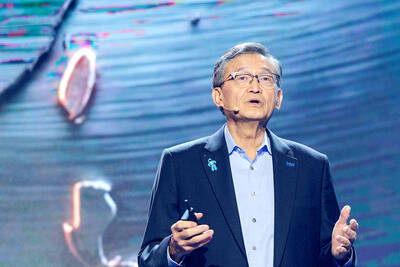
Intel Corp regards Taiwan Semiconductor Manufacturing Co (TSMC, 台積電) as a longstanding partner, as the US chipmaker would continue outsourcing production of advanced chips to TSMC, Intel chief executive officer Lip-Bu Tan (陳立武) said yesterday. “I don’t look at people as competitors. I look at the collaboration... Nvidia is also, you know, a good friend,” Tan told a news conference following his keynote speech at the Computex trade show in Taipei. “It’s a very trusted partnership for us... We are a big, top customer for them, and we’re going to continue doing that,” he said, referring to TSMC, the world’s largest foundry

Artificial intelligence (AI) agents would supplant smartphones as the center of people’s digital lives, fundamentally reshaping personal devices and driving a major computing upgrade cycle, Qualcomm Inc CEO Cristiano Amon said yesterday. In his keynote speech for this year’s Computex trade show in Taipei, Amon said that the rise of "agentic AI" — AI systems capable of reasoning, planning and carrying out tasks autonomously — would transform how people interact with technology across phones, PCs, vehicles and wearable devices. Describing the technology as the next major evolution in computing, Amon said that "2026 is the year of agents.” For decades, smartphones have sat
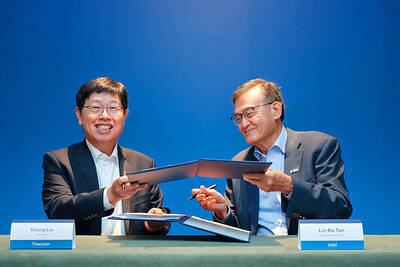
Hon Hai Precision Industry Co (鴻海精密) yesterday said it would work with US chipmaker Intel Corp to jointly develop and deploy next-generation artificial intelligence (AI) infrastructure and intelligent computing platforms in a move to capture booming demand for AI computing systems. Hon Hai, also known as Foxconn Technology Group (富士康), said in a statement that the partnership would combine its global manufacturing scale, system integration expertise and AI data center deployment capabilities with Intel’s strengths in processor architecture, silicon technologies and software ecosystem. The companies said they plan to work on equipment used in AI data centers, including server racks powered by


 RSS
RSS