


TPK Holding Co Ltd (宸鴻) , which supplies touch modules to Apple Inc, yesterday reported record-high quarterly profits, thanks to soaring demand for touch modules used in tablet devices, which delivered a higher margin than those used in mobile phones.
As TPK’s top customer reduces orders this quarter before launching a new-generation product, revenues are expected to fall by 3 to 5 percent this quarter from NT$32.53 billion (US$1.12 billion) in the previous quarter, company financial executive Freddie Liu (劉詩亮) told investors.
“As our key customer cut slightly its third-quarter shipment outlook and an unfavorable macroeconomic environment has weakened consumer confidence, we are conservative about order visibility in the third quarter,” Liu said.
Apple is widely expected to launch its new-generation smartphone, probably called iPhone 5, next month or in October.
“It looks like [the growth momentum] will take a short break in the third quarter and will restart in September,” Liu said.
During the quarter ended June 30, net income grew almost 2.5 times to NT$3.72 billion, compared with NT$1.12 billion earned in the same period last year, according to the company’s financial statement. On a quarterly basis, net profits expanded 50 percent from NT$2.47 billion in the first quarter.
TPK’s second-quarter net profits exceeded the NT$3.25 billion projected by Macquarie and NT$3 billion forecast by JPMorgan. Both Macquarie and JPMorgan rated TPK “outperform.”
Gross margin improved to 19 percent last quarter from 18.9 percent in the first quarter, beating the firm’s expectation of 18 percent, as cost improvement offset price erosion and it had a better product lineup.
This quarter, gross margin would shrink by 1 to 2 percentage points to about 17 or 18 percent from last quarter, reflecting falling demand and a 23 percent increase in operating expenses resulting from rising research and development spending on sampling new touch modules for tablet devices, Liu said.
Revenues from 7-inch touch modules, largely for tablet devices, made up 49 percent of TPK’s total revenue last quarter, from 43 percent in the prior quarter, while touch modules for smartphones dropped to 51 percent from 57 percent, the financial statement showed.
Last quarter, revenues expanded 28 percent quarter-on-quarter, helped by fast-growing end-demand for tablet devices, market share gains and new orders, Liu said.
Liu dismissed recent speculation that TPK was slashing prices to fend off a potential market share loss to local competitors such as Wintek Corp (勝華).
TPK kept its capital spending unchanged at about NT$20 billion for this year, but the company planned to allocate part of the investment on new touch-on-lens products for customers to design more sleek and cost-efficient devices.
TPK is scheduled to ramp up production of the new touch-on-lens products in June next year.

HSBC Holdings PLC is deepening its commitment to Taiwan as the economy emerges as one of the bank’s fastest-growing markets globally, driven by an artificial intelligence (AI) investment boom, expanding cross-border trade, and rising wealth creation. “The advantage that Taiwan has is a growth story linked to the semiconductor and broader AI industries, strong underlying corporate performance, and wealth creation,” said Surendra Rosha, HSBC’s co-chief executive for Asia and the Middle East, in an exclusive interview with the Taipei Times on June 2, during this year’s HSBC Taiwan Conference. That combination has helped HSBC cement its position as the most profitable international
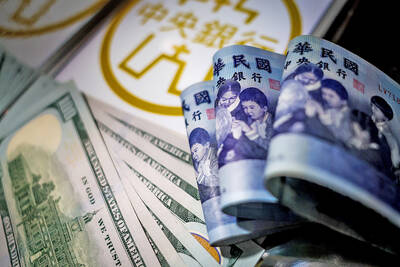
The New Taiwan dollar yesterday fell sharply against the US dollar to close at its lowest level since May 22 amid a massive outflow of funds from the country because of investors panicking over global equity markets. The NT dollar ended at NT$31.580 against the US dollar, slightly lower than its close of NT$31.568 on May 22, after moving between NT$31.5 and NT$31.648 on combined turnover of US$3.062 billion on the Taipei Foreign Exchange and the Cosmos Foreign Exchange. The NT dollar received a significant hit in the morning session, slumping as much as NT$0.173 at a time when other Asian currencies
Taiwan Semiconductor Manufacturing Co (TSMC, 台積電) is now ranked ninth among the world’s 100 most valuable companies after its market capitalization more than doubled over the past year, PricewaterhouseCoopers (PwC) Taiwan said in a report last month. TSMC’s market capitalization surged 101 percent year-on-year to US$1.427 trillion as of March 31, the accounting and consulting firm’s 2026 Global Top 100 Companies by Market Capitalization report said. The gain catapulted the world’s largest contract chipmaker from 12th place to ninth in the rankings, and it was the fastest-growing among the global top 10, it said. TSMC was the only Taiwanese company among the top
Taiwan Semiconductor Manufacturing Co (TSMC, 台積電) yesterday reported record revenue of NT$416.975 billion (US$13.17 billion) for last month, putting the world’s largest contract chipmaker on track to set a record for quarterly revenue. Last month’s figure surpassed March’s record NT$415.19 billion and represented increases of 1.5 percent from April and 30.1 percent from a year earlier. For the first five months of the year, TSMC generated NT$1.96 trillion in revenue, up 30 percent year-on-year, it said in a statement. TSMC has forecast second-quarter revenue of between US$39 billion and US$40.2 billion, representing sequential growth of about 10 percent and year-on-year growth of about


 RSS
RSS