


India’s billionaire Ambani brothers are struggling to rediscover their Midas touch after a year in which they have been battered by investigations and investor skepticism.
Mukesh and Anil Ambani took over their father Dhirubhai’s conglomerate after his death in 2002, but an acrimonious five-year scrap over the assets forced their mother to intervene and break the empire into two.
Elder brother Mukesh heads Reliance Industries, with assets in mostly the energy and petrochemicals sector while Anil created the Anil Dhirubhai Ambani group (ADAG), from its telecom, finance and utilities interests.
Shares in Mukesh’s firm hit a two-year low last week and are down 20 percent this year, while shares have more than halved in Anil’s flagship Reliance Communication (RCom) over the last year.
“Once ‘Dhiru’ shares were in almost every investor’s portfolio,” said Hemen Kapadia, chief executive of investment advisory firm Chart Pundit, using the nickname brokers gave the Reliance Industries stock under the Ambanis’ father.
“But Reliance stocks have lost some of their gloss,” he said.
Mukesh’s Fortune Global 500 firm has been dragged down mostly by concerns about slowing gas output from its fields off India’s east coast, raising valuation worries for other still-to-be-explored assets.
The group had been expected to get a major boost from a US$7.2-billion deal with British energy giant BP to explore the Indian company’s existing and uncharted deepwater oil and gas fields.
However, with gas output falling “the potential valuations for Reliance’s future oil reserves ... is evaporating,” said an oil analyst with a Mumbai-based firm, who declined to be named.
Another headache comes as the energy giant finds itself at the center of controversy after the national auditor claimed that Indian Ministry of Petroleum and Natural Gas favored Reliance as it developed the KG-D6 field.
Anil, meanwhile, saw ADAG removed from the leading Sensex index on the Bombay Stock Exchange last week, just as he was trying to revive its fortunes.
The group has faced headwinds since April after federal police quizzed the tycoon and other -executives as part of a probe into one of India’s biggest graft scandals, involving the awarding of telecom licenses in 2008.
Three senior executives from Reliance Telecom are on remand in prison facing charges of deception, forgery and criminal conspiracy in the high-profile case.
Anil has for more than a year been trying to find a foreign investor to buy a 26 percent stake in RCom, which would help lower its ballooning debt of US$7.18 billion.
RCom, India’s second-biggest mobile phone firm, with a 16.5 percent share, has recorded seven straight quarterly falls in profit, even though India is the world’s fastest growing mobile phone market, with 827 million subscribers at the end of April, a 35 percent jump year-on-year. Competition is intense and margins are falling.
To add insult to injury, the Tata Group became India’s biggest in terms of market capitalization last week, beating the combined value of the brothers’ companies.
The salt-to-steel Tata Group was worth 4.32 trillion rupees (US$96 billion) while the combined worth of the two Ambani brothers groups was 3.46 trillion rupees.
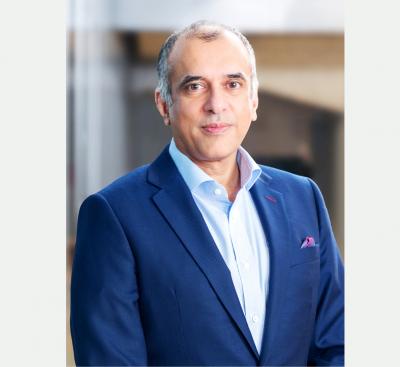
HSBC Holdings PLC is deepening its commitment to Taiwan as the economy emerges as one of the bank’s fastest-growing markets globally, driven by an artificial intelligence (AI) investment boom, expanding cross-border trade, and rising wealth creation. “The advantage that Taiwan has is a growth story linked to the semiconductor and broader AI industries, strong underlying corporate performance, and wealth creation,” said Surendra Rosha, HSBC’s co-chief executive for Asia and the Middle East, in an exclusive interview with the Taipei Times on June 2, during this year’s HSBC Taiwan Conference. That combination has helped HSBC cement its position as the most profitable international
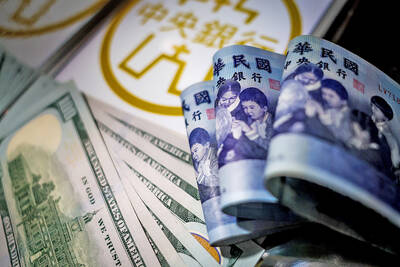
The New Taiwan dollar yesterday fell sharply against the US dollar to close at its lowest level since May 22 amid a massive outflow of funds from the country because of investors panicking over global equity markets. The NT dollar ended at NT$31.580 against the US dollar, slightly lower than its close of NT$31.568 on May 22, after moving between NT$31.5 and NT$31.648 on combined turnover of US$3.062 billion on the Taipei Foreign Exchange and the Cosmos Foreign Exchange. The NT dollar received a significant hit in the morning session, slumping as much as NT$0.173 at a time when other Asian currencies
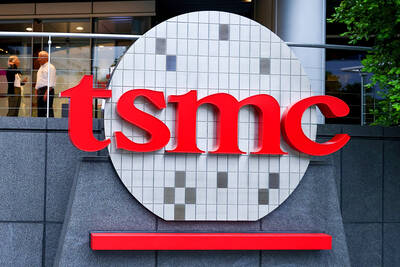
Taiwan Semiconductor Manufacturing Co (TSMC, 台積電) is now ranked ninth among the world’s 100 most valuable companies after its market capitalization more than doubled over the past year, PricewaterhouseCoopers (PwC) Taiwan said in a report last month. TSMC’s market capitalization surged 101 percent year-on-year to US$1.427 trillion as of March 31, the accounting and consulting firm’s 2026 Global Top 100 Companies by Market Capitalization report said. The gain catapulted the world’s largest contract chipmaker from 12th place to ninth in the rankings, and it was the fastest-growing among the global top 10, it said. TSMC was the only Taiwanese company among the top
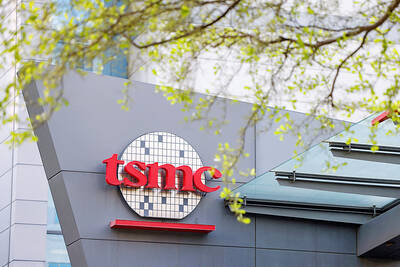
Taiwan Semiconductor Manufacturing Co (TSMC, 台積電) yesterday reported record revenue of NT$416.975 billion (US$13.17 billion) for last month, putting the world’s largest contract chipmaker on track to set a record for quarterly revenue. Last month’s figure surpassed March’s record NT$415.19 billion and represented increases of 1.5 percent from April and 30.1 percent from a year earlier. For the first five months of the year, TSMC generated NT$1.96 trillion in revenue, up 30 percent year-on-year, it said in a statement. TSMC has forecast second-quarter revenue of between US$39 billion and US$40.2 billion, representing sequential growth of about 10 percent and year-on-year growth of about


 RSS
RSS