


BlackBerry maker Research in Motion Ltd (RIM) is already struggling to keep up with rivals such as Apple Inc. Now it faces another challenge: dissident shareholders who are calling for changes in how the company is run.
A Canadian investment firm is calling for RIM to separate the roles of CEO and chairman, saying that is vital for the board to be able to do its job. Shareholder-rights groups often support separating the two positions. A board of directors is tasked with overseeing the CEO, which can be difficult if the CEO is also chairman of the board.
The firm, Northwest & Ethical Investments (NEI), is also asking that the company require any future board chairmen to be independent from the company, which essentially means that they cannot be RIM employees.
Shareholders will vote on NEI’s proposal at the annual meeting on July 12 in RIM’s hometown of Waterloo, Ontario.
RIM has an unusual leadership structure, where two executives, Jim Balsillie and Mike Lazaridis, serve as both co-CEOs and co-chairmen. The company is asking shareholders to vote against NEI’s proposal, saying that the board’s lead independent director serves many of the functions that a chairman would.
Balsillie and Lazaridis have long histories at the company.
In 2009, they settled allegations with the Canadian Securities and Exchange Commission and the Ontario Securities Commission about stock options that had allegedly been backdated. As part of the settlement, Balsillie agreed to step down from the board for about a year.
In March, RIM reported higher revenue and net income for the fiscal year ended Feb. 26, but in April, it cut its predictions for future earnings and sales, saying it’s selling fewer and cheaper phones than it had expected. BlackBerrys are known for their security and reliability as e-mail devices, but they haven’t kept pace with Apple’s iPhones or phones based on Google Inc’s Android software when it comes to running third-party applications.
Since the beginning of the year, RIM’s stock has fallen 37 percent to US$36.56.
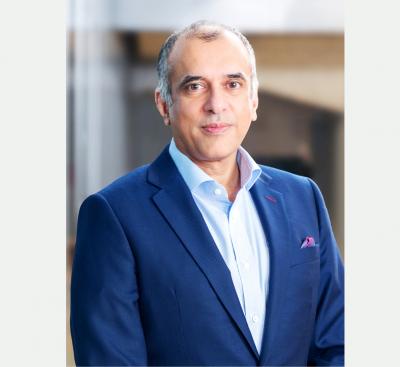
HSBC Holdings PLC is deepening its commitment to Taiwan as the economy emerges as one of the bank’s fastest-growing markets globally, driven by an artificial intelligence (AI) investment boom, expanding cross-border trade, and rising wealth creation. “The advantage that Taiwan has is a growth story linked to the semiconductor and broader AI industries, strong underlying corporate performance, and wealth creation,” said Surendra Rosha, HSBC’s co-chief executive for Asia and the Middle East, in an exclusive interview with the Taipei Times on June 2, during this year’s HSBC Taiwan Conference. That combination has helped HSBC cement its position as the most profitable international
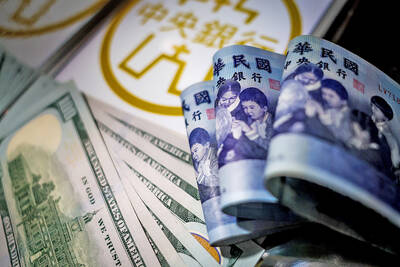
The New Taiwan dollar yesterday fell sharply against the US dollar to close at its lowest level since May 22 amid a massive outflow of funds from the country because of investors panicking over global equity markets. The NT dollar ended at NT$31.580 against the US dollar, slightly lower than its close of NT$31.568 on May 22, after moving between NT$31.5 and NT$31.648 on combined turnover of US$3.062 billion on the Taipei Foreign Exchange and the Cosmos Foreign Exchange. The NT dollar received a significant hit in the morning session, slumping as much as NT$0.173 at a time when other Asian currencies
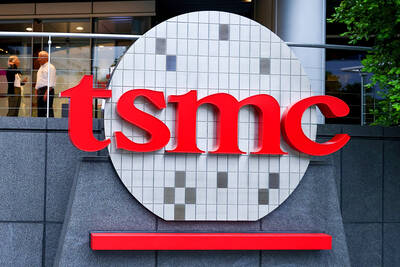
Taiwan Semiconductor Manufacturing Co (TSMC, 台積電) is now ranked ninth among the world’s 100 most valuable companies after its market capitalization more than doubled over the past year, PricewaterhouseCoopers (PwC) Taiwan said in a report last month. TSMC’s market capitalization surged 101 percent year-on-year to US$1.427 trillion as of March 31, the accounting and consulting firm’s 2026 Global Top 100 Companies by Market Capitalization report said. The gain catapulted the world’s largest contract chipmaker from 12th place to ninth in the rankings, and it was the fastest-growing among the global top 10, it said. TSMC was the only Taiwanese company among the top
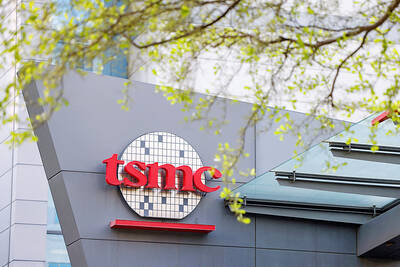
Taiwan Semiconductor Manufacturing Co (TSMC, 台積電) yesterday reported record revenue of NT$416.975 billion (US$13.17 billion) for last month, putting the world’s largest contract chipmaker on track to set a record for quarterly revenue. Last month’s figure surpassed March’s record NT$415.19 billion and represented increases of 1.5 percent from April and 30.1 percent from a year earlier. For the first five months of the year, TSMC generated NT$1.96 trillion in revenue, up 30 percent year-on-year, it said in a statement. TSMC has forecast second-quarter revenue of between US$39 billion and US$40.2 billion, representing sequential growth of about 10 percent and year-on-year growth of about


 RSS
RSS