


India, which has the highest inflation of any large Asian economy, looks set this week to hike interest rates for a ninth time despite mounting concern over the impact of monetary tightening.
The central bank has raised rates eight times since March last year, albeit in gradual, quarter-point steps to minimize the impact on economic growth.
However, inflation has remained high and some economists expect Reserve Bank of India (RBI) policymakers to move more aggressively when they meet tomorrow.
“A 50-basis-point rate rise wouldn’t surprise me — inflation is proving stubbornly difficult to reduce,” said Deepak Lalwani, head of London-based India investment consultancy Lalcap.
“It’s time to step it up,” HSBC chief India economist Leif Eskesen said.
Others bet the bank will stick to its “slowly, slowly approach” and only hike by a quarter point as it seeks to balance growth and inflation concerns.
The RBI meeting comes after data last month showed inflation had surged to nearly 9 percent.
The Asian Development Bank has said controlling inflation must be the Asian region’s top priority as strong growth, turmoil in the Middle East and Japan’s nuclear crisis drive up food and oil prices.
Asian economies from South Korea, Indonesia, Taiwan to China are all battling inflationary pressures, but some economists are concerned that India’s central bank may push too hard on the brakes.
The benchmark repurchase, or repo rate, at which the bank lends to commercial banks, is 6.75 percent while the reverse repo, paid to banks for deposits, is 5.75 percent.
“The bottom line is the central bank needs to act, but it should not go overboard,” CLSA economist Rajeev Malik said. “It must avoid a repeat of the mid-1990s outcome of killing inflation by crippling growth.”
The government has said it expects the economy to expand by 9 percent in the current fiscal year, returning to the level it reached before the global financial crisis.
However, there are already fears that Asia’s third-largest economy will undershoot the target because of interest rate increases.
Investment house Goldman Sachs has already slashed its growth forecast for the year to March next year from 8.7 percent to 7.8 percent. Credit Suisse economist Robert Prior-Wandesforde has trimmed his expansion forecast to 7.5 percent.
The economy is already showing signs of slowing with an 18 percent year-on-year drop in capital goods output in February, trimming industrial production growth to 3.6 percent.
Inflation, fed by food and fuel price rises, has been one of the biggest headaches for the -Congress-led government headed by Indian Prime Minister Manmohan Singh, whose coalition is also reeling from a string of corruption scandals.
Reducing prices is a political priority even as higher growth is seen as the key to reducing crushing poverty in the nation of 1.2 billion.
Poorer households, the backbone of the party’s support, have been especially hard hit by inflation, a traditional lightning rod for political discontent.
“Inflation is the most important short-term problem,” said Montek Singh Ahluwalia, deputy head of India’s influential economic Planning Commission, who has urged the central bank to use “all the flexibility” at its disposal.
Former central bank governor Y.V. Reddy said the RBI cannot afford any let up in its anti-inflation fight — even if it means slower growth.
“Tell me any single period when we have had higher growth and higher inflation. It just does not happen that way and it is a wrong policy. What we need is low inflation and if it demands low growth, so be it,” Reddy said.
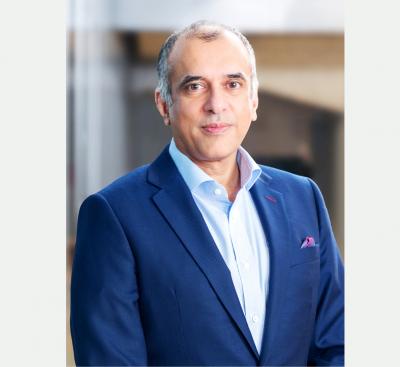
HSBC Holdings PLC is deepening its commitment to Taiwan as the economy emerges as one of the bank’s fastest-growing markets globally, driven by an artificial intelligence (AI) investment boom, expanding cross-border trade, and rising wealth creation. “The advantage that Taiwan has is a growth story linked to the semiconductor and broader AI industries, strong underlying corporate performance, and wealth creation,” said Surendra Rosha, HSBC’s co-chief executive for Asia and the Middle East, in an exclusive interview with the Taipei Times on June 2, during this year’s HSBC Taiwan Conference. That combination has helped HSBC cement its position as the most profitable international
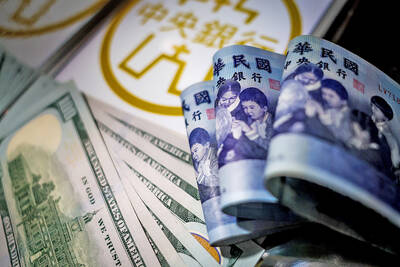
The New Taiwan dollar yesterday fell sharply against the US dollar to close at its lowest level since May 22 amid a massive outflow of funds from the country because of investors panicking over global equity markets. The NT dollar ended at NT$31.580 against the US dollar, slightly lower than its close of NT$31.568 on May 22, after moving between NT$31.5 and NT$31.648 on combined turnover of US$3.062 billion on the Taipei Foreign Exchange and the Cosmos Foreign Exchange. The NT dollar received a significant hit in the morning session, slumping as much as NT$0.173 at a time when other Asian currencies
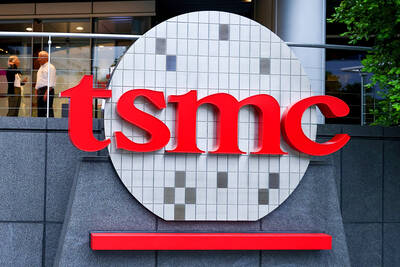
Taiwan Semiconductor Manufacturing Co (TSMC, 台積電) is now ranked ninth among the world’s 100 most valuable companies after its market capitalization more than doubled over the past year, PricewaterhouseCoopers (PwC) Taiwan said in a report last month. TSMC’s market capitalization surged 101 percent year-on-year to US$1.427 trillion as of March 31, the accounting and consulting firm’s 2026 Global Top 100 Companies by Market Capitalization report said. The gain catapulted the world’s largest contract chipmaker from 12th place to ninth in the rankings, and it was the fastest-growing among the global top 10, it said. TSMC was the only Taiwanese company among the top
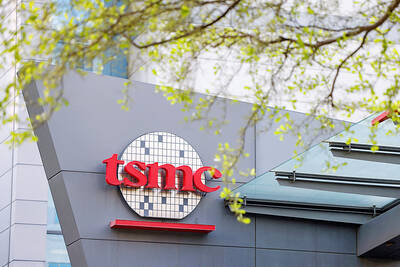
Taiwan Semiconductor Manufacturing Co (TSMC, 台積電) yesterday reported record revenue of NT$416.975 billion (US$13.17 billion) for last month, putting the world’s largest contract chipmaker on track to set a record for quarterly revenue. Last month’s figure surpassed March’s record NT$415.19 billion and represented increases of 1.5 percent from April and 30.1 percent from a year earlier. For the first five months of the year, TSMC generated NT$1.96 trillion in revenue, up 30 percent year-on-year, it said in a statement. TSMC has forecast second-quarter revenue of between US$39 billion and US$40.2 billion, representing sequential growth of about 10 percent and year-on-year growth of about


 RSS
RSS