


General Motors (GM) is almost certain to claim the title of world’s biggest automaker this year, retaking the top spot from Toyota, which has been hurt by production problems since the last month’s earthquake and still can’t escape the shadow of major safety recalls.
The No. 1 title, a morale booster for the winner’s employees and managers, would cap GM’s remarkable comeback from bankruptcy.
GM’s sales are up, mainly in China and the US, the world’s top two markets. Cars are better than in the past, especially small ones. But even though GM came within 30,000 sales of Toyota last year and began strong this year, any sales victory has more to do with Toyota’s problems.
First, a series of big recalls has ballooned to 14 million vehicles worldwide and damaged Toyota’s reputation for reliability. That has spurred loyal buyers to look at other brands.
Second, last month’s earthquake and tsunami in Japan curbed Toyota’s car production. On Friday, Toyota said its global factories would not return to full production until November or December. The crisis has already cost it production of 260,000 vehicles.
Last year, Toyota sold 8.42 million cars and trucks, barely ahead of a resurgent GM, which sold 8.39 million. GM held the No. 1 spot from 1932 until 2008.
If GM places first this year, it won’t be much to crow much, said Jesse Toprak, vice president of industry trends and insights for TrueCar.com, an auto price tracking Web site.
“It’s because of [factory] capacity restrictions, and that’s not something they want to brag about,” he said.
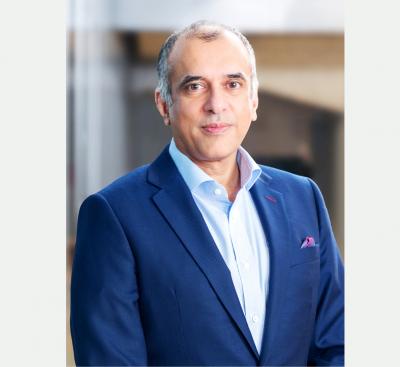
HSBC Holdings PLC is deepening its commitment to Taiwan as the economy emerges as one of the bank’s fastest-growing markets globally, driven by an artificial intelligence (AI) investment boom, expanding cross-border trade, and rising wealth creation. “The advantage that Taiwan has is a growth story linked to the semiconductor and broader AI industries, strong underlying corporate performance, and wealth creation,” said Surendra Rosha, HSBC’s co-chief executive for Asia and the Middle East, in an exclusive interview with the Taipei Times on June 2, during this year’s HSBC Taiwan Conference. That combination has helped HSBC cement its position as the most profitable international
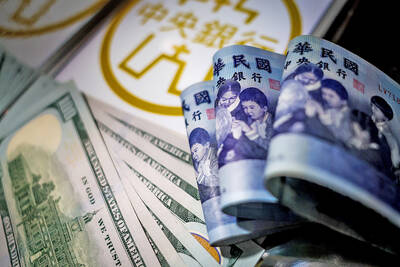
The New Taiwan dollar yesterday fell sharply against the US dollar to close at its lowest level since May 22 amid a massive outflow of funds from the country because of investors panicking over global equity markets. The NT dollar ended at NT$31.580 against the US dollar, slightly lower than its close of NT$31.568 on May 22, after moving between NT$31.5 and NT$31.648 on combined turnover of US$3.062 billion on the Taipei Foreign Exchange and the Cosmos Foreign Exchange. The NT dollar received a significant hit in the morning session, slumping as much as NT$0.173 at a time when other Asian currencies
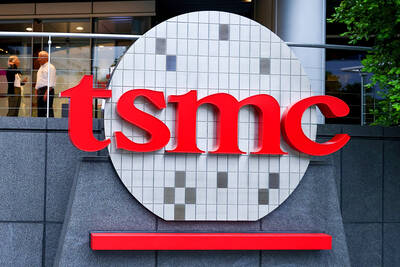
Taiwan Semiconductor Manufacturing Co (TSMC, 台積電) is now ranked ninth among the world’s 100 most valuable companies after its market capitalization more than doubled over the past year, PricewaterhouseCoopers (PwC) Taiwan said in a report last month. TSMC’s market capitalization surged 101 percent year-on-year to US$1.427 trillion as of March 31, the accounting and consulting firm’s 2026 Global Top 100 Companies by Market Capitalization report said. The gain catapulted the world’s largest contract chipmaker from 12th place to ninth in the rankings, and it was the fastest-growing among the global top 10, it said. TSMC was the only Taiwanese company among the top
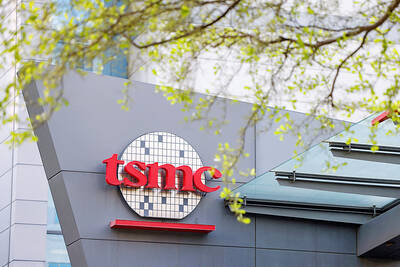
Taiwan Semiconductor Manufacturing Co (TSMC, 台積電) yesterday reported record revenue of NT$416.975 billion (US$13.17 billion) for last month, putting the world’s largest contract chipmaker on track to set a record for quarterly revenue. Last month’s figure surpassed March’s record NT$415.19 billion and represented increases of 1.5 percent from April and 30.1 percent from a year earlier. For the first five months of the year, TSMC generated NT$1.96 trillion in revenue, up 30 percent year-on-year, it said in a statement. TSMC has forecast second-quarter revenue of between US$39 billion and US$40.2 billion, representing sequential growth of about 10 percent and year-on-year growth of about


 RSS
RSS