


Leaders of the top emerging economic powers meeting in China yesterday warned that volatile commodity prices posed risks for the global recovery and voiced fears about capital inflows.
Inflation has been rising on higher food, energy and metal prices because of Japan’s nuclear disaster and the Libya conflict, while investors worried about the global outlook have poured money into fast-growing emerging economies.
“Excessive volatility in commodity prices, particularly those for food and energy, poses new risks for the ongoing recovery of the world economy,” Brazil, Russia, India, China and South Africa (BRICS) said in a joint summit communique.
Russian President Dmitry -Medvedev, Chinese President Hu Jintao (胡錦濤), Brazilian President Dilma Rousseff, South African President Jacob Zuma and Indian Prime Minister Manmohan Singh gathered for the talks yesterday on Hainan.
It marked the third annual meeting for the leaders of the four original BRIC nations, and the first in an expanded format that included South Africa, which was invited to join the bloc late last year.
Together, the five countries represent more than 40 percent of the world’s population, and their combined GDP accounted for 18 percent of the global total last year, according to the IMF.
They said emerging economies were threatened by “massive” capital flows that have been blamed for pushing up their currency values.
The leaders meanwhile welcomed discussion about the role of the IMF’s international reserve asset, noting the global crisis had exposed the “inadequacies and deficiencies” of the current monetary and financial system.
“We support the reform and improvement of the international monetary system, with a broad-based international reserve currency system providing stability and certainty,” the statement said.
The BRICS state development banks also agreed to open credit lines in their national currencies, Russia’s state development bank Vnesheconombank said in a separate statement, which would reduce their reliance on the US dollar.
China Development Bank (國家開發銀行), which just signed a local currency credit deal with its BRICS counterparts, is ready to pump up to 10 billion yuan (US$1.5 billion) in loans into Brazil, Russia, India and South Africa, the bank’s governor said.
Chen Yuan (陳元), the bank’s head, said the yuan loans would focus on big projects in oil, natural gas and infrastructure fields. He told a press conference that the bank aims to deepen cooperation with Brazilian state-run oil company Petrobras following the existing US$10 billion loan arrangements.
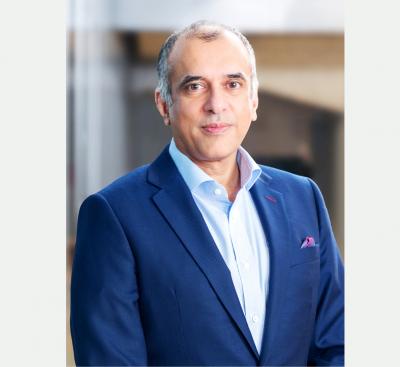
HSBC Holdings PLC is deepening its commitment to Taiwan as the economy emerges as one of the bank’s fastest-growing markets globally, driven by an artificial intelligence (AI) investment boom, expanding cross-border trade, and rising wealth creation. “The advantage that Taiwan has is a growth story linked to the semiconductor and broader AI industries, strong underlying corporate performance, and wealth creation,” said Surendra Rosha, HSBC’s co-chief executive for Asia and the Middle East, in an exclusive interview with the Taipei Times on June 2, during this year’s HSBC Taiwan Conference. That combination has helped HSBC cement its position as the most profitable international
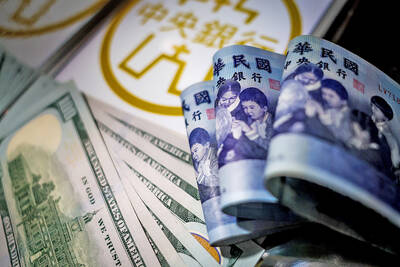
The New Taiwan dollar yesterday fell sharply against the US dollar to close at its lowest level since May 22 amid a massive outflow of funds from the country because of investors panicking over global equity markets. The NT dollar ended at NT$31.580 against the US dollar, slightly lower than its close of NT$31.568 on May 22, after moving between NT$31.5 and NT$31.648 on combined turnover of US$3.062 billion on the Taipei Foreign Exchange and the Cosmos Foreign Exchange. The NT dollar received a significant hit in the morning session, slumping as much as NT$0.173 at a time when other Asian currencies
Taiwan Semiconductor Manufacturing Co (TSMC, 台積電) is now ranked ninth among the world’s 100 most valuable companies after its market capitalization more than doubled over the past year, PricewaterhouseCoopers (PwC) Taiwan said in a report last month. TSMC’s market capitalization surged 101 percent year-on-year to US$1.427 trillion as of March 31, the accounting and consulting firm’s 2026 Global Top 100 Companies by Market Capitalization report said. The gain catapulted the world’s largest contract chipmaker from 12th place to ninth in the rankings, and it was the fastest-growing among the global top 10, it said. TSMC was the only Taiwanese company among the top
Taiwan Semiconductor Manufacturing Co (TSMC, 台積電) yesterday reported record revenue of NT$416.975 billion (US$13.17 billion) for last month, putting the world’s largest contract chipmaker on track to set a record for quarterly revenue. Last month’s figure surpassed March’s record NT$415.19 billion and represented increases of 1.5 percent from April and 30.1 percent from a year earlier. For the first five months of the year, TSMC generated NT$1.96 trillion in revenue, up 30 percent year-on-year, it said in a statement. TSMC has forecast second-quarter revenue of between US$39 billion and US$40.2 billion, representing sequential growth of about 10 percent and year-on-year growth of about


 RSS
RSS