


Chinese inflation topped expectations last month at 4.9 percent and looks set to climb further in coming months, adding to pressure for another dose of monetary tightening.
However, data published yesterday also offered tentative signs that Beijing was making some headway in taming price rises without inflicting undue harm on growth in the world’s second-largest economy.
Consumer inflation steadied in last month at the same level as in January, the National Bureau of Statistics said. Although above forecasts for 4.7 percent, the 4.9 percent reading contrasted with dire warnings a few months ago of runaway prices. Core inflation, stripped of volatile food costs, slowed.
“Clearly, the consumer price index is stabilizing, but the risk is still significantly on the upside,” said Wei Yao, economist with Societe Generale in Hong Kong. “It means the central bank will probably stay on the course of tightening.”
Though far too soon for Beijing to declare victory against inflation, the stabilization suggested that it was more than midway through a sustained tightening campaign launched almost half a year ago.
People’s Bank of China Governor Zhou Xiaochuan (周小川) struck a guardedly optimistic note.
“If we observe the CPI [consumer price index] figures for December, January and February, although they are high, inflationary expectations are currently relatively stable,” he said at a news conference during China’s annual session of parliament.
China’s top leaders have declared that their priority this year is to control inflation. So far, complaints about rising prices have amounted to little more than grumbles, but serious inflation has sparked social unrest in China in the past.
To meet the official goal of keeping inflation to a 4 percent average this year, the government has raised interest rates three times and banks’ reserve requirements five times since last October, while also using a series of direct controls to cap price rises. The next round of tightening may be just around the corner.
“The higher-than-expected CPI may push the government to raise interest rates or the reserve requirement ratio in March,” China Merchants Bank (招商銀行) analyst Liu Dongliang (劉棟樑) said in Shenzhen.
Reflecting the surge in global commodity costs earlier this year, producer price inflation jumped last month to 7.2 percent from 6.6 percent a month earlier.
The most important part of tightening efforts has been reining in banks, which unleashed a torrent of credit over the past two years, swamping the economy in cash.
Reports in official media have said that new loans last month were slightly above 500 billion yuan (US$76 billion), a steep drop from January and considerably less than expected. If confirmed, that would suggest that China has finally gained traction in controlling the excesses of banks.
In a statement yesterday, the Chinese central bank said it would ensure that there is an “appropriate” amount of liquidity in the economy this year, guiding credit growth at a reasonable pace.
Zhou poured cold water on the suggestion that faster currency appreciation would help China control inflation. At the margins, it would be useful, but China is a continent-sized economy and so the exchange rate plays a more minor role than in small, open economies, he said.
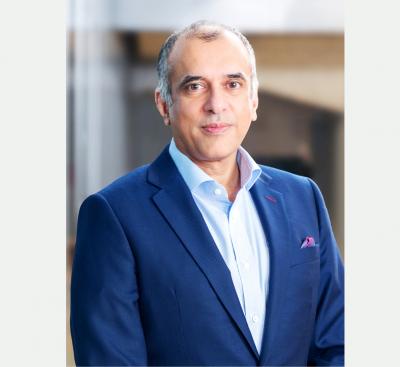
HSBC Holdings PLC is deepening its commitment to Taiwan as the economy emerges as one of the bank’s fastest-growing markets globally, driven by an artificial intelligence (AI) investment boom, expanding cross-border trade, and rising wealth creation. “The advantage that Taiwan has is a growth story linked to the semiconductor and broader AI industries, strong underlying corporate performance, and wealth creation,” said Surendra Rosha, HSBC’s co-chief executive for Asia and the Middle East, in an exclusive interview with the Taipei Times on June 2, during this year’s HSBC Taiwan Conference. That combination has helped HSBC cement its position as the most profitable international
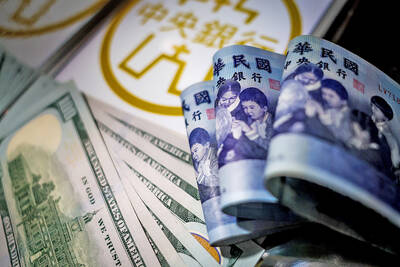
The New Taiwan dollar yesterday fell sharply against the US dollar to close at its lowest level since May 22 amid a massive outflow of funds from the country because of investors panicking over global equity markets. The NT dollar ended at NT$31.580 against the US dollar, slightly lower than its close of NT$31.568 on May 22, after moving between NT$31.5 and NT$31.648 on combined turnover of US$3.062 billion on the Taipei Foreign Exchange and the Cosmos Foreign Exchange. The NT dollar received a significant hit in the morning session, slumping as much as NT$0.173 at a time when other Asian currencies
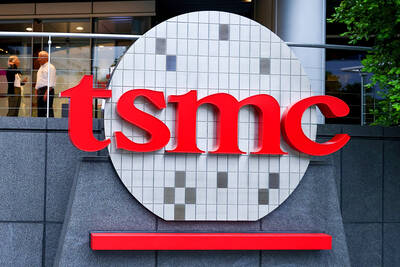
Taiwan Semiconductor Manufacturing Co (TSMC, 台積電) is now ranked ninth among the world’s 100 most valuable companies after its market capitalization more than doubled over the past year, PricewaterhouseCoopers (PwC) Taiwan said in a report last month. TSMC’s market capitalization surged 101 percent year-on-year to US$1.427 trillion as of March 31, the accounting and consulting firm’s 2026 Global Top 100 Companies by Market Capitalization report said. The gain catapulted the world’s largest contract chipmaker from 12th place to ninth in the rankings, and it was the fastest-growing among the global top 10, it said. TSMC was the only Taiwanese company among the top
Taiwan Semiconductor Manufacturing Co (TSMC, 台積電) yesterday reported record revenue of NT$416.975 billion (US$13.17 billion) for last month, putting the world’s largest contract chipmaker on track to set a record for quarterly revenue. Last month’s figure surpassed March’s record NT$415.19 billion and represented increases of 1.5 percent from April and 30.1 percent from a year earlier. For the first five months of the year, TSMC generated NT$1.96 trillion in revenue, up 30 percent year-on-year, it said in a statement. TSMC has forecast second-quarter revenue of between US$39 billion and US$40.2 billion, representing sequential growth of about 10 percent and year-on-year growth of about


 RSS
RSS