


Boeing Co won a US$30 billion contract for 179 new US Air Force refueling planes on Thursday, trumping arch rival Airbus parent EADS in a fiercely contested competition that began nearly a decade ago.
It was the third effort since 2001 to start replacing 50-year-old Boeing-made KC-135 Stratotankers, built before man first stepped on the moon.
“Boeing was the clear winner,” US Deputy Secretary of Defense William Lynn told reporters at the Pentagon.

Photo: Reuters WARNING: EXCESSIVE CONSUMPTION OF ALCOHOL CAN DAMAGE YOUR HEALTH
He said Boeing offered a far better deal at a time when defense budgets are under increasing pressure.
Boeing’s shares rose 3.9 percent in afterhours trading on the news, which gave the Chicago-based aerospace giant a solid win as it struggles to gets its ailing 787 Dreamliner commercial airplane program back on track.
EADS expressed disappointment and concern about the decision, but said the contract was just “one business opportunity among many” in the US.
EADS said last week it would only protest the contract if it saw egregious errors.
Boeing was “humbled” by the win, said Dennis Muilenburg, chief executive of Boeing’s defense unit. He gave no details on pricing, but said Boeing was able to cut costs by working more closely with its commercial wing and making substantial investments to improve its 767 production line.
Muilenburg added that the Boeing plane was smaller, used 24 percent less fuel and would result in less reconstruction costs for military airports.
US Air Force Secretary Michael Donley said the initial US$3.5 billion fixed-price contract would pay for design, development and delivery of 18 planes by 2017, but could be worth more than US$30 billion in coming years.
Previous Air Force efforts to buy new planes to refuel other aircraft during flight have been marred by an ethics scandal and selection errors.
The contest has sparked trans-Atlantic tensions and clashes among US lawmakers eager to bring high-paying aerospace jobs to their states.
Analysts were caught off guard by the contract, given predictions that EADS would aggressively underbid Boeing.
Teal Group’s Richard Aboulafia called the decision “a major surprise” and said if it holds, Boeing will have succeeded in blocking EADS’ biggest defense initiative.
Lynn said EADS could protest the decision, but said Pentagon officials were convinced the decision was fair.
“We think we’ve established a clear, a transparent and an open process and we think we’ve executed on that and it will not yield grounds for protest,” Lynn said
EADS is waiting until after a formal briefing by the Air Force, which is likely to occur on Wednesday, to decide what to do, but its statement appeared to look to future opportunities to do business with the US military.
EADS has 10 days to file a formal protest after a contract award and its congressional backers can also try to block the award legislatively.
EADS and Boeing, arch rivals in the market for passenger jets, have fought bitterly in public over the contest with expensive advertisements while their respective supporters have battled it out at dueling news conferences.
US defense officials, who kept the news under wraps until it was announced at the Pentagon, gave few details about the bids, saying only that the offers were more than 1 percent apart.
Documents from the previous competition showed an average price for the Airbus plane of US$160 million versus US$168 million for the Boeing plane, but analysts say the price could be 5 to 10 percent lower this time.
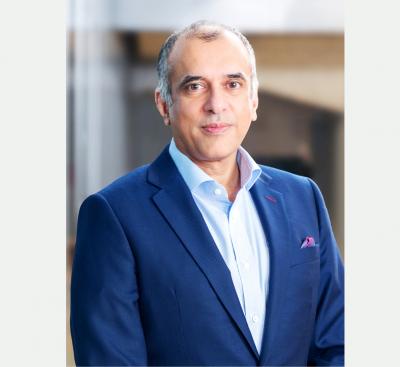
HSBC Holdings PLC is deepening its commitment to Taiwan as the economy emerges as one of the bank’s fastest-growing markets globally, driven by an artificial intelligence (AI) investment boom, expanding cross-border trade, and rising wealth creation. “The advantage that Taiwan has is a growth story linked to the semiconductor and broader AI industries, strong underlying corporate performance, and wealth creation,” said Surendra Rosha, HSBC’s co-chief executive for Asia and the Middle East, in an exclusive interview with the Taipei Times on June 2, during this year’s HSBC Taiwan Conference. That combination has helped HSBC cement its position as the most profitable international
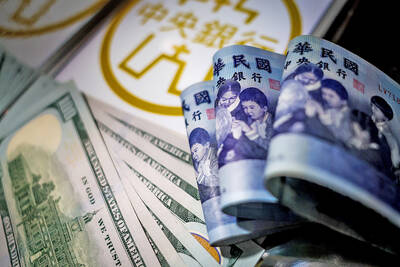
The New Taiwan dollar yesterday fell sharply against the US dollar to close at its lowest level since May 22 amid a massive outflow of funds from the country because of investors panicking over global equity markets. The NT dollar ended at NT$31.580 against the US dollar, slightly lower than its close of NT$31.568 on May 22, after moving between NT$31.5 and NT$31.648 on combined turnover of US$3.062 billion on the Taipei Foreign Exchange and the Cosmos Foreign Exchange. The NT dollar received a significant hit in the morning session, slumping as much as NT$0.173 at a time when other Asian currencies
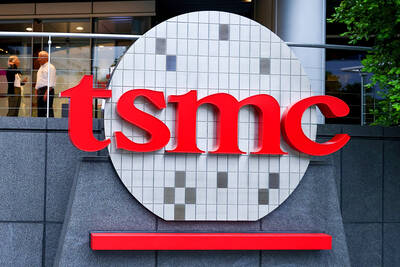
Taiwan Semiconductor Manufacturing Co (TSMC, 台積電) is now ranked ninth among the world’s 100 most valuable companies after its market capitalization more than doubled over the past year, PricewaterhouseCoopers (PwC) Taiwan said in a report last month. TSMC’s market capitalization surged 101 percent year-on-year to US$1.427 trillion as of March 31, the accounting and consulting firm’s 2026 Global Top 100 Companies by Market Capitalization report said. The gain catapulted the world’s largest contract chipmaker from 12th place to ninth in the rankings, and it was the fastest-growing among the global top 10, it said. TSMC was the only Taiwanese company among the top
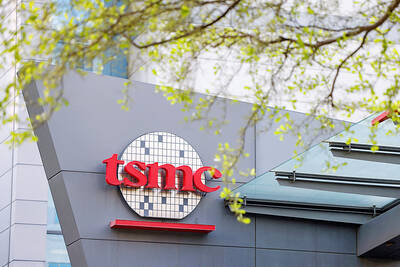
Taiwan Semiconductor Manufacturing Co (TSMC, 台積電) yesterday reported record revenue of NT$416.975 billion (US$13.17 billion) for last month, putting the world’s largest contract chipmaker on track to set a record for quarterly revenue. Last month’s figure surpassed March’s record NT$415.19 billion and represented increases of 1.5 percent from April and 30.1 percent from a year earlier. For the first five months of the year, TSMC generated NT$1.96 trillion in revenue, up 30 percent year-on-year, it said in a statement. TSMC has forecast second-quarter revenue of between US$39 billion and US$40.2 billion, representing sequential growth of about 10 percent and year-on-year growth of about


 RSS
RSS