


MANUFACTURING
Japan output drops again
Japan’s industrial output slipped for a third consecutive month in August, data showed yesterday, in a further sign that a fragile export-led recovery is losing steam. Output fell 0.3 percent, the Japanese Ministry of Economy, Trade and Industry said, following July’s revised 0.2 percent slump. The latest figure came in below expectations of a 1.1 percent rise. “Industrial production is flat and is likely to be weak,” the ministry said, adding that the general machinery sector and iron and steel production were the main contributors to the monthly decrease. The ministry expects production to fall 0.1 percent for last month and 2.9 percent this month.
MANUFACTURING
S Korea sees growth
South Korea’s industrial output grew year-on-year for the 14th straight month in August but dipped month-on-month, official data showed yesterday. Production in mining and manufacturing grew 17.1 percent from August last year, Statistics Korea said in a report. The figure dipped 1 percent from July, the first monthly decline for 10 months, as workers took summer vacations and factories cut inventories amid concern over the health of the global economic recovery. “There was a contraction in shipping and other transportation equipment sectors, but overall figures were propped up by a strong showing in semiconductors and machinery equipment sectors,” the statistical agency’s Yun Myoung-joon said.
BANKING
ICBC reaffirms partnership
Industrial and Commercial Bank of China (ICBC, 中國工商銀行) said yesterday its strategic partnership with Goldman Sachs remained unchanged after the US investment bank cut its stake to raise more than US$2 billion. Goldman Sachs had sold about 23 percent of its holdings in the Chinese lender’s Hong Kong-listed shares, the Beijing-based bank said. The sale would bring Goldman’s stake in ICBC down to 3 percent of China’s largest bank by assets after it initially bought a 4.9 percent stake in 2006. “Goldman Sachs indicated its strategic cooperation relations with us remains unchanged. It is still ICBC’s strategic investor,” an ICBC spokeswoman told reporters.
REAL ESTATE
Emaar to issue notes
Dubai’s giant developer Emaar Properties, which built the world’s tallest tower, will issue up to US$500 million in convertible notes, pending approval by shareholders, the company said. “The company intends to use the net proceeds of the offering to refinance short-term liabilities and for general corporate purposes,” Emaar said in a late-Wednesday statement. The planned offering would be for US$450 million of convertible notes due in 2015, “with a potential maximum size of US$500 million if the over-allotment option is exercised,” Emaar said.
OIL
Marubeni eyes North Sea
Japanese trading house Marubeni Corp said yesterday it would buy stakes in North Sea oil and gas fields from the Norwegian Energy Co. Marubeni will pay about US$150 million for the deal over the Oselvar and Enoch oil and gas fields in the Norwegian North Sea. The Japanese firm estimates its interests of the two fields should produce 3,000 barrels of crude and natural gas a day. “Through this transaction, we can enter into the Norwegian North Sea, an area with significant remaining potential,” Marubeni said. “We are confident that this acquisition will be a stepping stone to allow us to further develop our business in Norway."
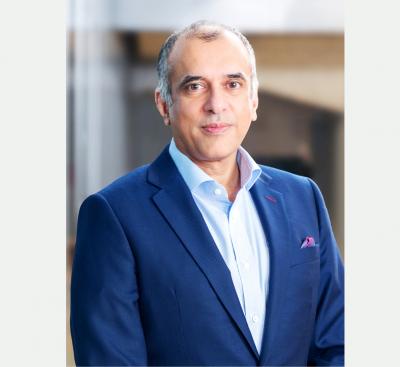
HSBC Holdings PLC is deepening its commitment to Taiwan as the economy emerges as one of the bank’s fastest-growing markets globally, driven by an artificial intelligence (AI) investment boom, expanding cross-border trade, and rising wealth creation. “The advantage that Taiwan has is a growth story linked to the semiconductor and broader AI industries, strong underlying corporate performance, and wealth creation,” said Surendra Rosha, HSBC’s co-chief executive for Asia and the Middle East, in an exclusive interview with the Taipei Times on June 2, during this year’s HSBC Taiwan Conference. That combination has helped HSBC cement its position as the most profitable international
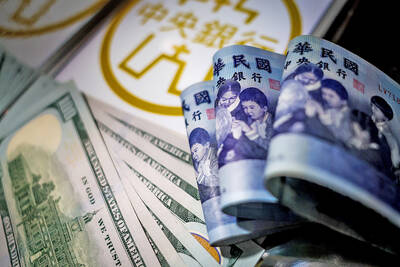
The New Taiwan dollar yesterday fell sharply against the US dollar to close at its lowest level since May 22 amid a massive outflow of funds from the country because of investors panicking over global equity markets. The NT dollar ended at NT$31.580 against the US dollar, slightly lower than its close of NT$31.568 on May 22, after moving between NT$31.5 and NT$31.648 on combined turnover of US$3.062 billion on the Taipei Foreign Exchange and the Cosmos Foreign Exchange. The NT dollar received a significant hit in the morning session, slumping as much as NT$0.173 at a time when other Asian currencies
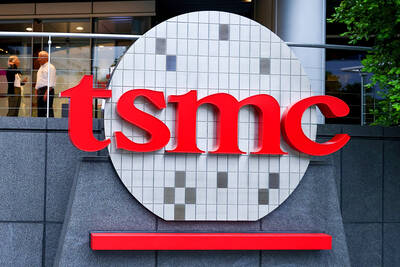
Taiwan Semiconductor Manufacturing Co (TSMC, 台積電) is now ranked ninth among the world’s 100 most valuable companies after its market capitalization more than doubled over the past year, PricewaterhouseCoopers (PwC) Taiwan said in a report last month. TSMC’s market capitalization surged 101 percent year-on-year to US$1.427 trillion as of March 31, the accounting and consulting firm’s 2026 Global Top 100 Companies by Market Capitalization report said. The gain catapulted the world’s largest contract chipmaker from 12th place to ninth in the rankings, and it was the fastest-growing among the global top 10, it said. TSMC was the only Taiwanese company among the top
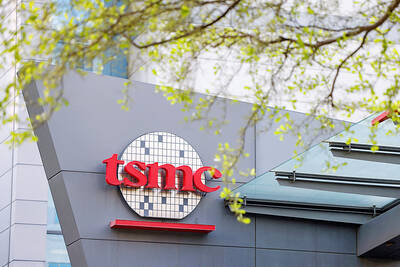
Taiwan Semiconductor Manufacturing Co (TSMC, 台積電) yesterday reported record revenue of NT$416.975 billion (US$13.17 billion) for last month, putting the world’s largest contract chipmaker on track to set a record for quarterly revenue. Last month’s figure surpassed March’s record NT$415.19 billion and represented increases of 1.5 percent from April and 30.1 percent from a year earlier. For the first five months of the year, TSMC generated NT$1.96 trillion in revenue, up 30 percent year-on-year, it said in a statement. TSMC has forecast second-quarter revenue of between US$39 billion and US$40.2 billion, representing sequential growth of about 10 percent and year-on-year growth of about


 RSS
RSS