


A proposal by 18 Academia Sinica research fellows opposing a petrochemical complex that Kuokuang Petrochemical Technology Co (國光石化科技) plans to build on Changhua County coastal wetlands will be submitted to the government, its initiators said yesterday.
The academic institution’s general assembly approved the proposal on July 7.
The institution will initially refer the proposal to the Ministry of Economic Affairs and the Environmental Protection Administration, said Chou Chang-hung (周昌弘), head of Academia Sinica’s Life Sciences Division, and former National Science Council minister Chen Chien-jen (陳建仁) — two of the proposal’s initiators.
The proposal states that to protect public health and the local ecology, as well as to realize the national policy of energy conservation and carbon reduction, the government should suspend plans for further petrochemical plants because they produce huge amounts of carbon dioxide.
Justification
It also presents three points to justify opposition to the plan.
First, conservationists have proposed establishing a public trust fund to buy the coastal wetlands near the mouth of the Jhuoshuei River to foil Kuokuang’s plan to buy the property for construction of the 4,000 hectare petrochemical complex.
Second, scientific investigations have proven that the Sixth Naphtha Cracker Plant in Yunlin County’s Mailiao (麥寮), which has been in operation since 1999, is a health threat to residents in six townships in the southern-central county.
Third, because the petrochemical industry is the prime culprit of global warming, the proposal calls on the government to ban further petrochemical plants so that Taiwan can reach global carbon-reduction targets under the Kyoto Protocol.
Chou said it was his responsibility to oppose the plant because he served as a member of the environmental impact assessment (EIA) committee for the sixth naphtha cracker project about 20 years ago and witnessed its negative impact on local residents and the environment.
Chou said he originally believed that science could resolve all pollution problems, but it was later proven that the plant was the cause of numerous cases of cancer and other illnesses.
“It is a fact beyond argument, and I am sorry I agreed to be part of the project,” Chou said.
Saying that 40 tonnes of water would be used every day if the petrochemical complex is built, Chou asked “if it is a reasonable and sustainable policy” to build petrochemical plants using taxpayers’ money and public land, when doing so adversely impacts agriculture and creates devastating pollution.
As a member of the Scientific Committee on Problems of the Environment (SCOPE) under the International Council for Science, Chou will hold a meeting of Taiwan’s SCOPE members later this month to discuss the Kuokuang project and publicize the controversy.
academics
Meanwhile, on the same day, university professors who launched a similar drive against the plant said they had collected about 540 signatures for a petition against it.
The academics said they would hold a press conference in coming days to explain their reasons for opposing the project and to expound on the plant’s possible negative impact.
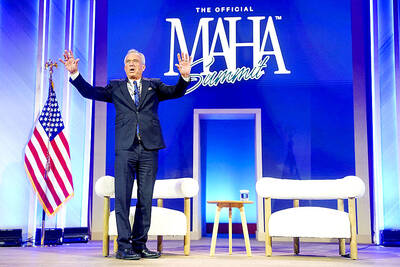
Sweeping policy changes under US Secretary of Health and Human Services Robert F. Kennedy Jr are having a chilling effect on vaccine makers as anti-vaccine rhetoric has turned into concrete changes in inoculation schedules and recommendations, investors and executives said. The administration of US President Donald Trump has in the past year upended vaccine recommendations, with the country last month ending its longstanding guidance that all children receive inoculations against flu, hepatitis A and other diseases. The unprecedented changes have led to diminished vaccine usage, hurt the investment case for some biotechs, and created a drag that would likely dent revenues and
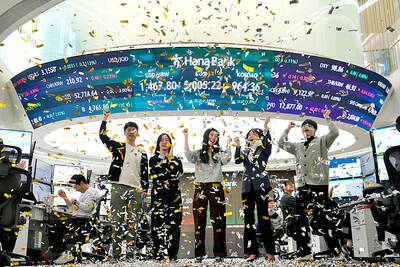
Global semiconductor stocks advanced yesterday, as comments by Nvidia Corp chief executive officer Jensen Huang (黃仁勳) at Davos, Switzerland, helped reinforce investor enthusiasm for artificial intelligence (AI). Samsung Electronics Co gained as much as 5 percent to an all-time high, helping drive South Korea’s benchmark KOSPI above 5,000 for the first time. That came after the Philadelphia Semiconductor Index rose more than 3 percent to a fresh record on Wednesday, with a boost from Nvidia. The gains came amid broad risk-on trade after US President Donald Trump withdrew his threat of tariffs on some European nations over backing for Greenland. Huang further

CULPRITS: Factors that affected the slip included falling global crude oil prices, wait-and-see consumer attitudes due to US tariffs and a different Lunar New Year holiday schedule Taiwan’s retail sales ended a nine-year growth streak last year, slipping 0.2 percent from a year earlier as uncertainty over US tariff policies affected demand for durable goods, data released on Friday by the Ministry of Economic Affairs showed. Last year’s retail sales totaled NT$4.84 trillion (US$153.27 billion), down about NT$9.5 billion, or 0.2 percent, from 2024. Despite the decline, the figure was still the second-highest annual sales total on record. Ministry statistics department deputy head Chen Yu-fang (陳玉芳) said sales of cars, motorcycles and related products, which accounted for 17.4 percent of total retail rales last year, fell NT$68.1 billion, or

MediaTek Inc (聯發科) shares yesterday notched their best two-day rally on record, as investors flock to the Taiwanese chip designer on excitement over its tie-up with Google. The Taipei-listed stock jumped 8.59 percent, capping a two-session surge of 19 percent and closing at a fresh all-time high of NT$1,770. That extended a two-month rally on growing awareness of MediaTek’s work on Google’s tensor processing units (TPUs), which are chips used in artificial intelligence (AI) applications. It also highlights how fund managers faced with single-stock limits on their holding of market titan Taiwan Semiconductor Manufacturing Co (TSMC, 台積電) are diversifying into other AI-related firms.


 RSS
RSS