


Accountant Jiao Yurong carefully organized her family’s finances to put her son through university in the US. Now that he has the coveted degree, she has been saving to buy him an apartment, but soaring property prices in China — and a series of moves by the government to rein them in — are throwing a spanner in the 50-year-old mother’s plans, and she said she did not know how to proceed.
“Just when we had saved enough for a down payment, prices surged,” said Jiao, a Beijing resident. “The policy is so unstable ... I’m so confused.”
Jiao is not alone. Prospective home buyers are reeling from a series of measures put in place by the Chinese government to curb rocketing prices amid persistent fears about a ballooning bubble in the real estate sector.
Authorities have tightened restrictions nationwide on advance sales of new property developments, introduced new curbs on loans for third home purchases and raised minimum down payments for second homes.
The Beijing city government has gone even further, limiting families to one new apartment purchase and barring people who have not paid taxes or made social security contributions in the city for one year from getting home loans.
“Sellers have started to lower the prices,” said Hu Jinghui, vice general manager of 5i5j, a real-estate agency chain that has around 600 outlets in eight cities across China. “But the buyers are still waiting.”
At the Beijing Real Estate Expo last month, the average price of a new apartment in the city was about 21,164 yuan (US$3,100) per square meter, double that of last year, state media said.
That means a 90m² apartment in Beijing would cost 1.9 million yuan, compared with the average per capita income of 26,738 yuan last year.
Since the capital put in place the austerity measures on April 30, prices have dropped an average 10 percent to 15 percent, with the number of home purchases slumping by 50 percent, Hu said.
Jack Guan, a securities firm executive from the coastal city of Qingdao, searched last year on the outskirts of Beijing for his first home, but said he could not make a deal as prices “went insane.”
“I am going to wait and see. I think this is an approach that many people have adopted as now there is a possibility for a price cut,” the 27-year-old said. “It will not cost me much if I wait for another two years.”
In 2008, China also introduced a range of policies to dampen the market frenzy, but a government stimulus package to prop up the economy during the financial crisis quickly negated any progress made.
The new measures so far seemed to have had a limited effect, as official data showed on Tuesday last week that prices in major Chinese cities rose 12.8 percent last month, a double-digit rise for the third straight month.
Experts also said the rules contained apparent loopholes that could be exploited by speculators.
China lacks a nationwide database on property sales, which means banks have no way of checking if mortgage applicants already own apartments in other cities, and higher down payments will have little impact on speculators who mostly pay the full value of properties in cash.
State media reported on Friday that people were even briefly resorting to divorce to acquire a second property, taking advantage of lower down payment and interest rate benefits offered to first-time buyers before remarrying.
Jiao said she was often told the properties she was interested in were sold out, leading her to suspect the developers were hoarding to keep prices high.
“The government has always been saying they would keep the policy unchanged, but they changed it whenever they wanted. We ordinary people just cannot do anything,” she said.
Hu, however, said he believed the government was more determined this time around to hold firm, as prices had become so out of reach for many ordinary Chinese that the measures were needed to keep a lid on social discontent.
Lina Wong (翁琳), managing director for east and southwest China of real estate firm Colliers International, said even more tough measures could be expected as curbing price rises had become a “political task” for the Chinese Communist Party.
New rules could include a property tax on residential housing to increase the costs for buyers keeping multiple apartments.
The government could also “raise the capital requirements for development or even restructure the fiscal revenue system of local governments to reduce [their] vested interests in land sales,” Wong said.

SECOND-RATE: Models distilled from US products do not perform the same as the original and undo measures that ensure the systems are neutral, the US’ cable said The US Department of State has ordered a global push to bring attention to what it said are widespread efforts by Chinese companies, including artificial intelligence (AI) start-up DeepSeek (深度求索), to steal intellectual property from US AI labs, according to a diplomatic cable. The cable, dated Friday and sent to diplomatic and consular posts around the world, instructs diplomatic staff to speak to their foreign counterparts about “concerns over adversaries’ extraction and distillation of US AI models.” Distillation is the process of training smaller AI models using output from larger, more expensive ones to lower the costs of training a powerful new
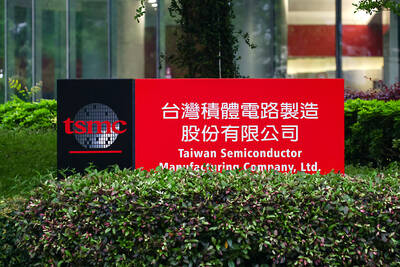
Shares of Taiwan Semiconductor Manufacturing Co (TSMC, 台積電) have repeatedly hit new highs, but an equity analyst said the stock’s valuation remains within a reasonable range and any pullback would likely be technical. The contract chipmaker’s historical price-to-earnings (P/E) ratio has ranged between 20 and 30, Cathay Futures Consultant Co (國泰證期) analyst Tsai Ming-han (蔡明翰) told Central News Agency. With market consensus projecting that TSMC would post earnings per share of about NT$100 (US$3.17) this year, supported by strong global demand for artificial intelligence (AI) applications, and the stock currently trading at a P/E ratio of below 25, Tsai said the valuation
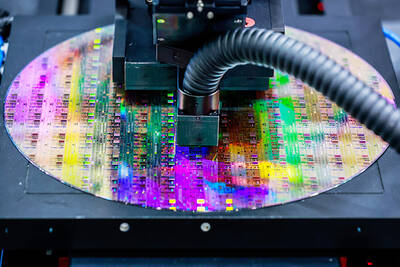
The artificial intelligence (AI) boom has triggered a seismic reshuffling of global equity markets, with Taiwan and South Korea muscling past European nations one by one. With its stock market now valued at nearly US$4.3 trillion, Taiwan surpassed the UK, Europe’s biggest market, earlier this month, data compiled by Bloomberg showed. South Korea is about US$140 billion away from doing the same. The tech-heavy Asian markets have shot past Germany and France in the past seven months. The shift is largely down to massive gains in shares of three companies that provide essential hardware for AI: Taiwan Semiconductor Manufacturing Co (TSMC, 台積電),
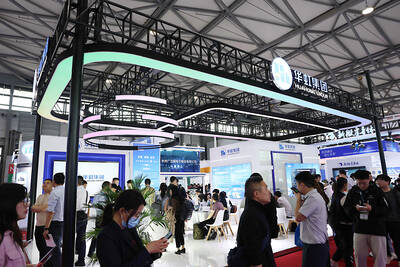
The US Department of Commerce last week ordered multiple chip equipment companies to halt shipments of certain tools to China’s second-largest chipmaker, Hua Hong Semiconductor Ltd (華虹半導體), its latest action to slow the country’s development of advanced chips, two people familiar with the matter said. The department sent letters to at least a handful of companies informing them of restrictions on tools and other materials destined for two Hua Hong facilities US officials believe make China’s most sophisticated chips, the people said. Top US chip equipment companies Lam Research Corp, Applied Materials Inc and KLA Corp, each of which has significant


 RSS
RSS