


AU Optronics Corp (AUO, 友達光電), the nation’s No. 2 LCD panel maker, yesterday said it had signed a memorandum of understanding (MOU) with Toshiba Mobile Display Co to buy a panel plant in Singapore that would enable it to enter the high-end notebook computer and mobile phone businesses.
This is the latest in a string of countermeasures unveiled by the Hsinchu-based flat-panel maker as it competes with Chimei Innolux Corp (奇美電子), allowing AU Optronics to broaden its product portfolio in terms of technologies rather than boosting capacity.
AU Optronics is also seeking to enhance its partnership with TV and PC monitor makers like TPV Technology Ltd (冠捷) to enhance competitiveness.
The company’s board approved a proposal to form a joint TV assembling venture with TPV in Poland, investing a combined US$40 million (US$1.27 million) initially.
Based on the MOU with Toshiba Mobile, AU Optronics would purchase 100 percent of the shares in AFPD Pte Ltd, a subsidiary of Toshiba Mobile Display in Singapore and a leading manufacturer of LCD panels based on low- temperature polysilicon (LTPS) technology.
“AU Optronics’ competence in the high-end display market is further strengthened by AFPD’s fab capacity, talented workforce and technologies,” chief executive Chen Lai-juh (陳來助) said in the joint statement.
“The acquisition could also help place AU Optronics in a special strategic position in slim notebooks and smart phones for high-end markets and new application markets such as tablet PCs,” Chen said.
The companies are scheduled to sign an agreement by the end of this month.
No financial details were disclosed yesterday, though speculation the acquisition might cost AU Optronics ¥10 billion (US$108 million) was dismissed.
“The deal will help AU Optronics obtain [more advanced] LTPS technologies and help it make the ultra-slim screens used in premium laptops and handsets, an area in which Chi Mei Innolux is weak,” said David Hsieh (謝勤益), a vice president of market researcher DisplaySearch.
Toshiba Mobile supplies ultra-slim screens from the Singaporean plant to laptop computer makers including the world’s No. 3 PC maker Dell Inc, Sony Corp and Lenovo Group, Hsieh said.
The plant ships 1 million notebook panels a month mostly tailor-made, he said.
After the transaction, AU Optronics may own the factory utilities, equipment, workforce and patents.
Toshiba Mobile is also planning to continue using the capacity for its customers, AU Optronics spokesperson Hsiao Ya-wen (蕭雅文) said by phone.
AFPD’s G4.5 fab — the latest generation fab capable of producing LTPS — has a capacity of approximately 45,000 sheets per month, the statement said.
AU Optronics currently operates a 3.5G LTPS plant in Taiwan.
The acquisition of AFPD in Singapore adds a new manufacturing base in Asia to AU Optronics’ existing units in Taiwan and China.
The new site would hopefully be able to serve high-end display markets in South Asia, the Middle East, Australia and New Zealand, the statement said.
The share price of AU Optronics rose 0.28 percent to NT$36.1, out-performing the TAIEX, which dropped 0.53 percent yesterday. Chi Mei Innolux shares fell 1.42 percent to NT$48.45.

Cairo’s new monorail slices across the city skyline, running above the familiar chaos of blaring horns and aging buses’ exhaust fumes that mark rush hour below. The US$4.5 billion monorail, opened this month, is among Egypt’s most prominent new transport projects, part of a debt-funded infrastructure drive criticized for sapping state finances while bringing limited benefits to most of the country’s 109 million people. “It feels like you’re in a different country,” said Ramy Sayed, a restaurant manager, aboard a driverless Innovia 300 train. “No noise, no traffic, we’re not used to this.” The eastern line runs 56km from the bustling middle-class

Starlux Airlines Co (星宇航空) today unveiled a long-haul network expansion plan at a shareholders’ meeting in Taipei, including direct flights to Barcelona, Spain, and Zurich, Switzerland, as well as a service connecting Taipei, Sydney and New Zealand. Starlux is to become the first Taiwanese carrier to offer non-stop services to the two European cities, while the inaugural oceanic route is expected to expand transit opportunities within the Australia-New Zealand market, Starlux said. Flight services to Chicago, Dallas, Washington and New York are under evaluation, the airline added. Prior to the shareholders’ meeting, the airline earlier this year announced that it would be

Taiwanese firms have increased investment in the Philippines in recent years as Manila’s ties with Washington deepen and global supply chains continue to shift away from China, an expert at the Chung-Hua Institution for Economic Research (CIER, 中華經濟研究院) said yesterday. The Philippines had not been among Taiwanese investors’ top choices in Southeast Asia, CIER Taiwan ASEAN Studies Center director Kristy Hsu (徐遵慈) said at a seminar in Taipei. However, Taiwan’s investment in the country has grown significantly since the COVID-19 pandemic, reaching US $257 million last year, a high in recent years, she said. Although Taiwan’s total investment in the Philippines still lags
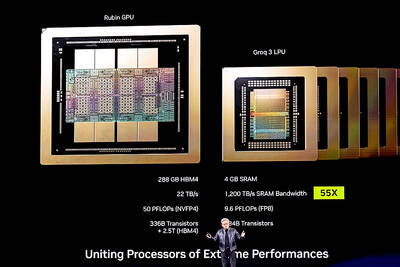
Taiwanese prosecutors suspect that three people successfully smuggled at least one shipment of Nvidia Corp artificial intelligence (AI) chips to China after first exporting them to Japan, people familiar with the matter said. The trio was detained last week by the Keelung District Prosecutors’ Office for allegedly falsifying documents related to exports of Super Micro Computer Inc servers containing advanced Nvidia chips, which the US has barred from sale to China without a license from Washington. The move marked Taiwan’s first public crackdown on AI chip diversion after years of pressure from the US to take a more active role in curtailing


 RSS
RSS