


Dell Inc’s quarterly gross margin missed Wall Street expectations, hurt by sales of lower-priced personal computers for consumers and a rise in costs for memory chips and other components.
The disappointing margin, which reflects Dell’s dependence on the computer hardware market, sent its shares down 5 percent in extended trading on Thursday and overshadowed its stronger-than-expected profit and revenue for the quarter.
Larger rival Hewlett-Packard Co (HP), which posted stronger results on Wednesday, had benefited from a more diversified revenue base than Dell, with income from software and services as well as hardware.
“I think people are concerned on the gross margins, clearly the revenue is strong, they had strength in the PC business as well as in the servers business, but there wasn’t as much leverage as maybe people had expected,” Cross Research managing director Shannon Cross said.
Dell is heavily dependent on selling PCs to US businesses, so it suffered during the economic downturn but is expected to improve this year as technology spending recovers.
The company, which depends on desktop and laptop sales for more than half of overall revenue, has stressed profitability over growth and stayed clear of the PC price war waged by HP and Acer Inc, which displaced Dell as the world’s No. 3 PC maker last year.
CFO Brian Gladden said average selling prices “held up pretty well” in the fourth quarter compared with the third, but added that gross margins were hurt by a larger mix of lower-cost PCs for consumers, and some higher component costs, including DRAM memory.
He said there were positive overall signs in the technology industry, and that Dell is “cautiously optimistic” about how the new fiscal year is starting.
“We saw some very encouraging market demand growth return to the business in the fourth quarter,” he said.
Dell, whose results had missed Wall Street targets for three of the previous eight quarters, said net profit fell to US$334 million, or US$0.17 a share, in its fiscal fourth quarter ended Jan. 29, from US$351 million, or US$0.18 a share, one year ago.
Excluding one-time items, profit was US$0.28 a share, a penny above the average Wall Street forecast, Thomson Reuters I/B/E/S said.
Revenue rose 11 percent to US$14.9 billion, also beating the average estimate of US$13.8 billion. But adjusted gross margin was 17.4 percent, compared with the average estimate of 18 percent. HP’s margin was 22.8 percent in the January quarter.
Cross also said Dell’s operating expenses did not fall as much as some investors had hoped. Dell reported adjusted operating expenses at 12.1 percent of revenue, versus 12.8 percent a year ago.
CEO Michael Dell said he sees the start of the hardware refresh cycle and is looking at smaller M&A deals.

Cairo’s new monorail slices across the city skyline, running above the familiar chaos of blaring horns and aging buses’ exhaust fumes that mark rush hour below. The US$4.5 billion monorail, opened this month, is among Egypt’s most prominent new transport projects, part of a debt-funded infrastructure drive criticized for sapping state finances while bringing limited benefits to most of the country’s 109 million people. “It feels like you’re in a different country,” said Ramy Sayed, a restaurant manager, aboard a driverless Innovia 300 train. “No noise, no traffic, we’re not used to this.” The eastern line runs 56km from the bustling middle-class
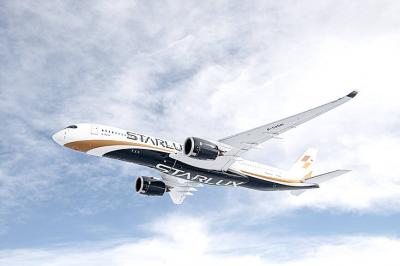
Starlux Airlines Co (星宇航空) today unveiled a long-haul network expansion plan at a shareholders’ meeting in Taipei, including direct flights to Barcelona, Spain, and Zurich, Switzerland, as well as a service connecting Taipei, Sydney and New Zealand. Starlux is to become the first Taiwanese carrier to offer non-stop services to the two European cities, while the inaugural oceanic route is expected to expand transit opportunities within the Australia-New Zealand market, Starlux said. Flight services to Chicago, Dallas, Washington and New York are under evaluation, the airline added. Prior to the shareholders’ meeting, the airline earlier this year announced that it would be

Taiwanese firms have increased investment in the Philippines in recent years as Manila’s ties with Washington deepen and global supply chains continue to shift away from China, an expert at the Chung-Hua Institution for Economic Research (CIER, 中華經濟研究院) said yesterday. The Philippines had not been among Taiwanese investors’ top choices in Southeast Asia, CIER Taiwan ASEAN Studies Center director Kristy Hsu (徐遵慈) said at a seminar in Taipei. However, Taiwan’s investment in the country has grown significantly since the COVID-19 pandemic, reaching US $257 million last year, a high in recent years, she said. Although Taiwan’s total investment in the Philippines still lags
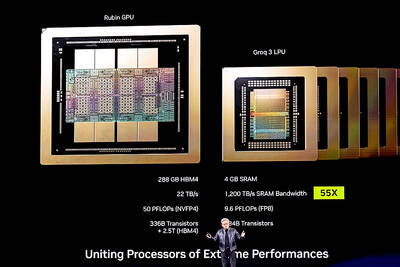
Taiwanese prosecutors suspect that three people successfully smuggled at least one shipment of Nvidia Corp artificial intelligence (AI) chips to China after first exporting them to Japan, people familiar with the matter said. The trio was detained last week by the Keelung District Prosecutors’ Office for allegedly falsifying documents related to exports of Super Micro Computer Inc servers containing advanced Nvidia chips, which the US has barred from sale to China without a license from Washington. The move marked Taiwan’s first public crackdown on AI chip diversion after years of pressure from the US to take a more active role in curtailing


 RSS
RSS