


A government plan to provide affordable housing in Linkou Township (林口), Taipei County, by 2014 will require a raft of supporting measures to make it happen, pundits said.
“One precondition — that the Airport mass rapid transit [MRT] system commence operations so that [middle-income] residents will find it convenient to commute — will have to be met,” David Chen (陳春忠), director of H&B Business Group’s (住商不動產) Linkou outlet, said by telephone.
The project will be located near the National Taiwan Sport University stop on the airport line, which is scheduled to be completed in 2014.
To make it more attractive, unit prices in the housing project will also have to be between 20 percent and 30 percent lower than in nearby areas, preferably between NT$100,000 (US$3,100) and NT$150,000 per ping (3.3m²), he said.
Chen said new properties around Chang Gung Memorial Hospital in Gueishan Township (龜山), Taoyuan County, are priced at about NT$200,000 per ping, while those across the highway in Linkou could reach NT$250,000 per ping.
A survey by a local realtor found that property prices in Linkou averaged NT$170,000 per ping last quarter.
CONFIDENCE
The Ministry of the Interior’s Construction and Planning Agency, however, is confident that the new housing project, based on the concept of transportation-oriented development, will work.
Under its initial design, the government will allocate about NT$23 billion to acquire more than 200 hectares for the project and partner with the private sector to create 4,000 units, said Hung Chia-hung (洪嘉宏), director of the agency’s urban and rural development branch.
The project will alleviate the apprehensions of middle-income earners over climbing property prices in Taipei, a development that has topped their list of grievances against President Ma Ying-jeou’s (馬英九) administration in the past two years, he said.
The project will also create steady traffic for the MRT system as residents are expected to commute between Taipei and Taoyuan for work, he said.
Hung brushed aside concerns that the project would add too much floor space in the area as the take-up for properties below NT$150,000 per ping in the vicinity has remained flat.
“If the MRT system is launched, I guarantee you that properties in Linkou will see a price increase and more take-up. Precedents have been seen elsewhere in Taipei County, such as in Banciao and Sinjhuang,” he said.
AFFORDABLE
Local media reported that the head of the construction agency has pledged to Premier Wu Den-yih (吳敦義) that the new housing project would be affordable, at about NT$3 million per 27-ping (89.2m²) home — less than half the price of any property in Taipei.
Hung, however, would not confirm this, saying that details about the project had yet to be finalized.
Private-sector developers and realtors, meanwhile, were skeptical about the housing project’s viability as the quality of past public housing units has often been substandard.
“The government should work more to create jobs,” Chao Teng-hsiung (趙藤雄), chairman of Farglory Group (遠雄企業), told reporters on the sidelines of a media briefing on Saturday to launch the “Future Hills” project in Linkou.
Farglory has initiated housing projects in the farmland-turned residential district.
QUESTIONS
Chao also said that commuters could find it expensive to drive through toll stations between Taipei and Linkou, which collect NT$40 per trip.
“If there are no jobs in the township, only a limited number of people will be willing to move there,” he said.
Chao said the government’s housing plan did not threaten the Farglory project.
Billy Yen (顏炳立), general manager of real estate consultancy DTZ (戴德梁行), was also cautious about the government housing project, saying it was well-intended but that it remained to be seen whether it would be popular.
Shares of contract chipmaker Taiwan Semiconductor Manufacturing Co (TSMC, 台積電) came under pressure yesterday after a report that Apple Inc is looking to shift some orders from the Taiwanese company to Intel Corp. TSMC shares fell NT$55, or 2.4 percent, to close at NT$2,235 on the local main board, Taiwan Stock Exchange data showed. Despite the losses, TSMC is expected to continue to benefit from sound fundamentals, as it maintains a lead over its peers in high-end process development, analysts said. “The selling was a knee-jerk reaction to an Intel-Apple report over the weekend,” Mega International Investment Services Corp (兆豐國際投顧) analyst Alex Huang
Taiwan Semiconductor Manufacturing Co (TSMC, 台積電) is expected to remain Apple Inc’s primary chip manufacturing partner despite reports that Apple could shift some orders to Intel Corp, industry experts said yesterday. The comments came after The Wall Street Journal reported on Friday that Apple and Intel had reached a preliminary agreement following more than a year of negotiations for Intel to manufacture some chips for Apple devices. Taiwan Institute of Economic Research (台灣經濟研究院) economist Arisa Liu (劉佩真) said TSMC’s advanced packaging technologies, including integrated fan-out and chip-on-wafer-on-substrate, remain critical to the performance of Apple’s A-series and M-series chips. She said Intel and Samsung
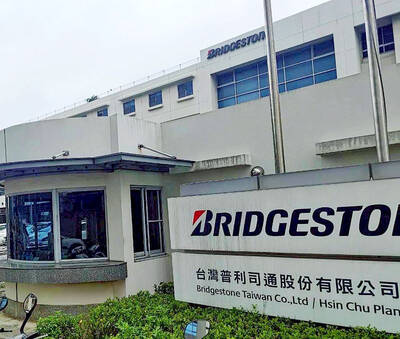
TRANSITION: With the closure, the company would reorganize its Taiwanese unit to a sales and service-focused model, Bridgestone said Bridgestone Corp yesterday announced it would cease manufacturing operations at its tire plant in Hsinchu County’s Hukou Township (湖口), affecting more than 500 workers. Bridgestone Taiwan Co (台灣普利司通) said in a statement that the decision was based on the Tokyo-based tire maker’s adjustments to its global operational strategy and long-term market development considerations. The Taiwanese unit would be reorganized as part of the closure, effective yesterday, and all related production activities would be concluded, the statement said. Under the plan, Bridgestone would continue to deepen its presence in the Taiwanese market, while transitioning to a sales and service-focused business model, it added. The Hsinchu
Taiwan Semiconductor Manufacturing Co (TSMC, 台積電) has approved a capital budget of US$31.28 billion for production expansion to meet long-term development needs during the artificial intelligence (AI) boom. The company’s board meeting yesterday approved the capital appropriation plan for purposes such as the installation of advanced technology capacity and fab construction, the world’s largest contract chipmaker said in a statement. At an earnings conference last month, TSMC forecast that its capital expenditure for this year would be at the higher end of the US$52 billion to US$56 billion range it forecast in January in response to robust demand for 5G, AI and


 RSS
RSS