

Global shipments of flat panels used in computers and televisions grew a faster-than-expected 1.4 percent last quarter, driven by inventory restocking demand primarily for the anticipated Lunar New Year buying spree in China, a Taipei-based researcher said yesterday.
The growth beat WitsView’s original estimate of a 5 percent quarter-on-quarter contraction in shipments of liquid-crystal-display (LCD) panels worldwide.
“Market demand is strong. The fourth quarter is not as slow as it was before,” WitsView said in the report, indicating “a bullish first quarter.”
Global shipments of PC and TV flat panels expanded to 148 million units in the final quarter of last year with LCD monitors leading the rebound, compared to 146 million shipped in the third quarter, WitsView’s tallies showed.
The unexpectedly good recovery bodes well for the industry’s prospects, WitsView said, as last month’s upswing in demand for TVs ahead of the holiday shopping season in China in particular may extend into this quarter to sustain demand in the conventionally slack period.
The Chinese government’s enhanced subsidies for PC and TV purchases and PC replacements following the sales of Microsoft Corp’s Windows 7 system also helped, the researcher said.
“China’s TV demand will be a main driving force in the first quarter,” a WitsView analyst, who requested not to be named, said by telephone. “This quarter’s shipments may hold steady, or slide a bit [from the previous quarter].”
That means the first quarter could be better than the seasonal pattern as demand usually dwindles after the gift shopping season in the US and Europe, leading to a decline of about 5 percent quarter-on-quarter.
But WitsView expected that tight supply of key components including glass and some chips would carry into this quarter, the report said.
In the final three months of last year, the nation’s top LCD panel maker AU Optronics Corp (友達光電) said PC and TV panel shipments rose 2.5 percent quarter-on-quarter to 27.37 million units, while smaller rival Chi Mei Optoelectronics Corp (奇美電子) saw shipments fall 3.4 percent.

INFRINGEMENT: The investigation comes after a complaint from Vicor Corp, with the company seeking a limited exclusion order as well as cease-and-desist orders, the ITA said The US International Trade Commission (USITC) has launched a Section 337 investigation naming Taiwanese technology companies, including Hon Hai Precision Industry Co (鴻海), Delta Electronics Inc (台達電) and Quanta Computer Inc (廣達), as respondents. The Ministry of Economic Affairs (MOEA) pledged assistance if needed. The USITC said on Friday in a statement that it had voted to institute an investigation under Section 337 of the US Tariff Act of 1930 into certain vertical power delivery systems, related components and computing devices incorporating such systems. The investigation covers 20 companies from Taiwan, China, Germany and the US, the commission said, adding that it

IN GOOD FAITH: Lai said he appreciates Micron’s commitment to Taiwan and that it would continue expanding its investment in the country, while also working with labor President William Lai (賴清德) yesterday called for US memory maker Micron Technology Inc and its workers to negotiate “sincerely” ahead of a possible strike by the company’s union in Taiwan. Last week, a Taiwanese union representing workers at Micron said it had secured authorization from its members to strike over a dispute concerning the company’s bonus scheme, escalating a labor conflict at the chipmaker’s largest manufacturing hub. Micron employs about 15,000 people in Taiwan and has said it invested more than NT$1.6 trillion (US$49.6 billion) in the country. Speaking in Taichung at the opening of a new Micron advanced assembly and testing facility,
A man charged along with Super Micro Computer Inc co-founder Yih-Shyan “Wally” Liaw (廖益賢) of conspiring to send cutting-edge chips to China in violation of US export controls pleaded guilty, court documents said. Ting-Wei “Willy” Sun (孫廷瑋), a former outside contractor described by US authorities as a “fixer” who allegedly aided in the sales, pleaded guilty on Thursday at a hearing in federal court in New York as part of an agreement with prosecutors, court filings showed. Prosecutors claimed the men were part of a scheme to send Nvidia Corp-powered servers to an unnamed Southeast Asian company and then divert them to
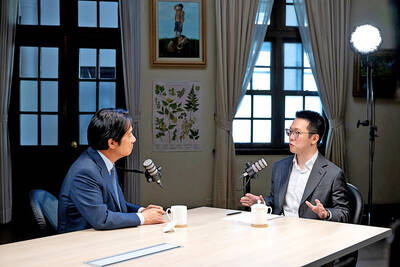
Taiwan should not rule out any energy source or abandon environmental sustainability in favor of ideology and short-term benefits, President William Lai (賴清德) said in an interview, calling for a “professional assessment” of whether nuclear power should be reintroduced into Taiwan’s energy mix. In an online interview with influencer Yu Ting-hao (游庭皓) that aired yesterday, Lai reiterated his position on nuclear power. SHIFT Lai’s remarks marked a shift from the Democratic Progressive Party’s (DPP’s) longstanding opposition to nuclear power. As premier from 2017 to 2019, Lai pushed for more gas-fired power capacity while sticking to the DPP’s nuclear free homeland ideology and rejected the


 RSS